Sapona Shipwreck Snorkeling in Bimini Historic Concrete Ship Adventure
Snorkel a real WWI-era concrete shipwreck in shallow, clear water. Book the 4-stop Sapona snorkeling adventure that pairs the wreck with stingrays, reef sharks and a sunken plane, with gear, guide and transfers included. Rated 4.5 by snorkelers who swam the hull.
2.7★average rating23traveler reviews100%free cancellation6countries travelers came from
Sapona shipwreck snorkeling in Bimini
A day in Bimini comes down to one choice: time in the water or time on the island. Boat trips take you offshore to snorkel the Sapona wreck and meet stingrays and reef sharks, while a land tour covers the towns, the history and the food. Seaplane arrivals stretch your hours ashore when the ferry schedule feels tight.
DocumentsEvery traveler needs a valid passport or passport card, plus authorization to re-enter the United States such as an ESTA. Citizens of countries outside the USA, EU, UK and Switzerland may need a Bahamian entry visa.
SwimmingThe snorkeling trips are not suitable for non-swimmers or people with back, heart or mobility problems, so read the limits before you book.
WeatherCaptains cancel or reroute offshore trips on their own judgment when seas turn rough, and winter winds make that most likely from November through March. Light rain does not stop a departure.
BookingFor peak summer weekends, US holidays and spring break, book ferry seats 4 to 6 weeks ahead.
SeasonMay gives the calmest combined conditions, and June through August brings nearly flat seas along with heat and humidity.
FlotationCrews hand out inflatable vests and life jackets to nervous swimmers, while strong snorkelers can swim without one to duck through open sections of the wreck hull.
SunscreenThe Bahamas bans sunscreens with oxybenzone, octinoxate and octocrylene, so pack a reef-safe one.
SeasicknessTake motion sickness medication 30 to 60 minutes before boarding, because it works far better before the swells start.
On the waterBoats stop at the wreck in the morning when the sea sits calmest, and most trips wrap up by early afternoon.
importantBoat trips to the SS Sapona have no fixed weather cutoff, so captains cancel or reroute on their own judgment when rough seas, high swells, storms or strong winds make the open-water run unsafe.
Book a morning departure, when seas are calmest, and keep your booking flexible enough to move to another date or take a refund if the captain calls it off, which happens most often from November through March.
Boat tours for snorkeling the Sapona shipwreck
Most popular
3 hours·English
4.5(22)
Bimini: 4-Stop Snorkeling Adventure
The shared four-stop run hits the Sapona, a sunken plane, stingrays and reef sharks in three hours for the lowest fare
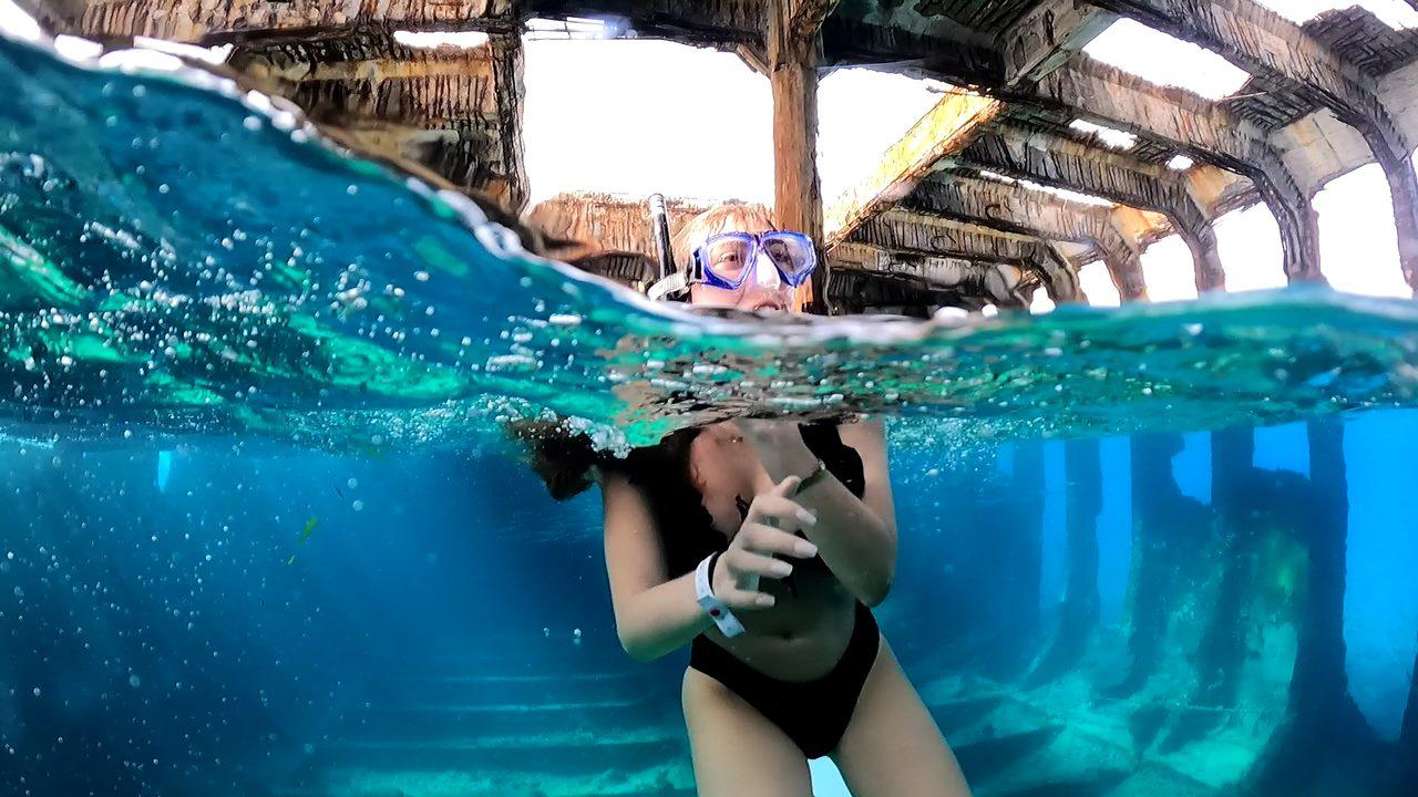
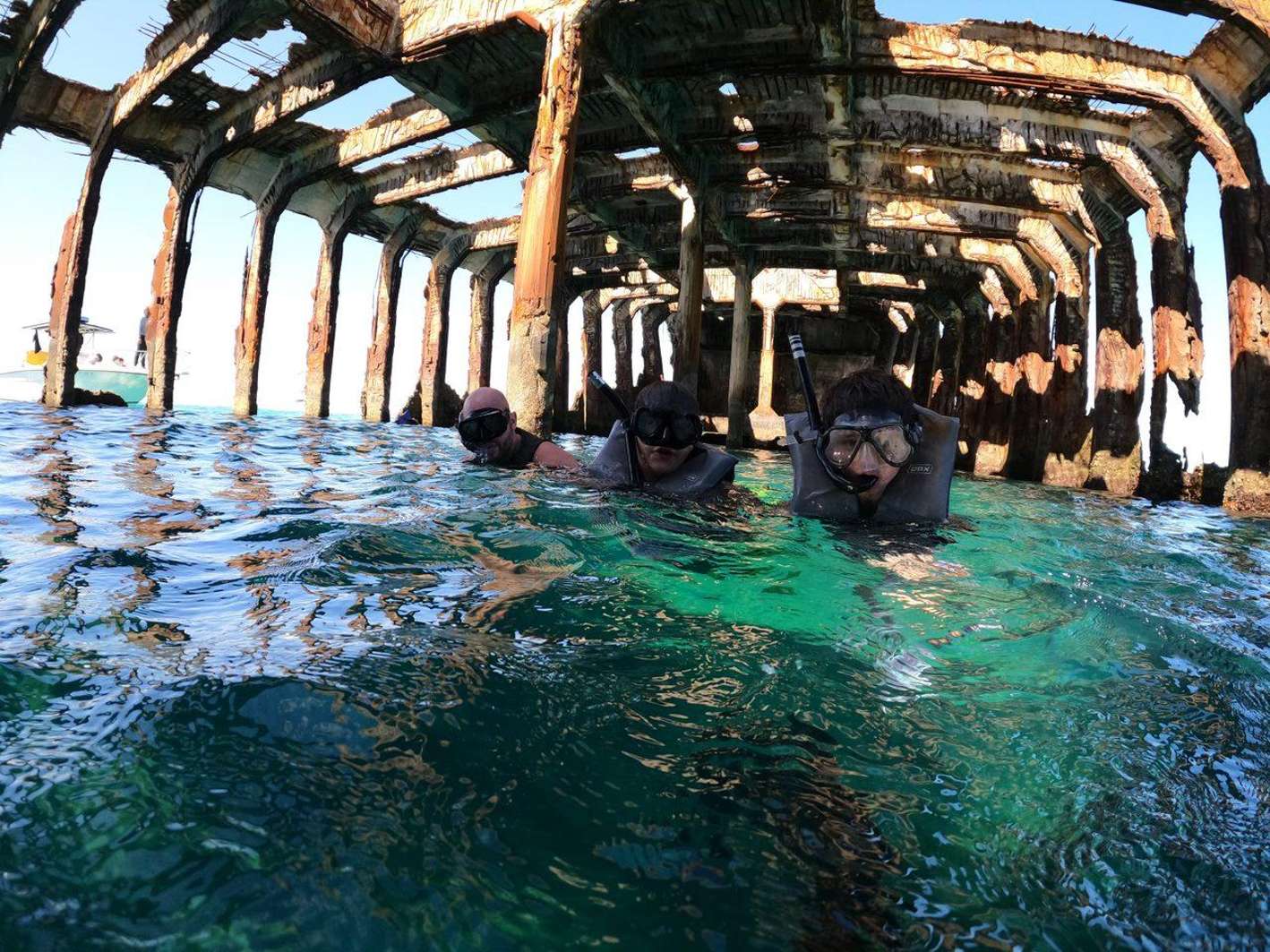
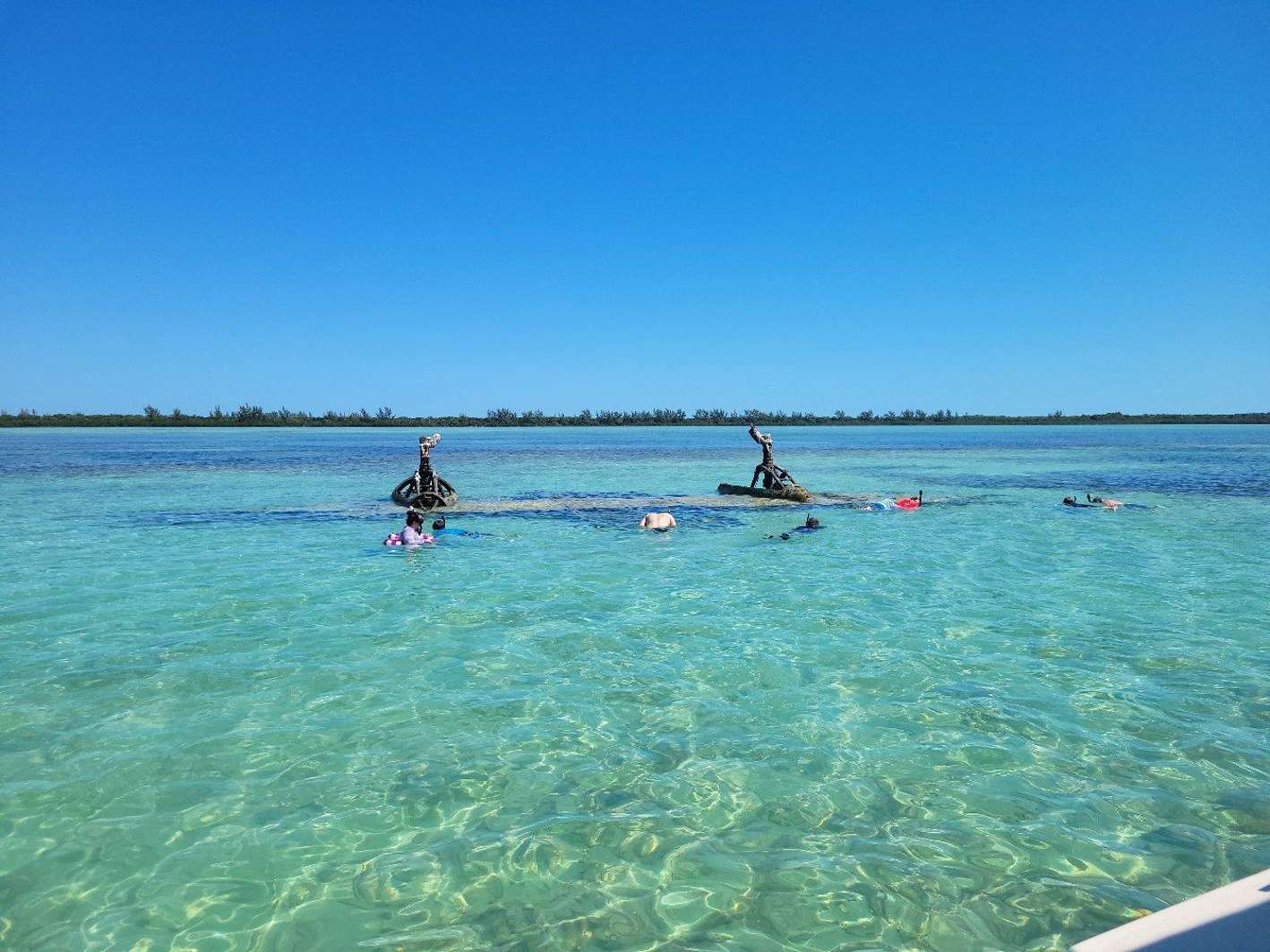
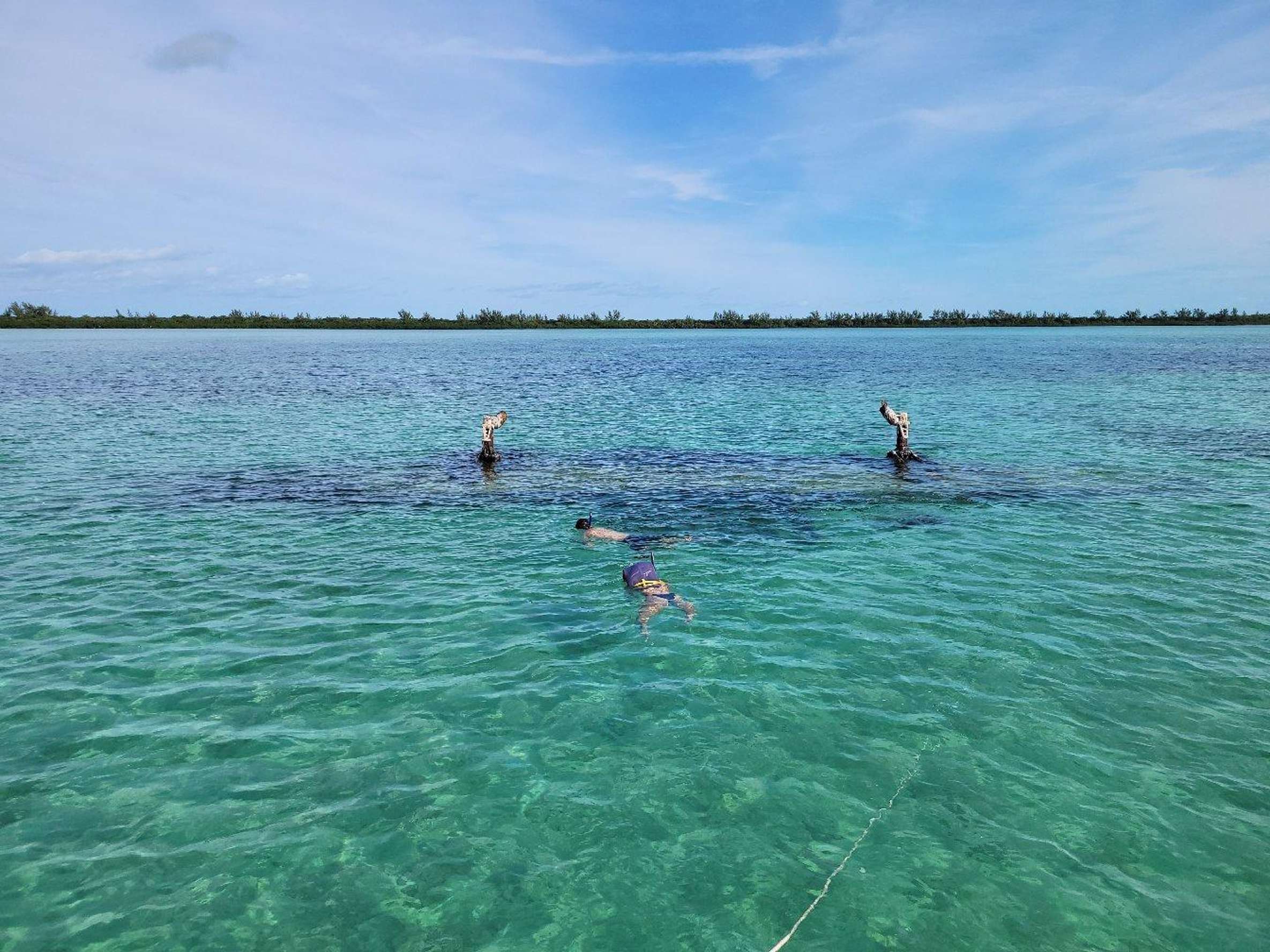
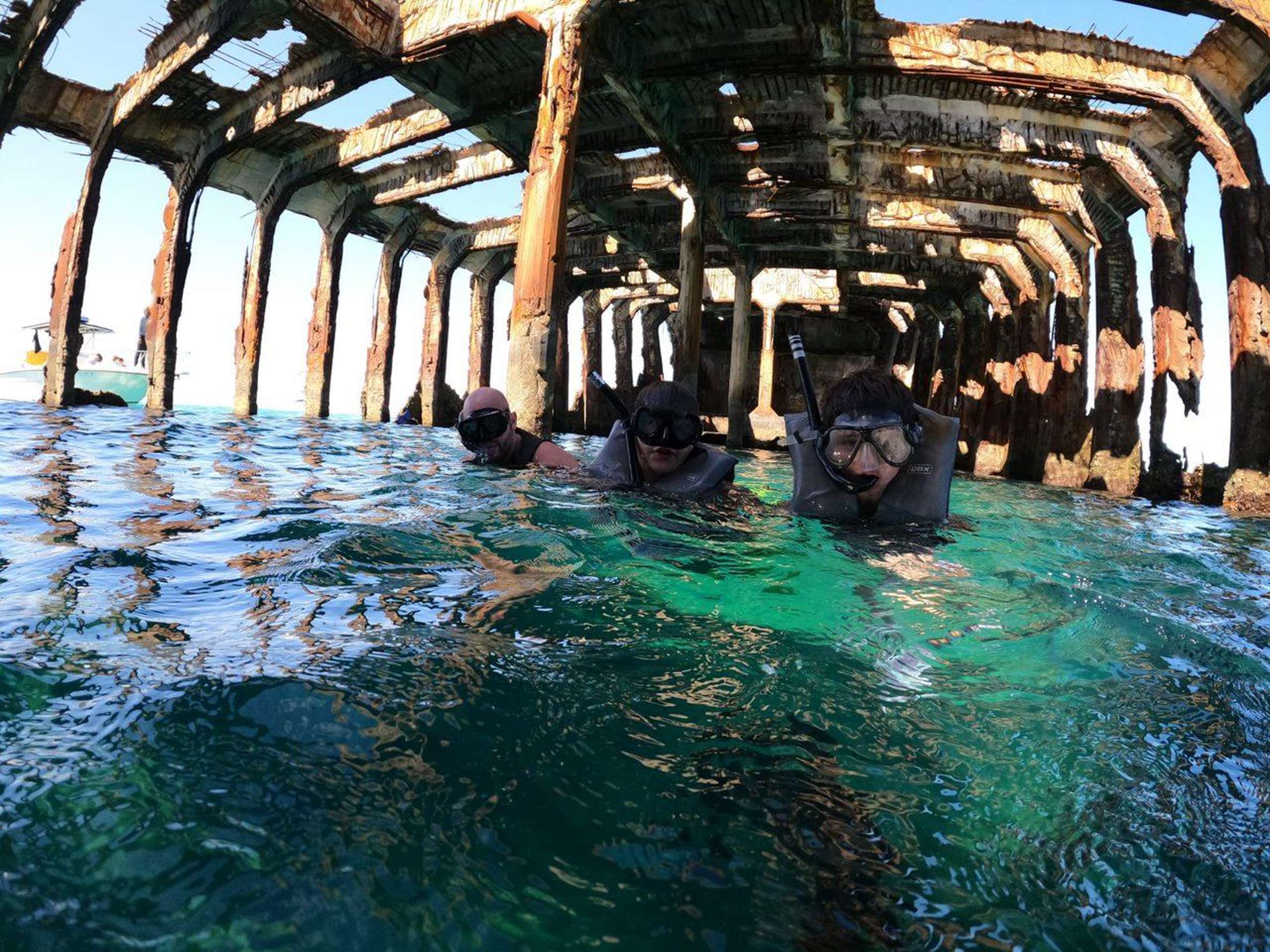
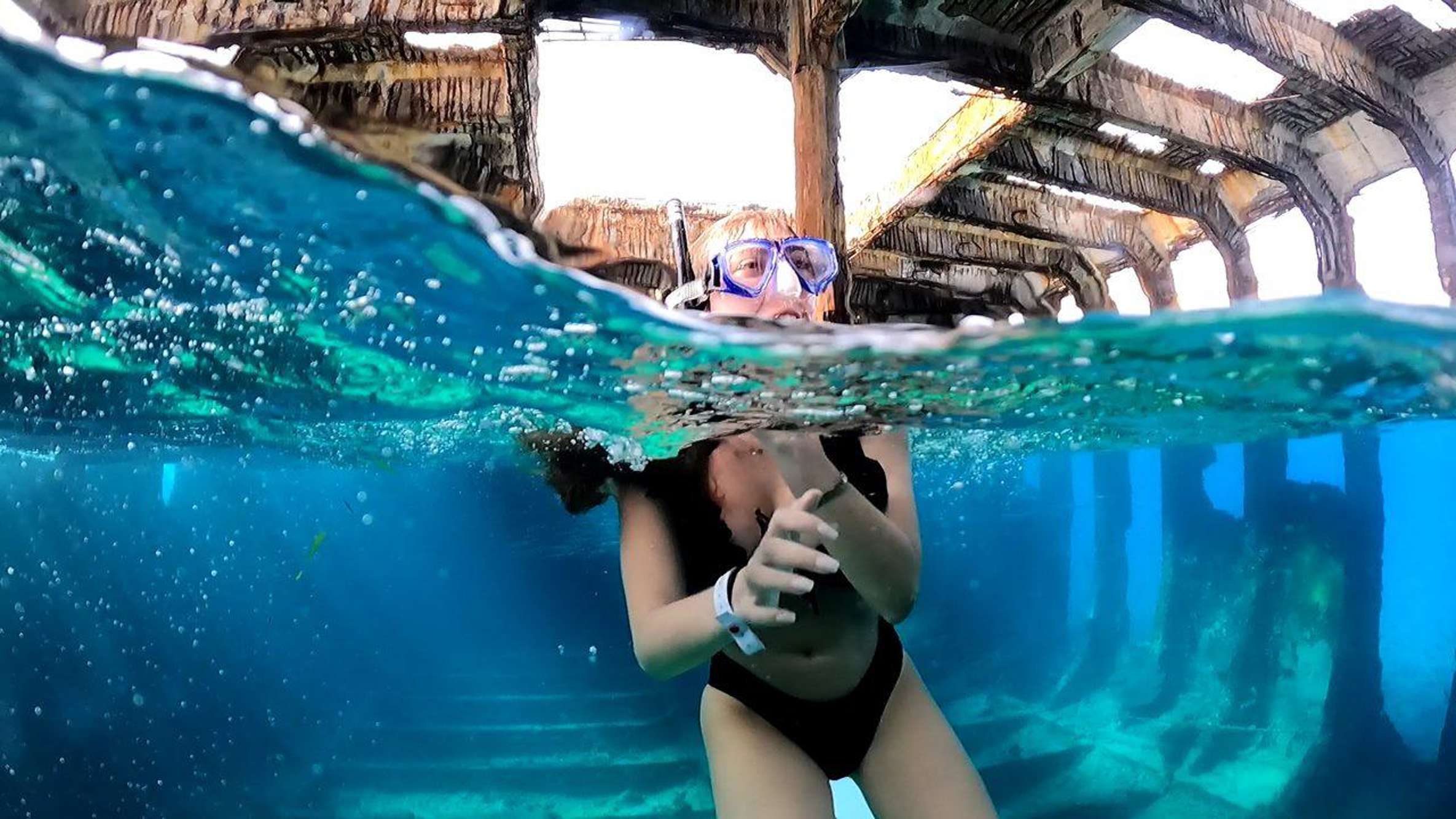
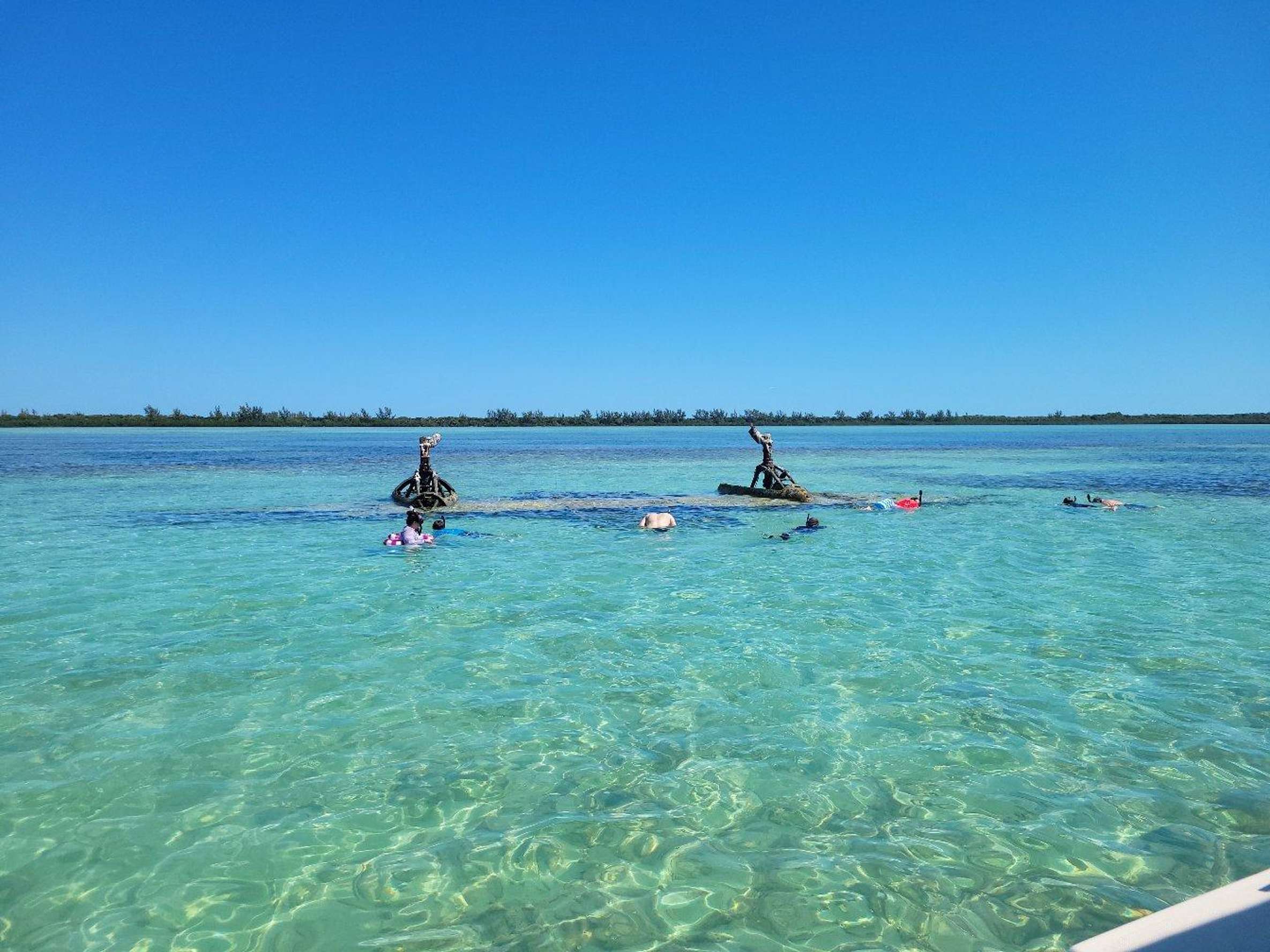
The wreck is the stop people talk about afterwards. The SS Sapona rises out of about 15 feet of water a short boat ride south of Bimini, its concrete superstructure still standing above the surface.
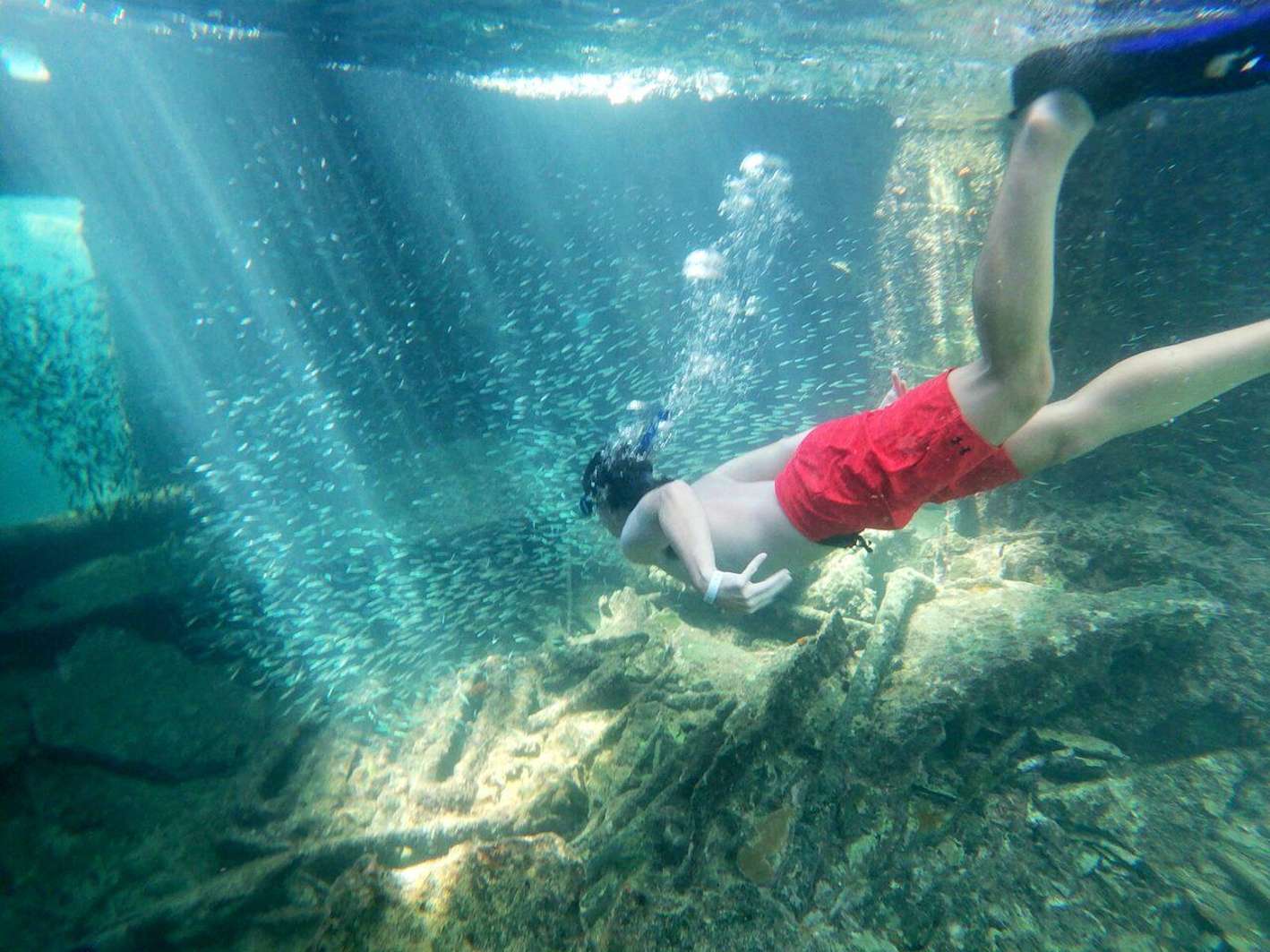
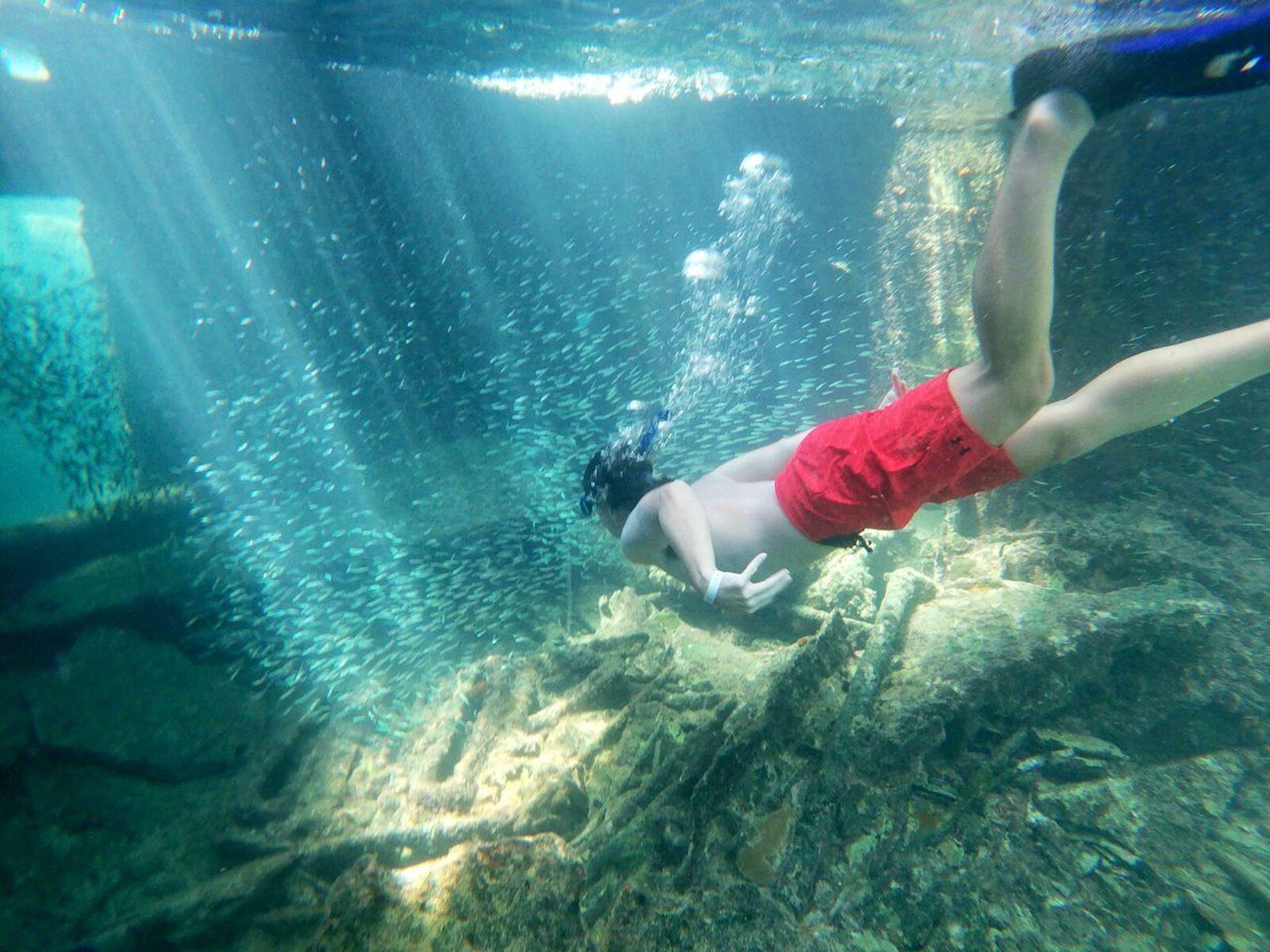
You swim through open sections of the hull, past exposed concrete ribs, rusty rebar and old engine machinery, with bullet holes and bomb damage from wartime target practice still visible in the walls.
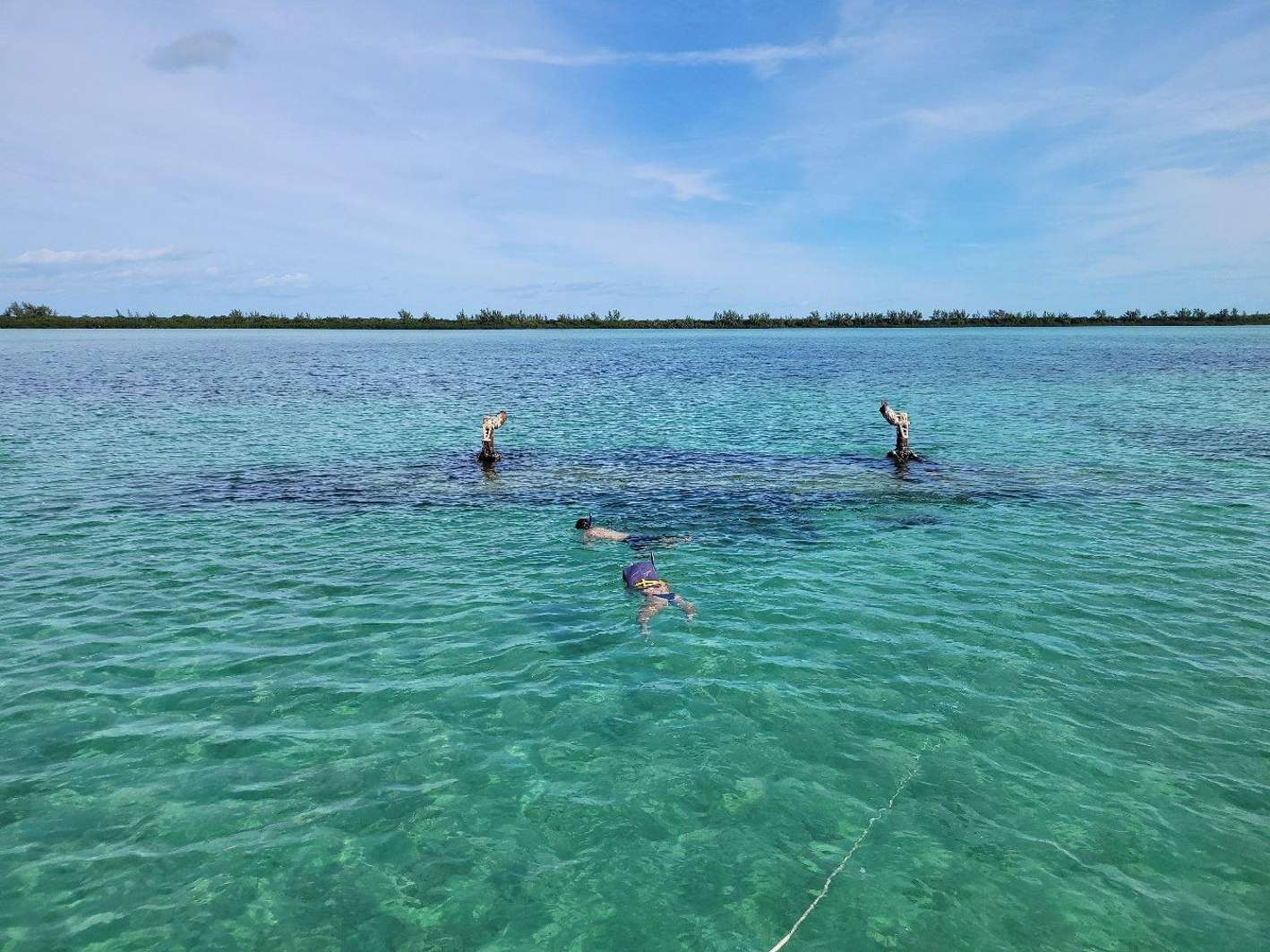
The 4-stop snorkeling adventure links that wreck with three more stops on the same trip: a sunken plane wreck, Stingray Island and Shark Arena. A guide, snorkel gear, pickup and bottled water come with the booking, so you show up with a towel and swimwear. Three hours, four very different stops.
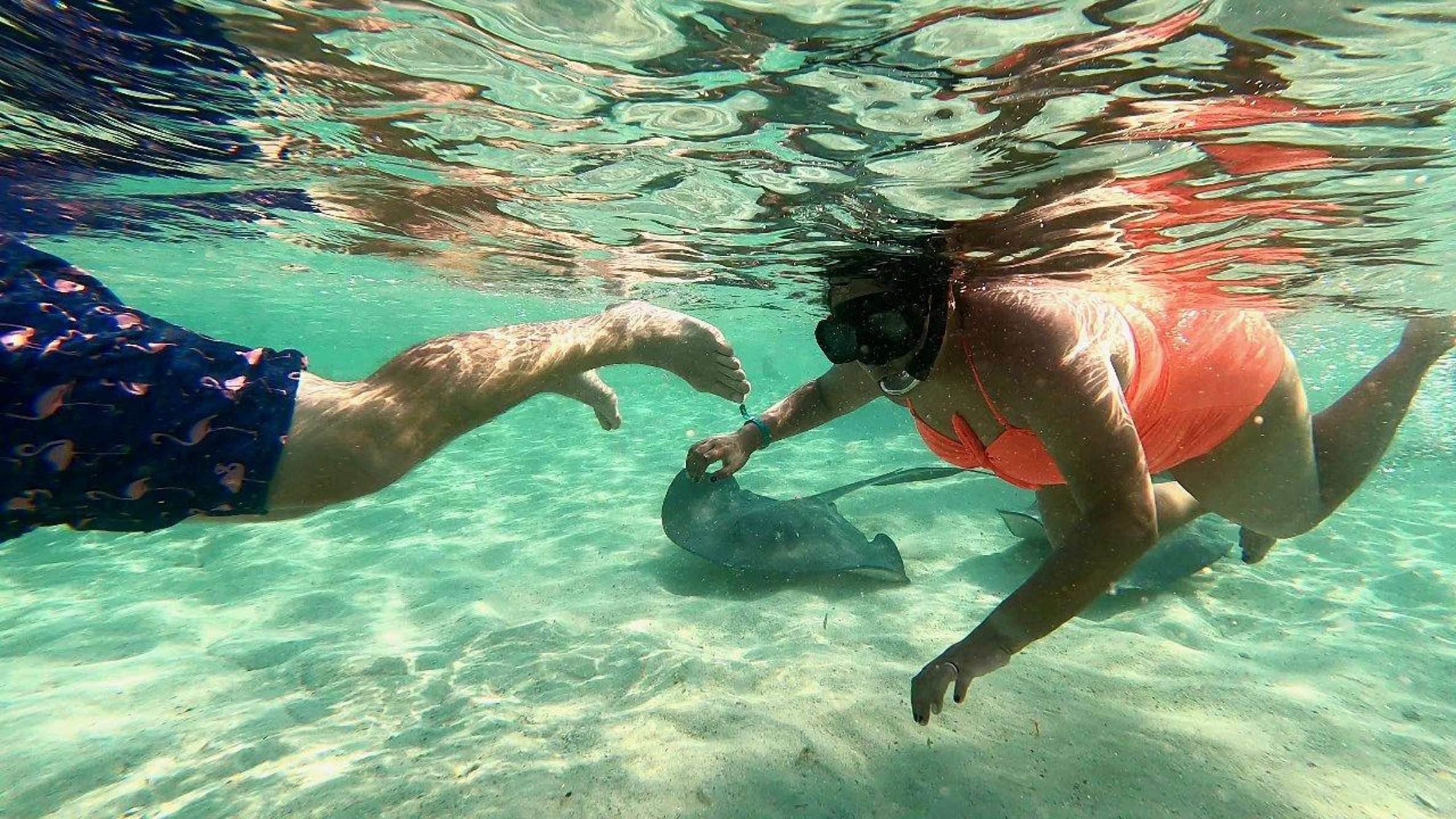
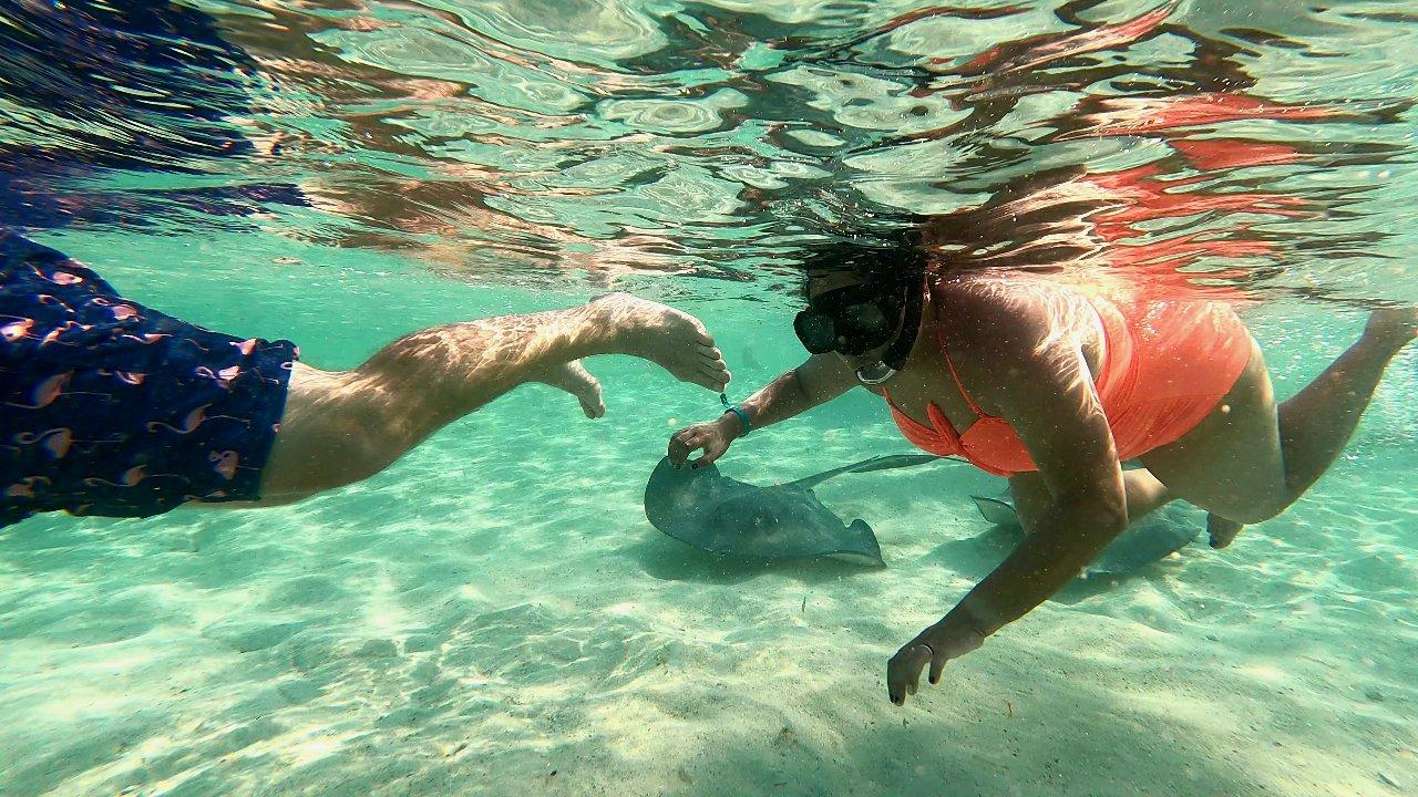
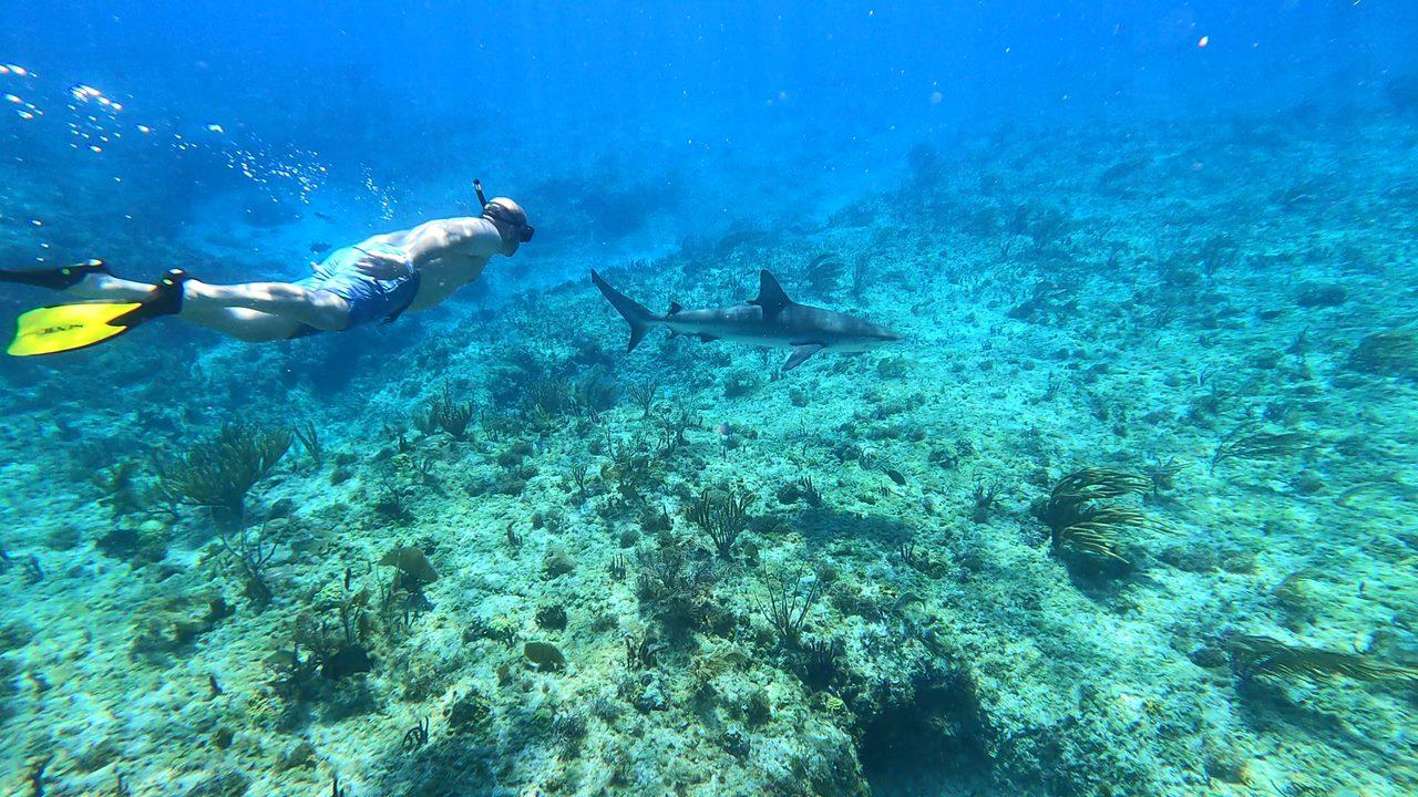
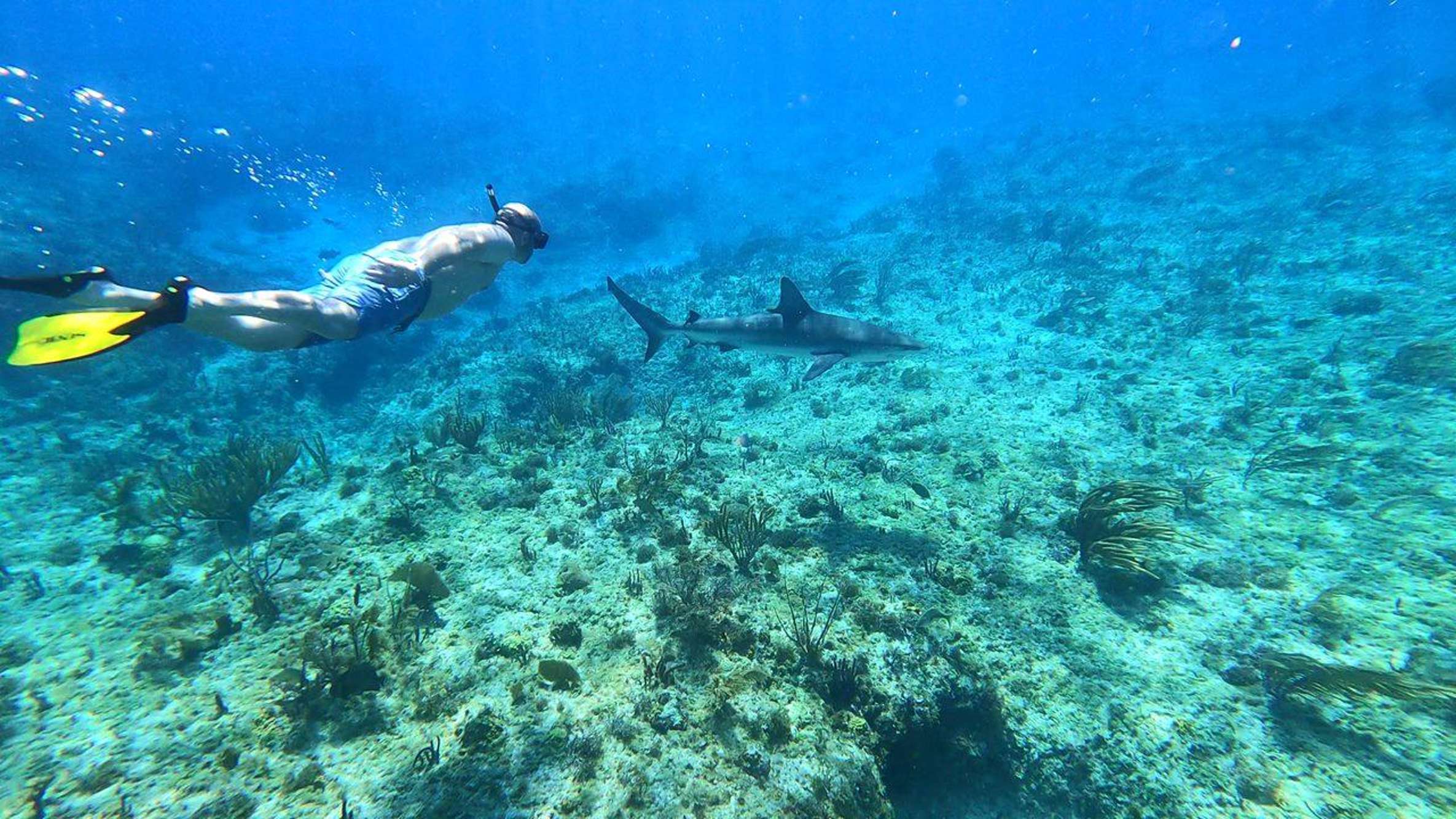
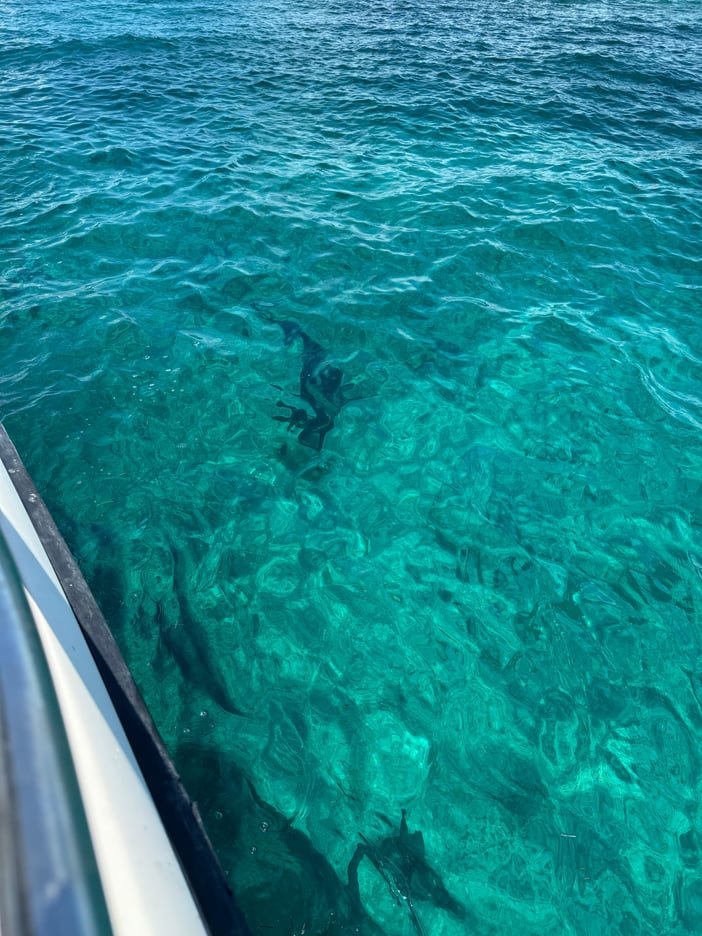
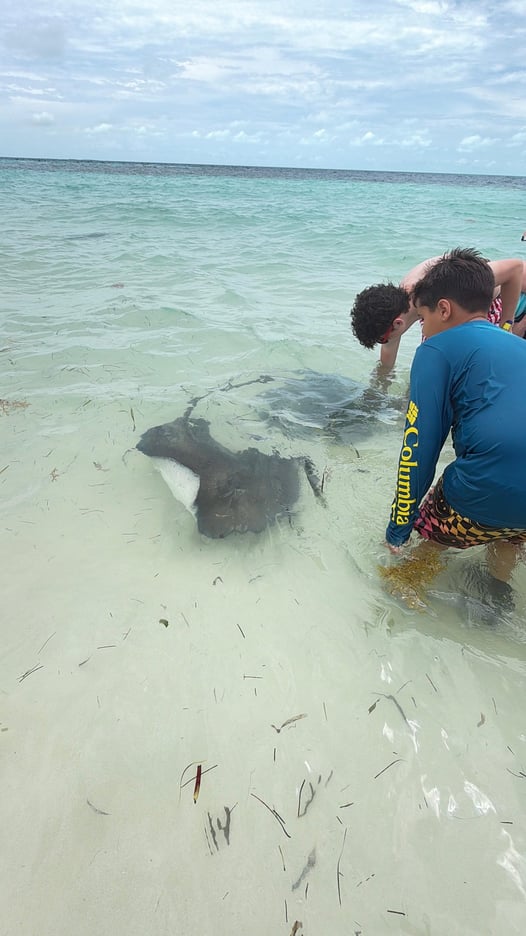
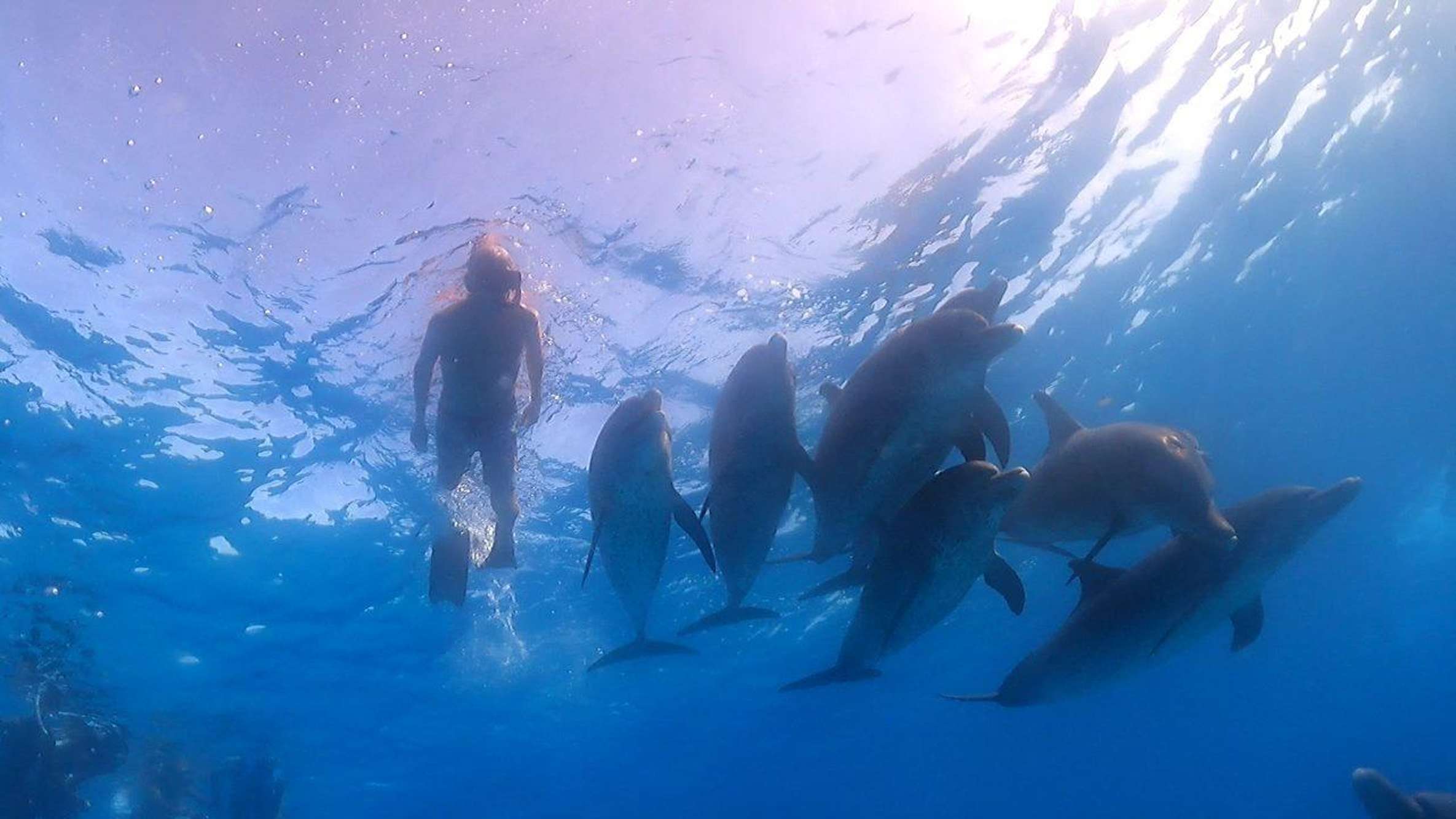
1Sunken plane wreck· about 45 minYour first swim is around the remains of a small aircraft, with clear water and fish holding around the fuselage.2The SS Sapona· about 45 minSnorkel through the open hull of the WWI-era concrete freighter and spot moray eels, snappers, spiny lobsters and sea stars in its crevices.3Stingray Island· about 45 minWade into the shallows where stingrays glide past within arm's reach, an easy stop for the whole group.4Shark Arena· about 45 minThe final stop puts you in the water with Caribbean reef sharks that cruise around the tour boats.
Included
Pick-up and drop-offGuideSnorkel gearBottled water
Not included
TowelsGratuity
Sapona shipwreck snorkeling tours compared - which one fits your day
Green marks the lowest price. Each price says whether it is per person or per group.
Tour
Price
Duration
Languages
Best for
Our pick
Bimini: 4-Stop Snorkeling Adventure
4.5★ (22)
from $175lowest price
3 hours
English
snorkelers who want the wreck, sharks and stingrays packed into one morning outing
Most reviewers praise the guides, who gave plenty of time at every stop and kept everyone safe.
Best surprise
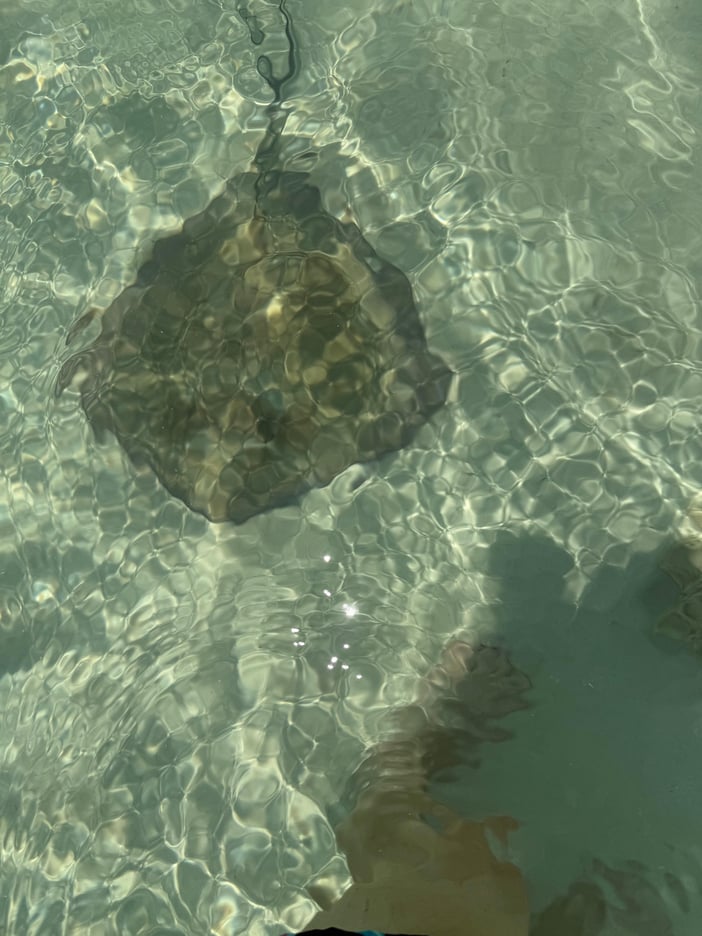
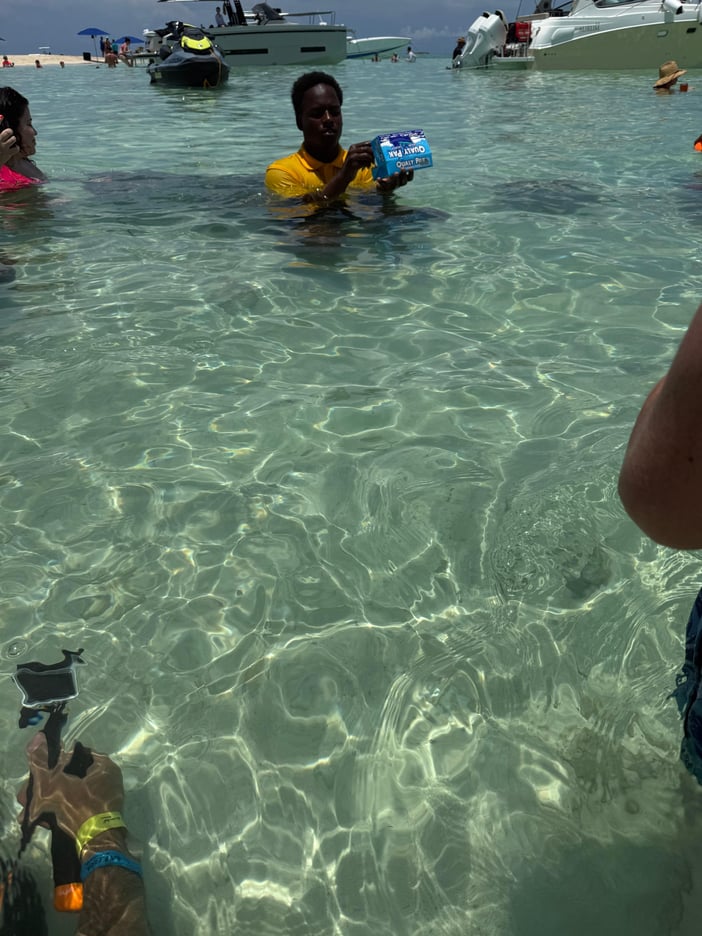
Many came for the wreck and found that feeding the stingrays became the surprise favorite stop.
Most common wish
A few families wished the crew had called them when the boat ran late, so they could wait with the group.
How to book your Sapona shipwreck snorkeling trip in Bimini
01
Pick your date and tour
Choose the 4-stop snorkeling adventure for a fixed three-hour group outing, or the private boat adventure if you want to set your own departure time and stops. Both cancel free up to 24 hours before.
Pro tipMorning departures give the calmest seas and the clearest light inside the wreck, so book the earliest slot you can
RecommendedA morning boat usually wraps by around 1 pm, leaving your whole afternoon free for the beach
02
Check who can come
Read the suitability notes before you pay. The 4-stop trip is not suitable for non-swimmers or people with back, heart, or mobility problems. The private boat excludes babies under 1 and people over 95.
ImportantIf anyone in your group cannot swim confidently in open water, pick a different outing rather than hoping it will be calm
03
Find your meeting point
The 4-stop adventure meets at the Piano lounge of the Resorts World hotel, in the seating area behind the check-in desk. Other boats leave from Fisherman's Village or Kayak Beach at the end of the cruise pier.
Common mistakeFirst-timers head to the marina in Alice Town without checking which departure point their booking names
04
Confirm and watch for messages
After payment your confirmation and the operator's instructions arrive by email, including the exact meeting time and spot. Captains check weather, swell, and tides before every run, so departure details can shift.
RecommendedKeep your phone on you the evening before, since rough-sea reroutes and time changes come through as messages
05
Be ready on the day
Arrive early with swimwear on, a towel, and sunscreen. The run to the wreck takes 20 to 40 minutes each way, and guides supply masks, snorkels, fins, bottled water, and flotation vests on board.
Pro tipBring your own towel, since the boats list towels as the one thing they do not carry
Know before you go - Sapona shipwreck snorkeling in practice
Can stop the dayGood to knowGood news
01
ChoosingWhat it is, who it suits, when to go
9
Water depth
The wreck sits in only about 15 to 20 feet of water, and its upper hull and superstructure break the surface. You can see the decks and the fish living around them from the surface, with a mask and snorkel, no scuba gear needed.
Marine life
Angelfish, soldierfish, snappers and grunts hold inside the hull's openings, and moray eels and spiny lobsters hide in the crevices. Barracudas and rays pass by now and then. The inner hull holds few corals, so the outside walls carry most of the life.
Timing
Morning departures between 8 and 10 am give you the calmest seas and the best light inside the hull, before afternoon winds stir up surface chop. Morning trips also wrap up by early afternoon, which leaves you hours for the beach on a ferry day.
Flotation
Life jackets and inflatable snorkel vests are available on the boats, and nervous or first-time snorkelers can simply ask the crew for one. Strong swimmers can go without a vest and dip down through the open hull sections.
ClimbingCan stop the day
Some visitors climb the old exterior ladders onto the top deck and jump in, but the rope ladder has rotted and the rebar and concrete are unstable. Treat broken concrete edges as sharp and unsound, and enjoy the wreck from the water.
Currents
Currents around the hull are usually mild to moderate, though they can build quickly as the tide changes. Guides often trail a floating rope from the boat so swimmers can pull themselves back, and it pays to stay on the boat-facing side of the wreck.
Wetsuit
Summer water runs 83 to 86°F and a rash guard is plenty. From December through April it cools to 75 to 77°F, and a 3 to 5 mm shorty keeps you from chilling on a windy day.
Health limits
The 4-stop snorkeling adventure is not suitable for non-swimmers, or for people with back problems, mobility impairments or heart conditions. The private boat charter excludes babies under 1 year and anyone over 95. Check the operator before booking if any of these apply.
Tipping
Tips for the guide and crew are not included in the tour price. Around Bimini it is customary to tip 15 to 20 percent of the trip cost, in cash.
02
BookingHow far ahead, and what happens if plans change
2
Weather
There is no fixed wind or wave cutoff for the run out to the wreck; captains judge conditions themselves and reroute or cancel for heavy chop, swells, or storms. Light rain does not stop a departure. Wind-driven cancellations happen most from November through March.
Cancellation
Both snorkel tours let you cancel up to 24 hours in advance for a full refund, which matters when a captain may scrub a trip for rough seas. If the Sapona itself is too rough, boats shift to sheltered reef spots instead.
03
Before you goPapers, health, what to bring
1
What to bring
Boats supply masks, snorkels, fins and bottled water, so pack the rest:
Swimwear and a towel
Reef-safe sunscreen and a rash guard
Water shoes with thick, non-slip soles if you plan to touch the structure
Motion sickness tablets if open water bothers you
Sapona shipwreck snorkeling in Bimini, the complete guide
A century-old concrete freighter sits in about 15 feet of water, a short boat ride from Bimini. The open question is whether an ordinary snorkeler on a one-day visit can reach it, swim it, and still see the island. The stakes are your one day ashore, and these chapters settle it.
If you only remember three things
1
Book a morning boat: departures between 8 and 10 am beat the afternoon chop and get you back by around 1 pm.
2
The wreck rests in 15 to 20 feet of water with decks above the surface, so no scuba gear is needed.
3
A valid passport book or card is required; birth certificates and state IDs are turned away at the terminal.
Is Sapona shipwreck snorkeling worth it with one day in Bimini?
Twenty minutes of open water south of the docks, the SS Sapona appears before you have finished your sunscreen: a gray concrete ship rising straight out of the sea. That short run is the whole argument for doing this on a day trip.
The wreck lies about 3 miles off North Bimini, and a dedicated snorkeling tour runs about two hours, so a morning boat has you back by around 1 pm with the whole afternoon still yours.
Pair the wreck with sharks and stingrays on the same run and you have the island's most talked-about marine day. The Bimini: 4-Stop Snorkeling Adventure does exactly that in 3 hours, with gear, guide, bottled water and pickup included.
The numbers behind that promise are simple enough to hold in your head: a short boat run, a fixed tour length, and a wreck close enough to reach twice before lunch.
Reaching the SS Sapona from Bimini
20 minboat run from North Bimini
3 milesdistance south of North Bimini
3 hourstypical excursion duration
The honest part comes now. A one-way journey, counting Miami transfers, terminal check-in, the 2-hour crossing and customs in Bimini, runs about 4 to 5 hours; counted in both directions, the whole day stretches to 15 or 17 hours door to door for 5 to 6 hours on the island.
That trade works if you have an open day and like early starts; on a three-night Florida break, save Bimini for a longer stay.
Scenes from a snorkeling trip out to the Sapona wreck
A freighter built of concrete sounds like a joke until you float under its shadow. Steel ran short during World War I, so the Sapona was built as ferro-concrete, and a century later the hull still stands while most steel wrecks of that era have folded.
Much of the superstructure stays above water, which is why captains find it by eye off South Bimini.
The story gets better. During Prohibition the ship was moored in shallow water as a rum-running warehouse, and a hurricane in 1926 wrecked it where it sat. In World War II the military used the hulk for target practice, and machine-gun bullet holes and bomb damage still mark the hull.
In the water you swim past exposed concrete ribs, rusty rebar and engine machinery, and you can push through the open sections of the hull. Regulars pass along one caution: the ribs and machinery below can feel eerie if sunken structures unsettle you.
Two stories travel with this wreck, and both are worth unlearning before you get in the water.
Myths about the Sapona
MythIt ran aground by accident
Reality
It was placed in shallow water on purpose as a Prohibition rum-running warehouse, then wrecked by a 1926 hurricane
MythConcrete ships were a failed experiment
Reality
The Sapona's ferro-concrete hull has outlasted most steel wrecks of its era
So the hull you photograph is the original fabric of the ship, and the story you tell back home runs a full century long.
Tour for this
Bimini: Island Tour with Lunch1.0★ (1) · 2.5 hours · Free cancellation
Can an ordinary snorkeler handle Sapona shipwreck snorkeling?
Depth settles the scuba question first. The wreck rests in about 15 feet of water, ranging to 20 feet with the tide, and its upper hull and superstructure break the surface. You see the decks and the fish from the surface, mask and snorkel only.
Currents are the honest variable. Around the hull they run mild to moderate with the tide, but they can build quickly into strong windows, which is why visits are timed around slack or incoming tide. Guides often trail a floating rope from the boat so you can pull yourself back without fighting the water.
Stay on the boat-facing side of the hull. The far side is where currents pick up, and less confident swimmers have no reason to go round there.
Crews hand out inflatable vests and life jackets on request, so nervous swimmers float without effort, while strong snorkelers usually skip the vest so they can dive down through the open hull sections. Swim with a buddy, as you would over any open offshore water.
What nobody tells you
A floating rope trails from the boat
Pull along it instead of swimming against open-water current
The calm side is the boat side
Currents build on the far side of the hull, so beginners stay on the boat-facing side
The hardest moment is the ladder
Climbing back up an outboard ladder in chop with fins and mask is the toughest minute of the day
None of this makes the site expert water. It makes it honest water: mild through most of the tide, strong in windows, with the rope and the vests there for the moment it builds.
When to book Sapona shipwreck snorkeling for clear water
Pick your month and the water decides half your day. Summer, June through August, brings the flattest sea of the year, with calm days close to guaranteed, and visibility at the shallow wreck reaching 60 to 100 feet. The trade is heat, heavy humidity and rain on plenty of days.
Winter is the compromise. Cold fronts sweep through and churn the shallow sandy bank, dropping visibility to a few feet for a day or two, though settled days between fronts clear again. Water cools to the mid 70s Fahrenheit, cold enough that regulars pack a shorty wetsuit.
May earns its reputation as the sweet month: calm water nearly every day and comfortable air before the summer heat and crowds arrive. The month-by-month picture below shows how the calm water, the wind and the crowds line up across the year.
SS Sapona Conditions and Visitor Crowds by Month
August is the peak busy month with the warmest water near 30°C (85°F) and calm seas, though afternoon tropical showers are common.
HighestJul to Sep
In betweenFeb to Jun, Oct to Nov
LowestDec to Jan
Darker: a higher how busy it gets score, out of 5
Tap a month to read it.
July: 5 out of 5 for water temperature. 29°C (85°F)
HighestJun to Oct
In betweenApr to May, Nov
LowestDec to Mar
Darker: a higher water temperature score, out of 5
Tap a month to read it.
December is a quiet month with brisk 26°C (78°F) seas and frequent breezy fronts that make a wetsuit advisable.
HighestOct to Mar0.9 to 1.1 m
In betweenApr, Sep0.7 to 0.8 m
LowestMay to Aug0.4 to 0.6 m
Darker months: higher, from 0.4 to 1.1 m
Tap a month to read it.
March brings moderate tour activity and slowly warming water, though breezy days still call for a wetsuit around the wreck.
HighestOct to Mar3.6 to 5.4 days
In betweenApr3 days
LowestMay to Sep0 to 1.6 days
Darker months: higher, from 0 to 5.4 days
Tap a month to read it.
August is the peak busy month with the warmest water near 30°C (85°F) and calm seas, though afternoon tropical showers are common.
HighestJun to Sep28.7 to 30.2 °C
In betweenMay, Oct to Nov26.1 to 27.9 °C
LowestDec to Apr23.4 to 25.4 °C
Darker months: higher, from 23.4 to 30.2 °C
Tap a month to read it.
Read it and the booking logic falls out: May through September for the flattest, warmest water, the quiet edges of the calendar in late spring, and a wetsuit in the bag for any winter trip.
Time of day matters as much as month. Book a slot between 8 and 10 am Afternoon wind stirs surface chop and cuts the light inside the wreck, so the offshore window effectively closes around 11 am.
Sapona shipwreck snorkeling on a group tour or private boat
Two boats get you to the wreck, and the right one depends on who is swimming. The group run is the Bimini: 4-Stop Snorkeling Adventure, 3 hours across four stops with pickup, gear, guide and bottled water included.
It is built for confident swimmers: non-swimmers, and people with back problems, mobility impairments or heart conditions, are not suitable for it.
The private option is a charter you shape yourself, choosing the stops and the pace, with a photographer along and room to swim with stingrays, dolphins and sharks.
It excludes babies under 1 and anyone over 95, and it does not suit people prone to seasickness. Mixed-ability families often split up instead: the swimmers take the wreck boat while the rest hold the beach.
The two boats side by side, so the split between them is easy to see at a glance.
Group tour or private boat
Shared 4-stop snorkeling tour
Private boat adventure
Group size
Shared boat, other swimmers at each stop
Your party only
Itinerary
Fixed four stops: plane wreck, Sapona, stingrays, sharks
You choose the stops and the timing
Best for
Confident swimmers who want sharks and wreck in one run
Families and mixed-ability groups who set their own pace
Shared 4-stop snorkeling tour
Group size
Shared boat, other swimmers at each stop
Itinerary
Fixed four stops: plane wreck, Sapona, stingrays, sharks
Best for
Confident swimmers who want sharks and wreck in one run
Private boat adventure
Group size
Your party only
Itinerary
You choose the stops and the timing
Best for
Families and mixed-ability groups who set their own pace
Whichever you pick, book before you fly. Seats on small boats go quickly in high season, and the group run asks for confident swimmers while the charter asks for a bigger budget.
Tour for this
Bimini: Private Boat Adventure with Photographer3 hours · Free cancellation
Your Sapona shipwreck snorkeling day, hour by hour
Count the hours and the shape of the day appears. The boat run out is about 20 minutes each way, a dedicated wreck tour lasts 2 to 2.5 hours, and roughly an hour of that is anchored at the hull, swimming inside and around it.
On a multi-stop trip the water time splits across four sites, and guides give each stop enough time to snorkel the wreck properly. A morning departure gets you back by around 1 pm, which leaves the whole afternoon for the beach, a lazy lunch or a pool.
Take an afternoon slot instead and you pay twice: the wind has stirred the surface by then, and you burn island time you will want before the evening ferry.
Day-trip ferry passengers get about 5 to 6 hours ashore, so the morning tour is the one that fits. There is no cramped shuttle leg either; boats leave straight from the marina.
The transit and swimming times side by side, so you can see how much of the tour is water time.
SS Sapona Excursion and Transit Times
20 minBoat transit each way
2 to 2.5 hrsDedicated tour duration
3 to 6 hrsMulti-stop tour duration
Those numbers are the whole pitch for a morning slot: an hour at the hull, the rest of the daylight on land, and the ferry terminal still reachable by dinnertime.
Getting to Bimini for Sapona shipwreck snorkeling
No ferry leaves from Miami anymore. Every passenger crossing runs from Terminal 21 at Port Everglades in Fort Lauderdale, roughly a 45-minute drive north for anyone starting in Miami. The catamaran crossing itself takes about 2 hours across the Gulf Stream.
Build the morning backwards. Check-in opens 3 hours before departure and terminal doors close firmly 1 hour out, so check-in and boarding eat 1.5 to 2 hours, and the trip door to door runs 4 to 5 hours each way. The ferry sails mainly on Wednesdays, Fridays and Sundays, with extra departures in peak periods.
The ride varies with the wind. North winds against the Gulf Stream build steep waves, and winter crossings turn choppy often enough that travelers swap seating advice: mid-ship on a low deck, eyes on the horizon, medication taken well before boarding.
Return sailings leave Bimini at 7 pm in summer, 6 pm from mid-September, and you must be back at the terminal a full hour before, so plan the afternoon around that cutoff.
Each way across ranks by how much of your day it costs and how exposed you are to the swell.
Ways across the water
Fast ferry from Port Everglades2-hour crossing on fixed days with early check-in, and the roughest rides come in winter
Easy
Private boat across the Gulf Stream2 to 4 hours depending on speed, and you must clear customs on arrival
Moderate
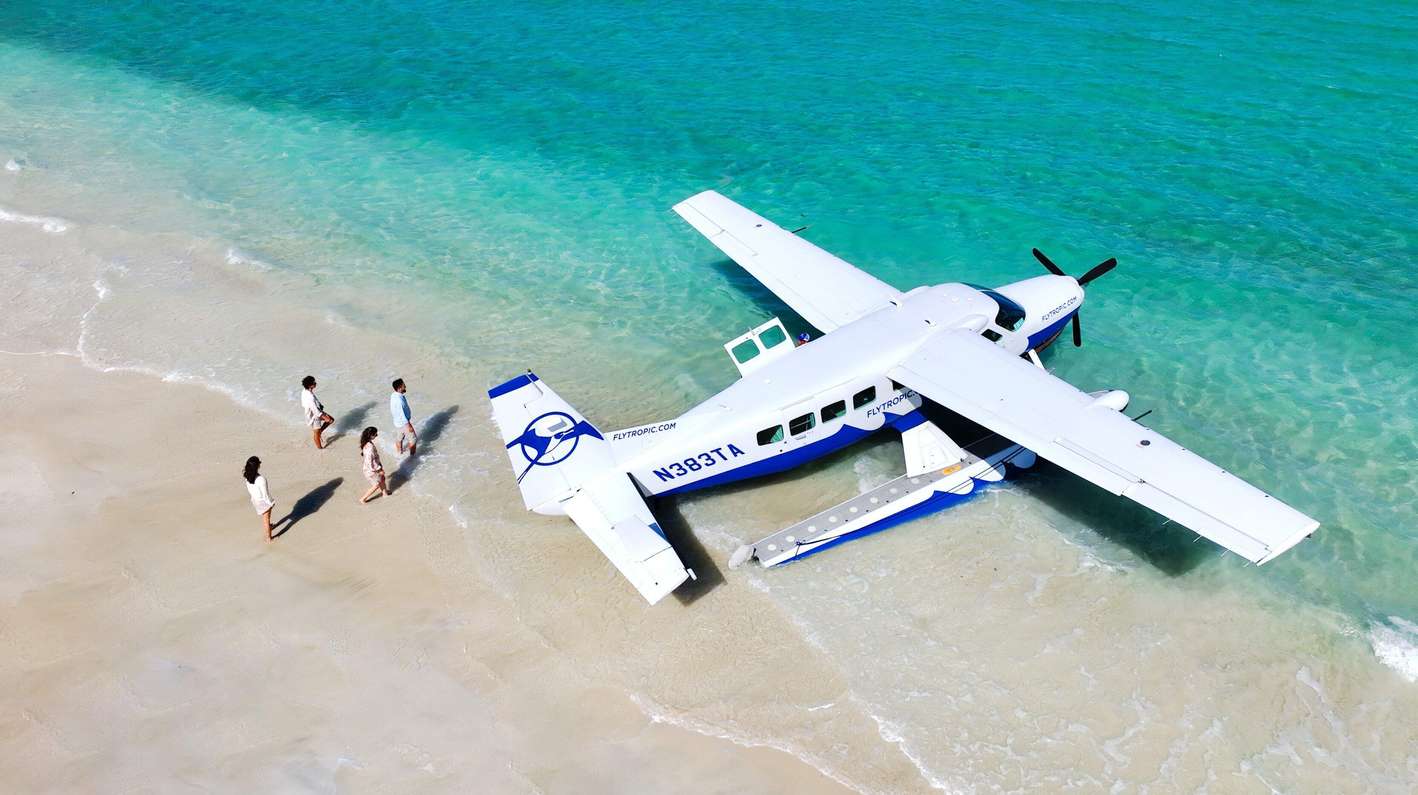
SeaplaneAbout 25 minutes each way with 8 hours on the island, on a far smaller plane
Easy
The ferry row is the one most readers take, and the winter note matters most: pick your sailing month with the sea in mind, and the easiest crossings of the year run from late spring through summer.
Documents for your Sapona shipwreck snorkeling day trip
The paperwork gate comes before any of this, and it has turned travelers away at the dock. A valid passport book or passport card is required, including for children, and birth certificates, photo IDs and naturalization documents are not accepted on the ferry.
Arrive with a state ID and you risk being denied boarding. On top of the passport you need authorization to re-enter the United States, such as an ESTA for Visa Waiver travelers.
Citizens of the USA, EU, UK and Switzerland need no Bahamian visa; other nationalities may, and a US visa or Canadian permit does not waive the requirement. Bahamian visas take 7 to 10 business days, so there is no same-day fix.
Departure taxes and levies are collected by the carrier on commercial sailings. Clearing in at Bimini takes about an hour before you can step off, so part of your island window is spoken for before you start.
In peak summer weekends and spring break, book ferry seats 4 to 6 weeks ahead. ::alert The document that stops the trip Birth certificates and state IDs are not accepted | Carry a valid passport book or passport card, or you can be denied boarding and left unable to fly home in an emergency
With papers ready, that hour is the only slow gate of the day; without them, there is no day at all. Check the passports tonight, before anything else gets booked.
What to pack for Sapona shipwreck snorkeling
Lay the gear out on the dock and the split is simple. Charters hand out masks, snorkels, fins and flotation vests, and bottled water comes along on the 4-stop tour. What they never provide is thermal protection: from December through April, water in the low-to-mid 70s Fahrenheit calls for your own wetsuit or neoprene vest.
The Bahamas bans sunscreens containing oxybenzone, octinoxate and octocrylene, so reef-safe mineral sunscreen goes in the bag before you leave home.
If chop turns your stomach, the open anchorage at the wreck is the real test, with boats rocking in the swell.
Take dimenhydrinate or meclizine 30 to 60 minutes before boarding, since the tablets work far less well once nausea has started. Eat plain toast before you leave and keep your eyes on the horizon instead of a screen.
The packing list splits the same way the boat does: what the charter hands you, and what stays your job.
What to bring for SS Sapona snorkeling
Nov to AprWater and air cool to 21-25°C with breezy boat rides; bring a 2-3 mm wetsuit or neoprene top for warmth while snorkeling.
May to OctWarm tropical waters reach 27-30°C under intense sun; wear a UV-blocking rashguard over swimwear to prevent sunburn.
Prescription or custom maskCharters supply standard adult masks and snorkels only; bring your own if you need corrective lenses or a custom fit.
Reef-safe sunscreenCharters ask guests to use reef-safe sunblock to protect Bimini's delicate coral reefs and marine life at SS Sapona.
Beach towel and cover-upTours provide snorkel equipment but require visitors to bring their own towel and dry clothing for the boat ride.
Waterproof action cameraCharters do not provide cameras; bring an underwater camera or waterproof case to photograph marine life on the wreck.
Pack for the gap between those lists and the boat has nothing left to surprise you with; everything else in the bag is comfort, not survival.
Sapona shipwreck snorkeling when the weather turns
Captains keep the weather calls to themselves. There is no published wind speed at which wreck trips stop; captains cancel or reroute on judgment when heavy chop, swells, squalls or storm threats build, and light rain stops nothing. Winter, November through March, brings most of these calls.
Rough does not always mean cancelled. When anchoring at the Sapona turns unsafe, snorkel boats reroute to sheltered reef areas and the day continues, just without the wreck.
Know the exit routes before you pay. Boat tours cancel free up to 24 hours ahead for a full refund, and one operator's Bimini day trip offers an alternative date or a full refund for weather cancellations.
Weather-cancelled ferry crossings typically bring a full refund or a rebooking without penalty, in one carrier's terms up to a year out. Miss the evening return ferry and the policy hardens: no date change, no refund.
If the day changes
If this happens
What happens then
Seas turn too rough for the wreck
The captain reroutes the trip to sheltered reefs
The ferry crossing is cancelled by weather
You get a full refund or a rebooking, in some cases up to a year ahead
You miss the evening return ferry
No date change and no refund under the operator's policy
You cancel a boat tour
Free cancellation up to 24 hours in advance for a full refund
Read together, the terms are generous on cancellations and strict on lateness. The one rule with no mercy is the missed evening ferry, so build the afternoon backwards from the terminal cutoff.
What to do around Bimini after Sapona shipwreck snorkeling
Back at the docks by early afternoon, the sharks and stingrays already ticked off on the same boat, the rest of the day belongs to land.
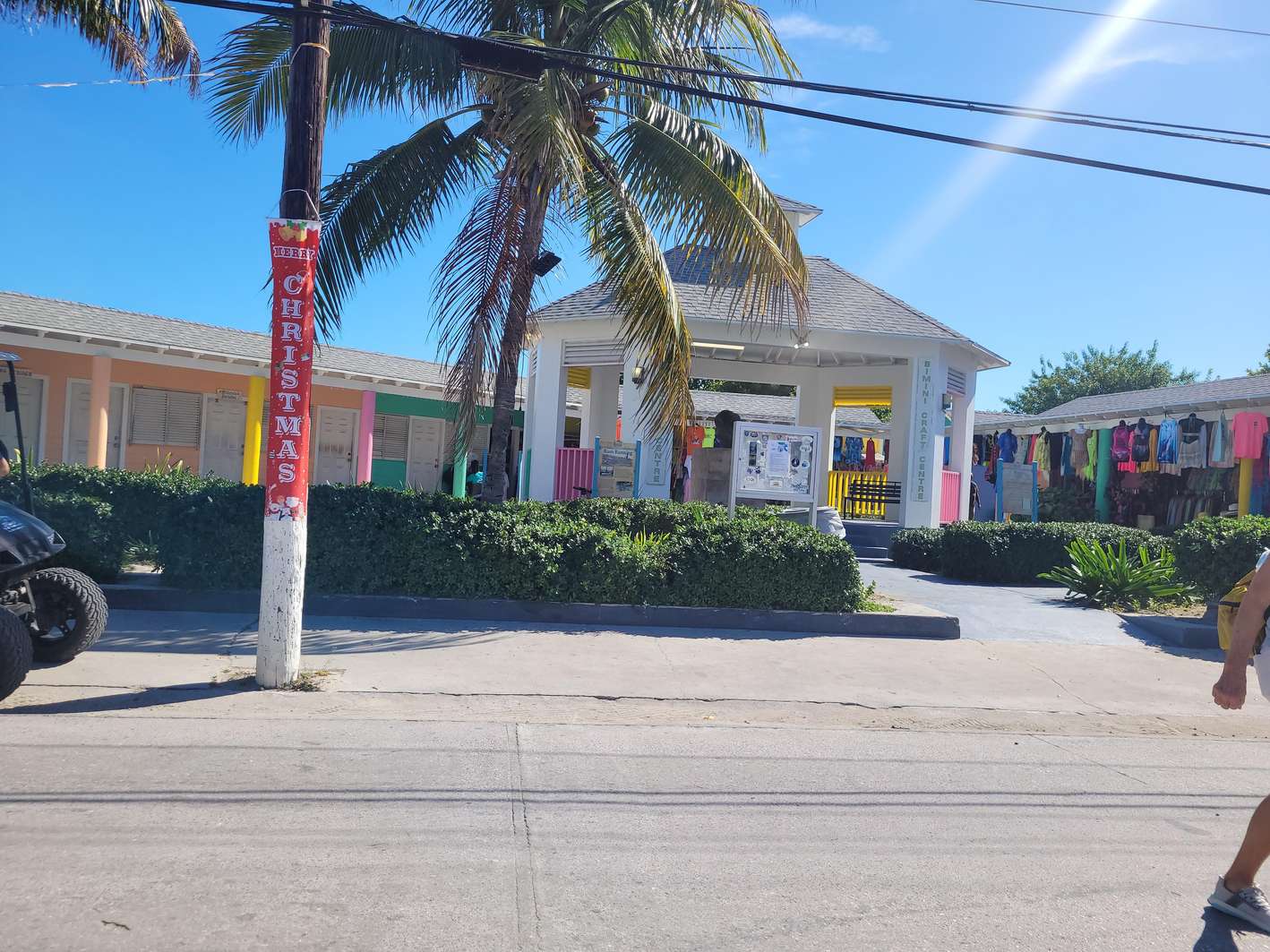
Alice Town sits a few minutes' walk from the marinas along King's Highway, with the Dolphin House Museum, the Bimini Museum and the Craft Centre close together; regulars always mention the Dolphin House and the Hemingway park area as worth the stroll.
Food comes easy. Conch stands such as Big Mike's and Joe's Conch Shack sit near the water, and the Bimini Big Game Club lets day visitors eat and use the pool without a resort package.
Every beach on Bimini is public and free, so Radio Beach costs nothing but a short taxi ride from the pier.
A golf cart, rented early, ties it all together; fleets are small and carts sell out fast when a cruise ship is in port. Keep it to two or three stops, since a short afternoon rewards a short list. The terminal wants you back a full hour before the evening sailing.
More to book nearby
Live dates and prices
A traveler's note
If you can only do one thing in Bimini, this is it. My favorite summer adventure ever. Swimming with sharks was my favorite spot, and feeding the stingrays was amazing ⭐️⭐️⭐️⭐️⭐️
A morning Sapona run is the best single use of a ferry day in Bimini: 20 minutes out, an hour at the hull, sharks and stingrays on the same circuit, and the afternoon still yours.
The wreck needs no scuba gear and no expert swimming, only a passport, an early slot and seasickness tablets taken in time. Book the boat before you leave Florida, then plan the beach around it.
Go ifYou have one open day in South Florida and want a quick international tripYou can swim comfortably in open water, or are happy floating with a vest near the boatYou can travel between May and September, when the sea is flattest and clearest
Skip ifYour whole Florida trip is only three or four days longYou cannot swim, or back, heart or mobility issues put you out of the open-water boatsYou are prone to seasickness and can only travel in the winter months
The questions travelers ask before they book a boat out to the wreck.
2026
Swimming inside a concrete ship built in 1918, rebar and all. Book the morning boat so the water stays glassy.
How deep is the water at the Sapona shipwreck for snorkeling?
The wreck rests in about 15 feet of water, with depths between 15 and 20 feet depending on the tide and where you swim around the hull. Much of the concrete superstructure rises above the surface, so you can see the decks and the fish around them with just a mask and snorkel.
How long does a Sapona shipwreck snorkeling trip take?
A dedicated trip runs about two to two and a half hours. The boat ride takes roughly 20 minutes each way from the North Bimini marinas, which leaves close to an hour anchored at the wreck to swim around and inside the hull. Multi-stop tours run three hours or more across four sites.
What will I see snorkeling the SS Sapona shipwreck in Bimini?
Exposed concrete ribs, rusty rebar and old engine machinery sit below the surface, and bullet holes from World War II target practice still mark the hull. Blackbar soldierfish, snappers, grunts and moray eels shelter in the openings, and lobsters hide in the cracks. Barracudas and rays pass by now and then.
Are there sharks at the Sapona shipwreck while snorkeling?
Nurse sharks sometimes turn up in the wreckage, and you may spot a barracuda or a ray. The Caribbean reef sharks most tours visit gather at Triangle Rocks, a stop the boat makes shortly after the wreck, so the two experiences usually happen in one outing.
Can ferry day-trippers fit Sapona shipwreck snorkeling into one day?
Yes. Day trips give you around five to six hours on the island, and a morning boat excursion typically wraps up by midday or 1 pm. That still leaves the afternoon for the beach club, a golf cart loop or lunch in Alice Town.
Is the Sapona shipwreck snorkeling site good for weak swimmers?
The shallow water and the parts of the wreck above the surface make it easier than an open reef, and crews hand out flotation vests or inflatable snorkel vests to anyone who wants one. Currents around the hull can build with the tide, so less confident swimmers do best on the boat-facing side.
Which stops get combined with the SS Sapona on a snorkeling tour?
Most boats pair the wreck with Stingray Island at Honeymoon Harbour, the sunken plane wreck, a patch reef, or the reef sharks at Shark Arena. A four-stop trip covers all of them in about three hours, so one outing packs the whole morning.
Can you climb on the Sapona shipwreck and jump into the water?
Some visitors do dive from the top deck, but the exterior ladders have deteriorated badly, with loose rebar and soft concrete underfoot. The stable parts of the hull reward you plenty from the water, so leave the climbing to the structure's own pace.
What should I bring for a Sapona shipwreck snorkeling boat trip?
Wear your swimsuit and bring a towel, a sun hat, sunglasses and a rash guard. Pack reef-safe mineral sunscreen, a waterproof phone pouch and water shoes. Boats supply the masks, snorkels, fins and bottled water; bring your own mask and motion sickness pills if you prefer your own gear or know open water bothers you.
When is the best time of day for Sapona shipwreck snorkeling?
Boats that leave between 8:00 and 10:00 in the morning get the calmest seas and the clearest water before the afternoon breeze stirs up surface chop. The morning light also reaches deeper into the wreck's open sections.
Is the open-water anchorage at the Sapona rough on the stomach?
It can be when seas are choppy, since the boat rocks in the open swell while you snorkel. Conditions sit easiest from May through September, when nearly every day brings calm water, and morning departures beat the afternoon wind. Take motion sickness medication 30 to 60 minutes before boarding.
Who can join a snorkeling boat out to the SS Sapona?
The tours on this page accept adults of any age up to 99, with a couple of sensible limits: the four-stop group trip is not suitable for non-swimmers, people with back, heart or mobility problems, and the private boat excludes babies under 1 year and anyone over 95.
If a health condition could stop you boarding, confirm with the operator before you book.
Snorkeling the SS Sapona shipwreck on the 4-stop tour
Bimini's Sapona shipwreck snorkeling adventure covers the wreck, stingrays and reef sharks in three hours, with free cancellation up to 24 hours ahead.