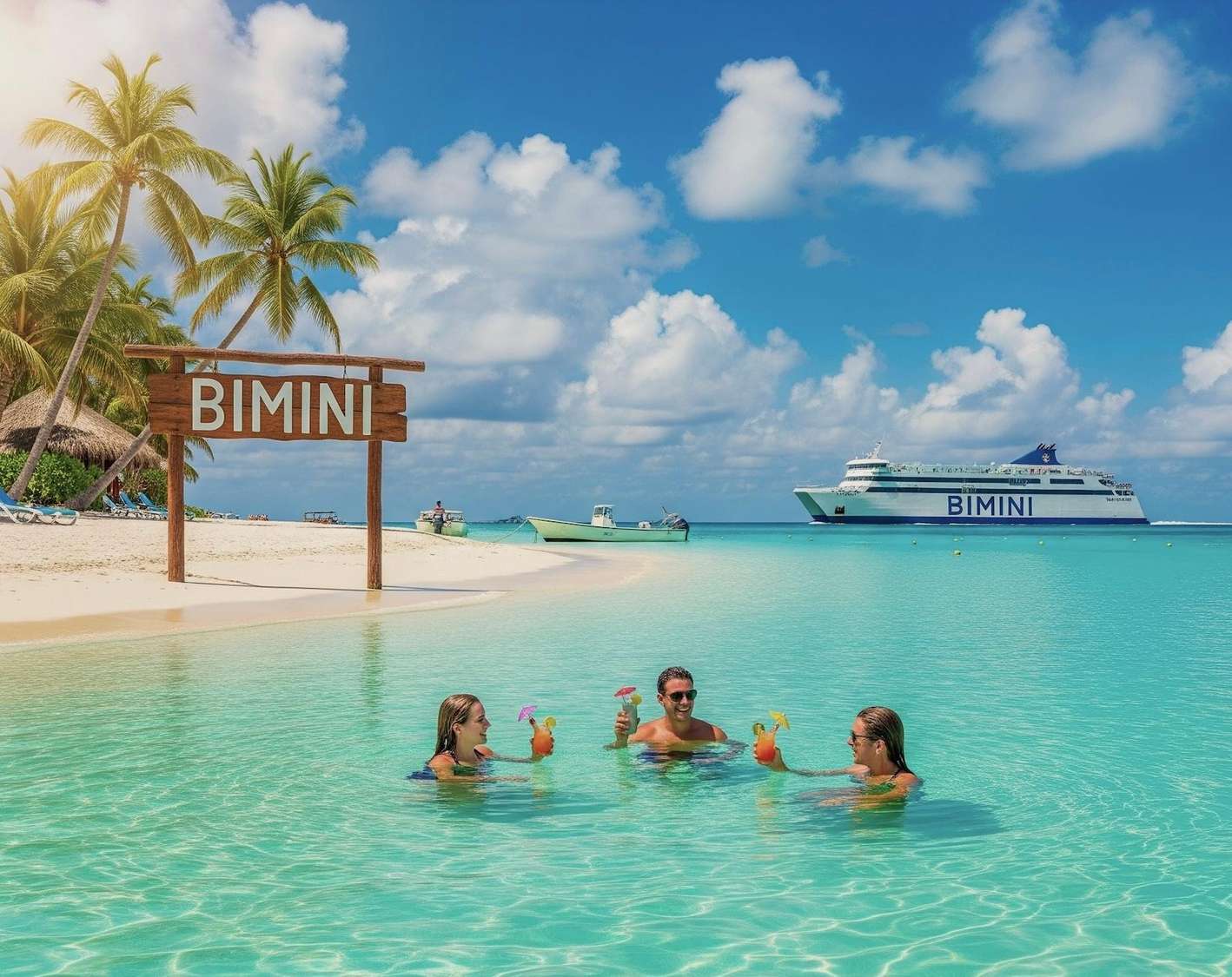
Bimini Bahamas Snorkeling Tours Boat Trips and Multi-Stop Excursions
Swim the Sapona, meet reef sharks and stingrays, all before your ferry home. Captains who know these waters run you through four stops in three hours, with snorkel gear, guide and bottled water included. Book your spot and keep your day on the island open.
"If you only pick one activity in Bimini, make it this one, my favorite summer adventure yet. Swimming with the sharks was the best snorkeling, and feeding the stingrays was amazing. ⭐️⭐️⭐️⭐️⭐️"
2.7★average rating23traveler reviews100%free cancellation6countries travelers came from
Bahamas snorkeling tours - pick your boat trip
Two kinds of boat trip cover the water here: a guided three-hour run that hits four fixed stops, and a private charter you set yourself. The difference is structure. Fixed stops suit first-timers who want the wreck, sharks and stingrays handled for them; a charter suits groups who want the schedule their own.
DocumentsA valid passport book or passport card is required for every passenger, including babies; birth certificates and state IDs are not accepted.
Entry rulesUS, EU, UK and Swiss citizens need no Bahamian visa; other nationalities may need one, and everyone needs US re-entry authorization such as an ESTA.
SwimmingThe four-stop snorkeling adventure is not for non-swimmers, so weak or nervous swimmers should ask the crew for a flotation vest.
TimingBoat tours run from North Bimini marinas, some a 10 to 15 minute taxi or golf cart ride from the ferry pier, so leave room to be back at the terminal one hour before your return ferry.
SeasonMay through September brings the calmest seas and warmest water; winter cold fronts can churn visibility and cancel offshore runs.
GearMasks, snorkels and fins come with the boat tours, but bring your own towel, swimwear, sunscreen and anti-fog drops.
SunscreenOxybenzone, octinoxate and octocrylene sunscreens are banned in the Bahamas, so pack reef-safe mineral sunscreen.
SeasicknessIf the open-water run to the wreck bothers you, take medication 30 to 60 minutes before boarding, not after you feel queasy.
Motion on the wreckCurrents around the Sapona shift with the tide, so less confident swimmers should stay on the boat side of the hull.
documentA valid passport or passport card is required for every passenger, including children, and birth certificates or state IDs are not accepted.
Check that each traveler's passport is valid for at least six more months before you book, and confirm your US re-entry authorization such as an ESTA. Non-US citizens should verify whether they need a Bahamian entry visa, which takes 7 to 10 business days to process.
Bahamas snorkeling tour options for your Bimini day
Most popular
3 hours·English
4.5(22)
Bimini: 4-Stop Snorkeling Adventure
The four-stop group tour hits the Sapona, a sunken plane wreck, Stingray Island and Shark Arena in 3 hours with gear included.
The 4-stop snorkeling adventure packs four different sites into three hours on the water, with a guide, snorkel gear and bottled water all included. You bring a swimsuit, a towel and sunscreen; the crew handles the rest.
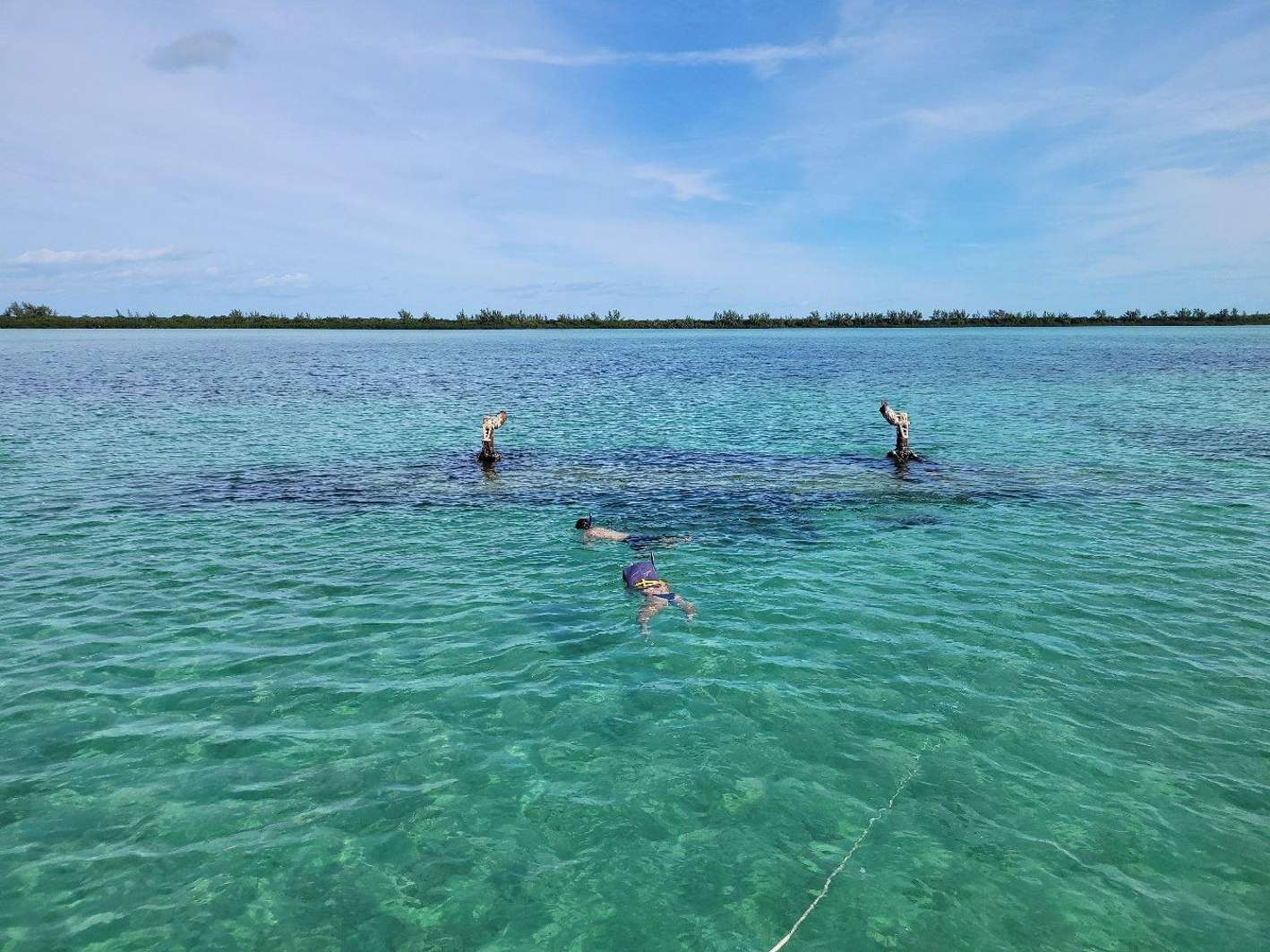
The run between stops is short. The SS Sapona lies about 3 miles south of the islands and the outer reefs 1 to 2 miles offshore, so none of these sites can be reached from shore.
A boat gets you to each one in 15 to 20 minutes, which is what makes the itinerary work: a sunken plane, a concrete shipwreck, a shallow bay full of stingrays and a reef shark spot, each with its own character, in a single morning.
Below is how the tour unfolds, stop by stop.
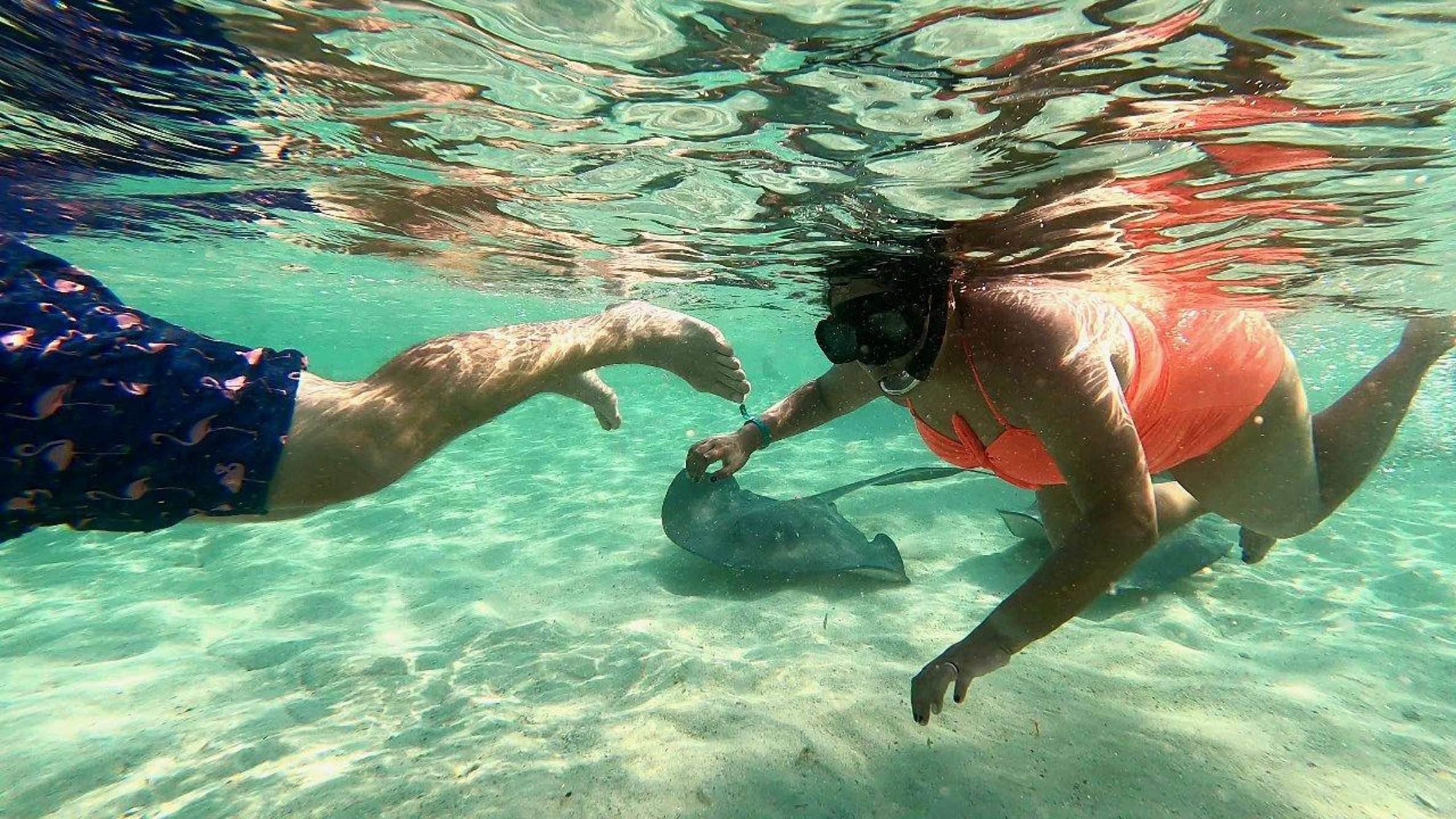
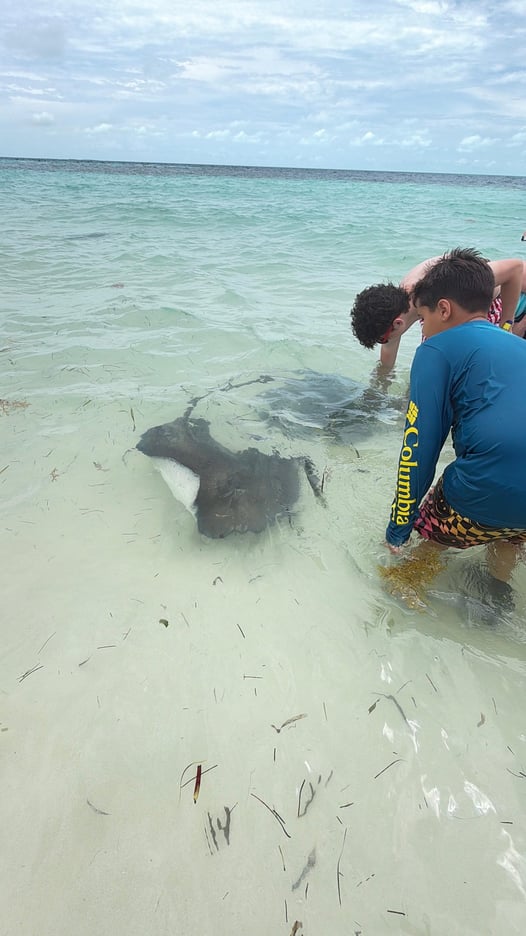
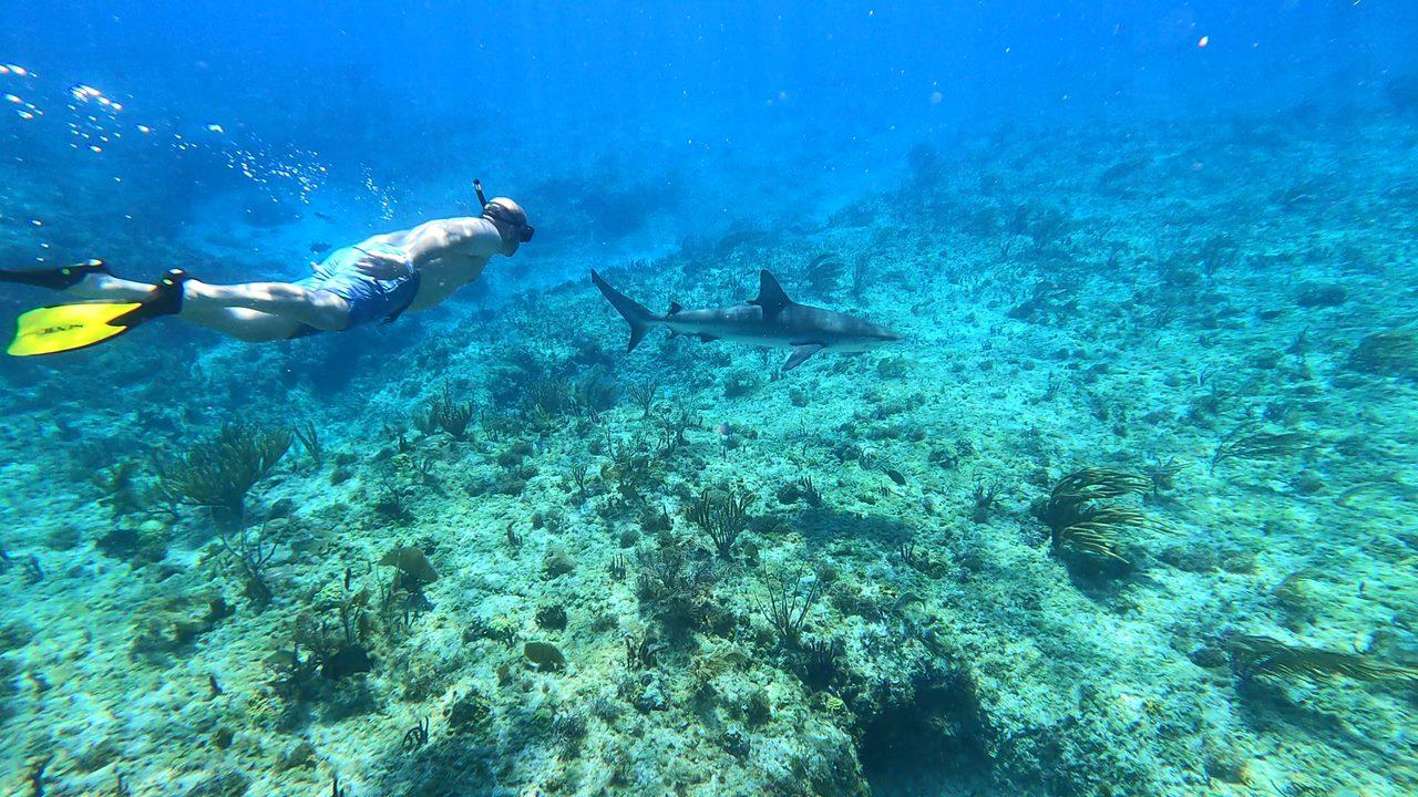
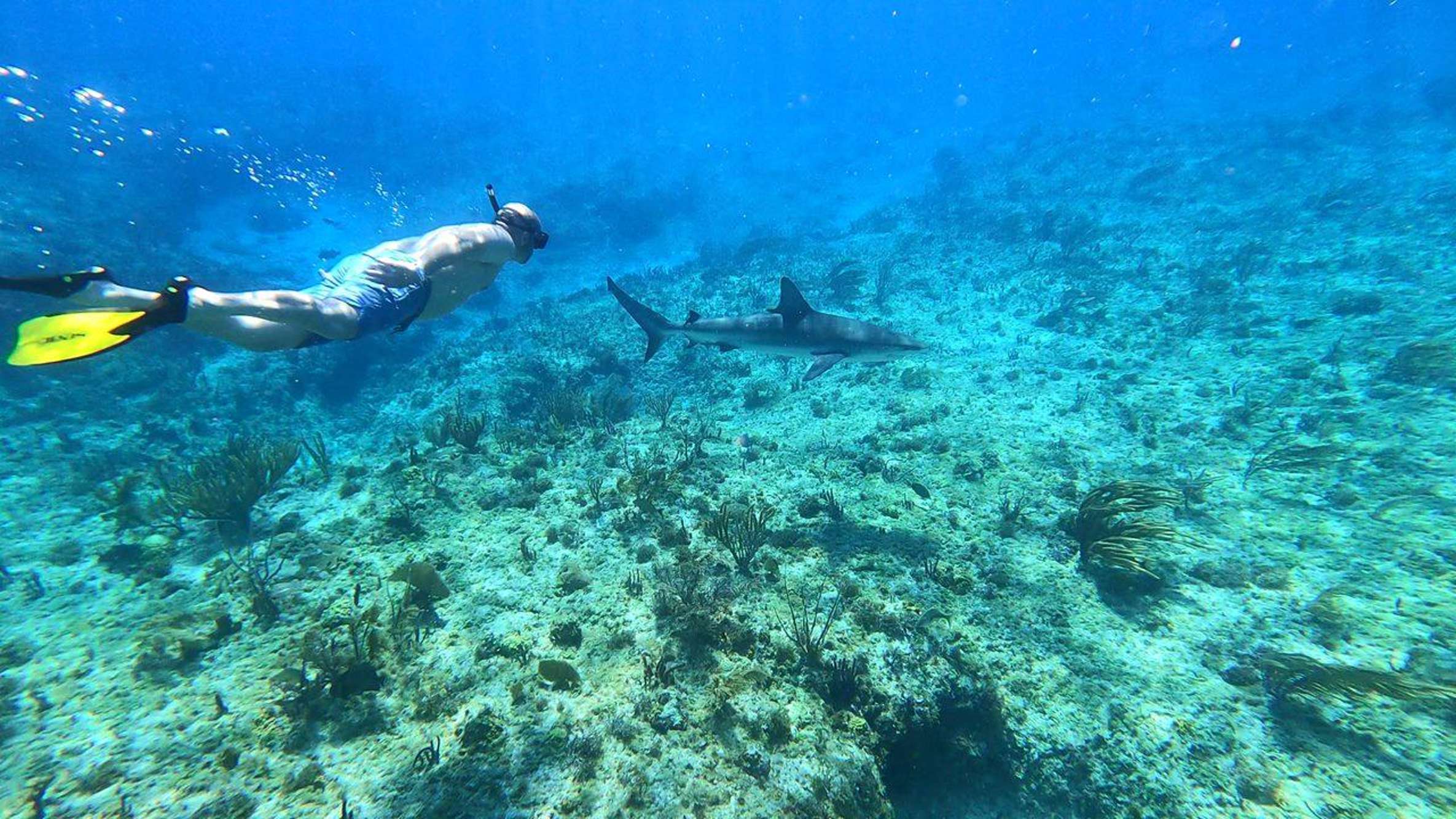
1Gear up and set off· about 15 minPick-up, a guide, masks, snorkels, fins and bottled water are all part of the trip. You swim in with what you wear.2The sunken plane wreck· about 40 minThe first stop is a sunken plane, where clear water draws fish around the aircraft's remains and the shallow depth keeps everything in view.3The SS Sapona· about 40 minA century-old concrete ship that served as a Prohibition rum warehouse before a 1926 hurricane wrecked it. It sits in 15 feet of water.4Stingray Island· about 40 minSouthern stingrays have gathered here for over twenty years and often arrive within minutes of the anchor dropping. Shuffle your feet in the sand.5Shark Arena finale· about 45 minThe last stop is Shark Arena, where Caribbean reef sharks circle the rocky formations that keep them resident year-round. Eye contact, no splashing.
Included
Pick-up and drop-offGuideSnorkel gearBottled water
Not included
TowelsGratuity
What travelers said about these Bahamas snorkeling tours
Most reviewers call swimming with the reef sharks and feeding the stingrays the best part of the trip.
Best surprise
Several families found the guides shared so much history at each stop that the boat ride felt like a tour too.
Most common wish
Many reviewers wished the trip ran longer, saying they wanted more unhurried time at every stop.
How to book your Bimini Bahamas snorkeling tour
01
Pick your date
Choose a day when you are already in Bimini, ideally the same day as your ferry crossing. Snorkeling trips in Bimini run from the island, so the tour has to fit around your ferry arrival and evening return.
Pro tipMorning slots between 8 am and 10 am give the calmest seas and clearest water before afternoon winds stir up surface chop
ImportantEvery passenger needs a valid passport or passport card and US re-entry authorization such as an ESTA, and birth certificates are not accepted
02
Choose your option
Decide between the shared 4-stop snorkeling adventure, a 3-hour guided trip with gear and bottled water included, and the private boat adventure, which lets you set your own itinerary and comes with a photographer.
Pro tipThe 4-stop tour covers the SS Sapona, a sunken plane wreck, Stingray Island and Shark Arena in one morning, which suits a ferry day trip
Common mistakeFirst-timers book the private charter thinking it is per person, but the price covers the whole boat, so it works best for a group
03
Book and get your voucher
Complete the booking online and the confirmation with your voucher arrives by email. Both tours let you cancel up to 24 hours in advance for a full refund, so you can lock in a spot early and adjust later.
Common mistakeSome travelers wait until they land to book, then find the boat full on days when a cruise ship is in port
Pro tipBooking 4 to 6 weeks ahead matters in peak season, when ferry seats and boat space both go fast
04
Find the meeting point
The 4-stop tour meets in the seating area behind the check-in desk at the piano lounge in the Resorts World hotel. Independent charters usually depart from marinas in Alice Town, about 10 to 15 minutes by taxi or golf cart.
RecommendedThe free resort tram runs only within Resorts World, so budget cash for a taxi to Alice Town marinas
Pro tipCarry US cash for the taxi, since card acceptance on the island is inconsistent
05
On the day
Go for a morning departure and pack swimwear, a towel and sunscreen. The boat provides masks, snorkels and fins, so you only need your own anti-fog solution if rental gear fogs up.
RecommendedTake motion sickness tablets 30 to 60 minutes before boarding if you are prone, as the run across the banks to the wreck can be choppy
ImportantBe back at the ferry terminal at least 1 hour before your return sailing, since embarkation closes then and late check-in is not permitted
What to know before you book a Bahamas snorkeling trip
Can stop the dayGood to knowGood news
01
ChoosingWhat it is, who it suits, when to go
5
Who can joinCan stop the day
The 4-stop adventure is not suitable for non-swimmers, and it excludes people with back problems, mobility impairments, or heart conditions. The private boat adventure excludes babies under 1 and anyone over 95.
Food and drink
The 4-stop tour includes bottled water but no food. The private boat comes with light refreshments, and lunch plus drinks can be added. Some half-day charters pour a cup of rum punch for the ride home.
Group size
The 4-stop adventure is a shared boat, so you swim with other guests and follow a fixed route. The private charter is yours alone, with a customized itinerary, a photographer, fishing supplies, and your chosen departure time.
Timing
Morning departures between 8:00 and 10 am get the calmest seas and the clearest water before afternoon winds stir up surface chop. From May through September, calm days run near 100 percent.
Ferry window
Embarkation for the return ferry closes an hour before departure, and late check-in is not permitted. A morning snorkel trip finishes by midday, leaving you a comfortable buffer before the evening sailing.
02
BookingHow far ahead, and what happens if plans change
1
Cancellation
Both tours let you cancel up to 24 hours in advance for a full refund. Rough seas rarely cancel whole days; captains simply reroute to sheltered reefs when the wreck anchorage turns choppy.
03
Before you goPapers, health, what to bring
2
Gear
Both tours include snorkel gear, so you do not need to pack fins and a mask. Bring your own mask if fit matters to you, and pack anti-fog solution, since the coating on rental gear is usually worn out.
What to bring
Bring swimwear, a towel, and sunscreen. Bahamian law bans sunscreens with oxybenzone, octinoxate, or octocrylene, so pack a reef-safe formula. Leave shiny rings and watches ashore; their glint attracts barracudas.
04
On the dayWhere to be, when, and how you get there
1
Meeting point
The 4-stop snorkeling adventure meets behind the check-in desk of the Resorts World piano lounge, a short walk from the ferry dock. Independent operators also run boats from Alice Town marinas, about a 10 to 15 minute taxi or golf cart ride from the pier.
05
During the tourWhat is expected of you
3
Shark etiquette
Never touch, chase, or corner a shark; the Bahamas protects them by law. Face an approaching one, keep your arms close, and hold the safety line if you want it. Skip flash photos, which startle the sharks at Triangle Rocks.
Stingrays
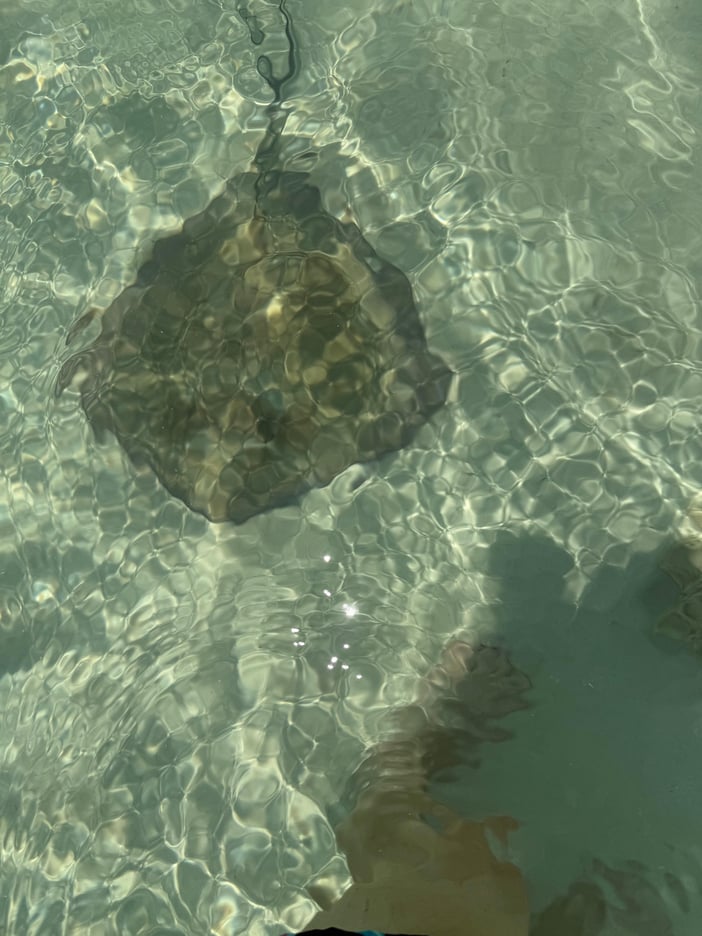
At Honeymoon Harbour, shuffle your feet as you walk, since rays bury themselves in the sand. Their barbs cannot be thrown or lunged; accidents come from stepping on a hidden ray, so watch the bottom and never grab one.
Tipping
Tips for the captain and deckhand are not included in either tour. In Bimini it is customary to tip boat crew 15 to 20 percent, and US dollars work everywhere.
The Bahamas snorkeling guide to a Bimini day trip
Bimini's best underwater sites, the Sapona wreck and the shark rocks, sit 3 miles offshore. Getting there and back in one day takes planning, and this guide settles every step of it.
If you only remember three things
1
Count on 15 to 17 hours door to door for 4 to 6 hours on the island.
2
Book a morning boat slot; afternoon wind chops the water and drops the visibility.
3
Be back at the ferry terminal a full hour before your return sailing, no exceptions.
Is a Bahamas snorkeling day trip to Bimini worth it?
A ferry day trip turns into a 15- to 17-hour journey for around 4 to 6 hours on the island. The bigger number counts every leg of the day, from the early drive to Port Everglades through both two-hour crossings and customs on each side.
The outbound journey alone runs 4 to 5 hours; add the same again for the return and the totals line up.
For the right traveler the trade holds up. You have an open day in Florida, you want a quick international getaway, and an early alarm does not scare you. Bimini is also the closest Bahamas island to Miami, so the crossing stays short.
Among the Bahamas snorkeling tours you can join in a day, the morning boat trips work well: a dedicated two-hour shipwreck excursion returns you by midday, with hours left for the beach before the evening ferry.
Who should slow down instead? If your Florida trip is only three or four days, squeezing an international crossing in leaves no breathing room. If you want to snorkel and also take several excursions at a relaxed pace, two or three nights suits Bimini better. The island is compact, so a short stay covers it.
A traveler's note
We thoroughly enjoyed our snorkel trip with 700 Adventures. Nice, fast boat, kind and accommodating crew, and we loved Janae's knowledge along the way. A perfect day in Bimini.
If the math still reads as a marathon, remember the alternative: a seaplane puts you on the island for around 8 hours instead of 4 to 6, at a much steeper price. The ferry remains the practical choice for a same-day snorkeling trip.
From first splash to last reef - how a Bahamas snorkeling day in Bimini flows
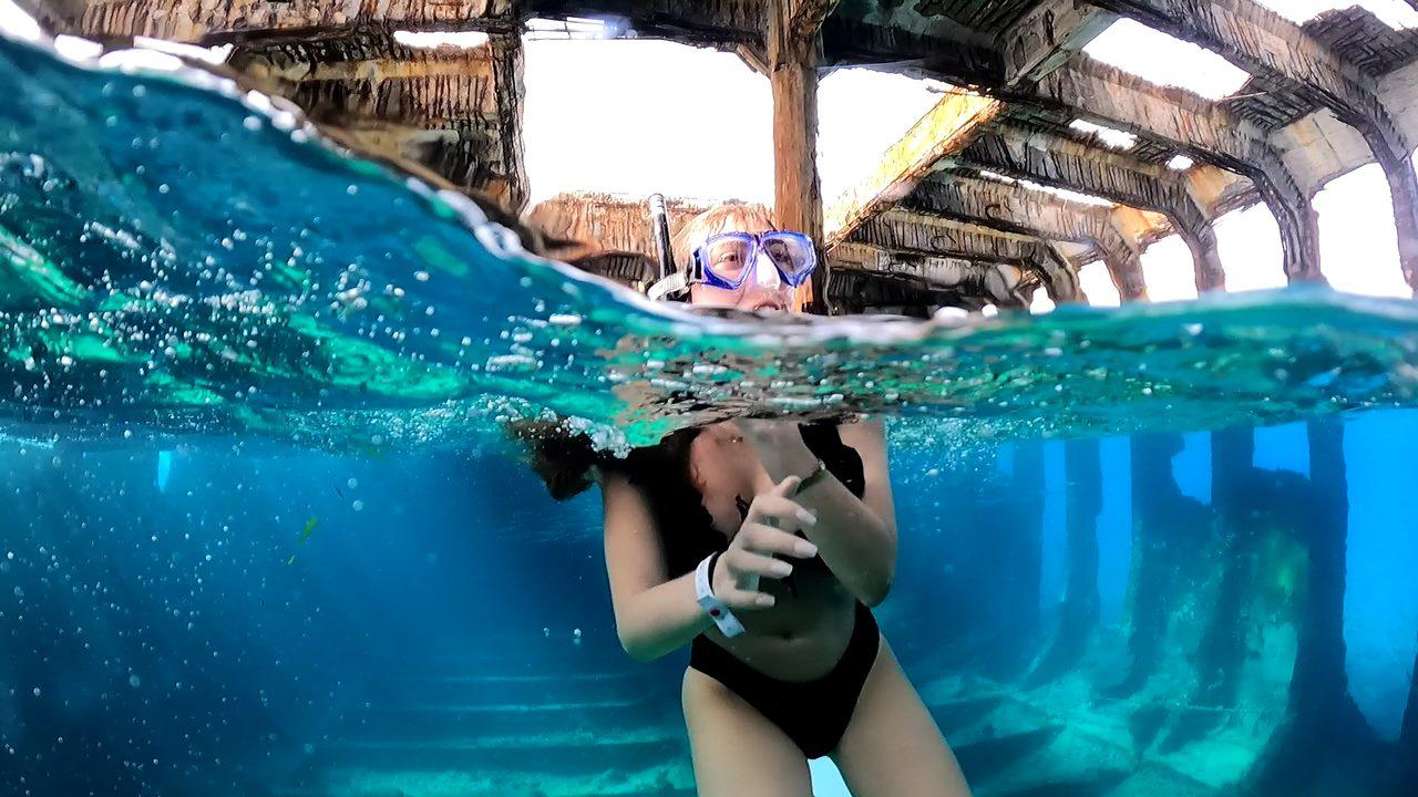
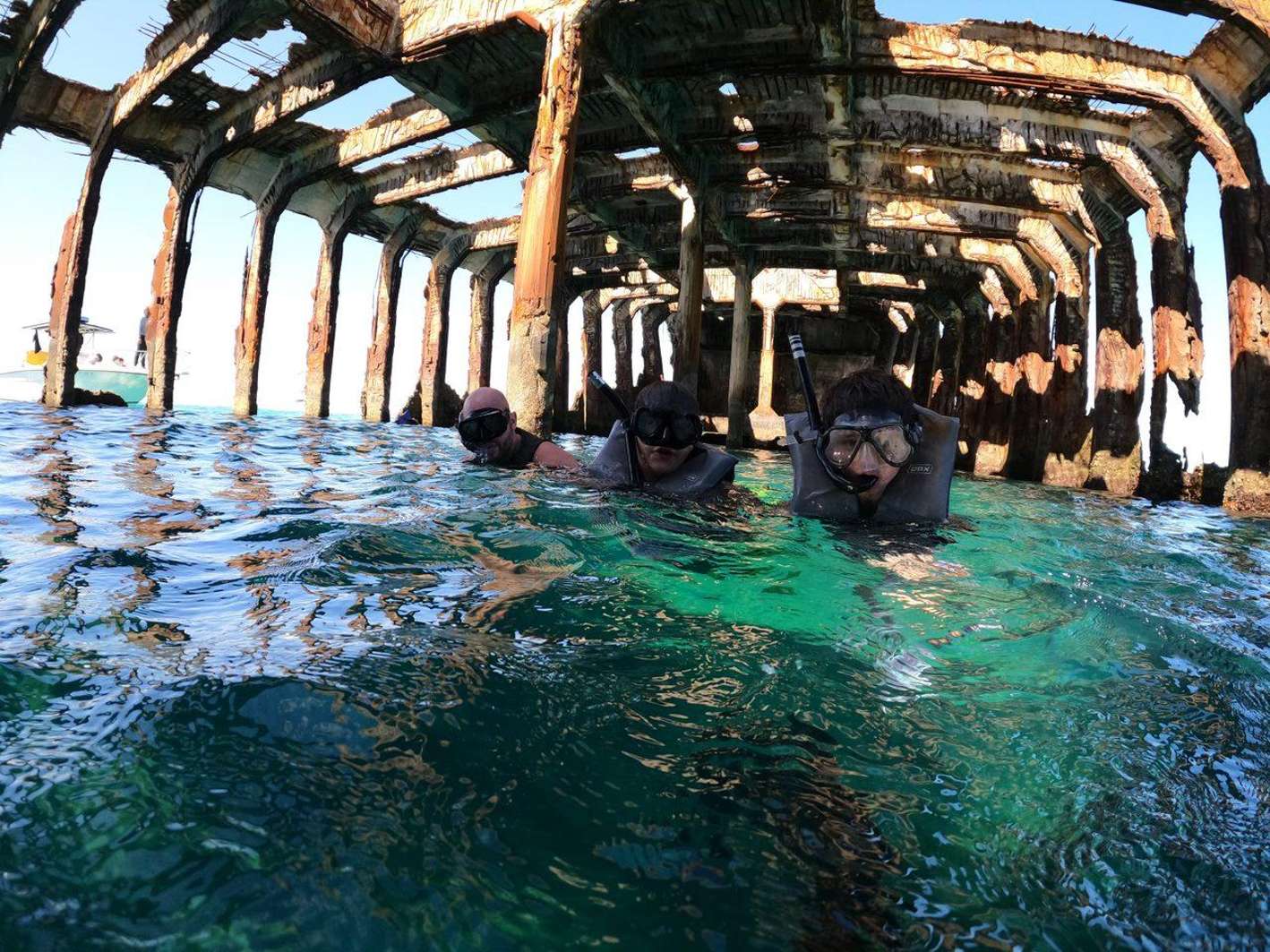
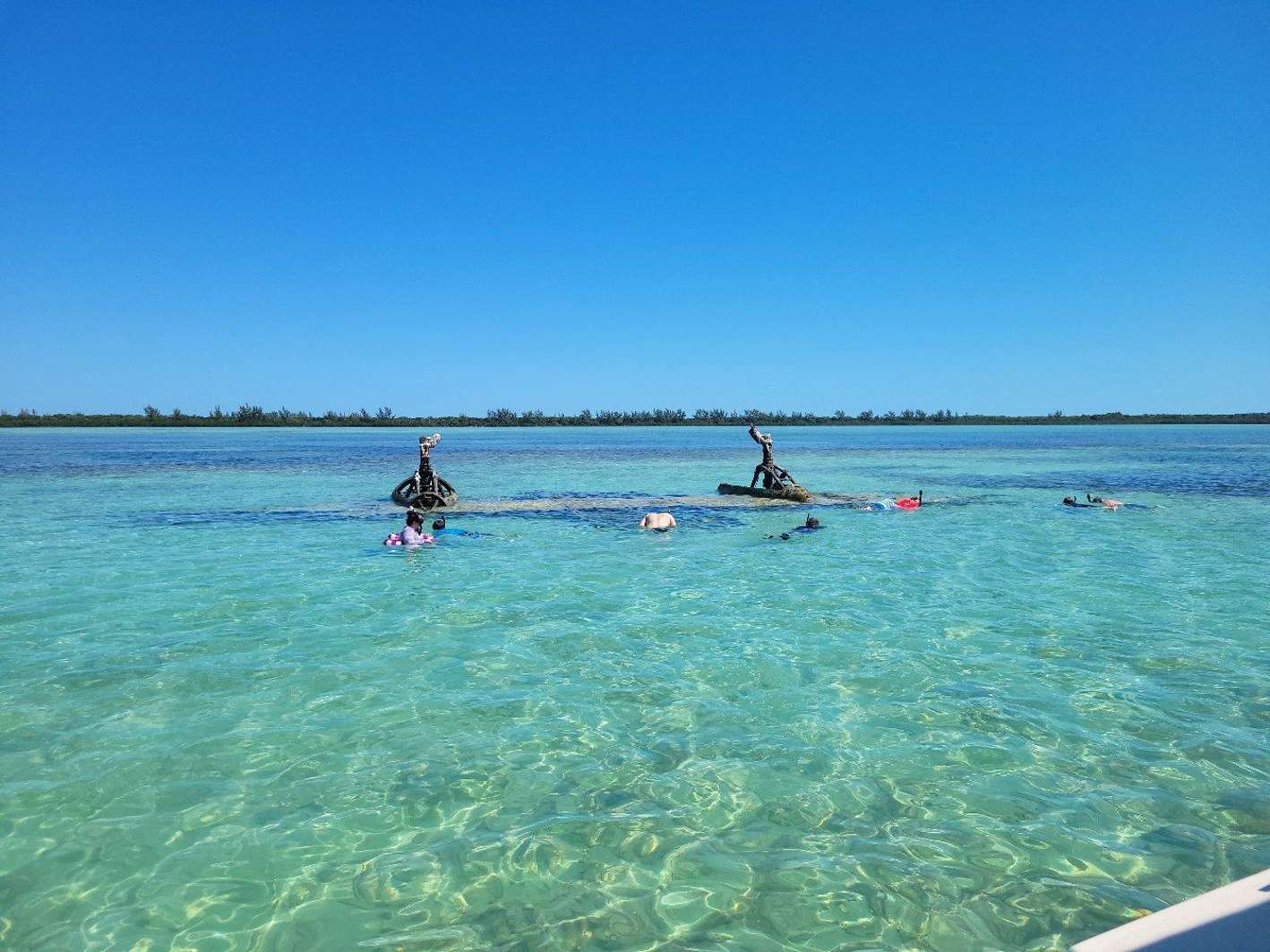
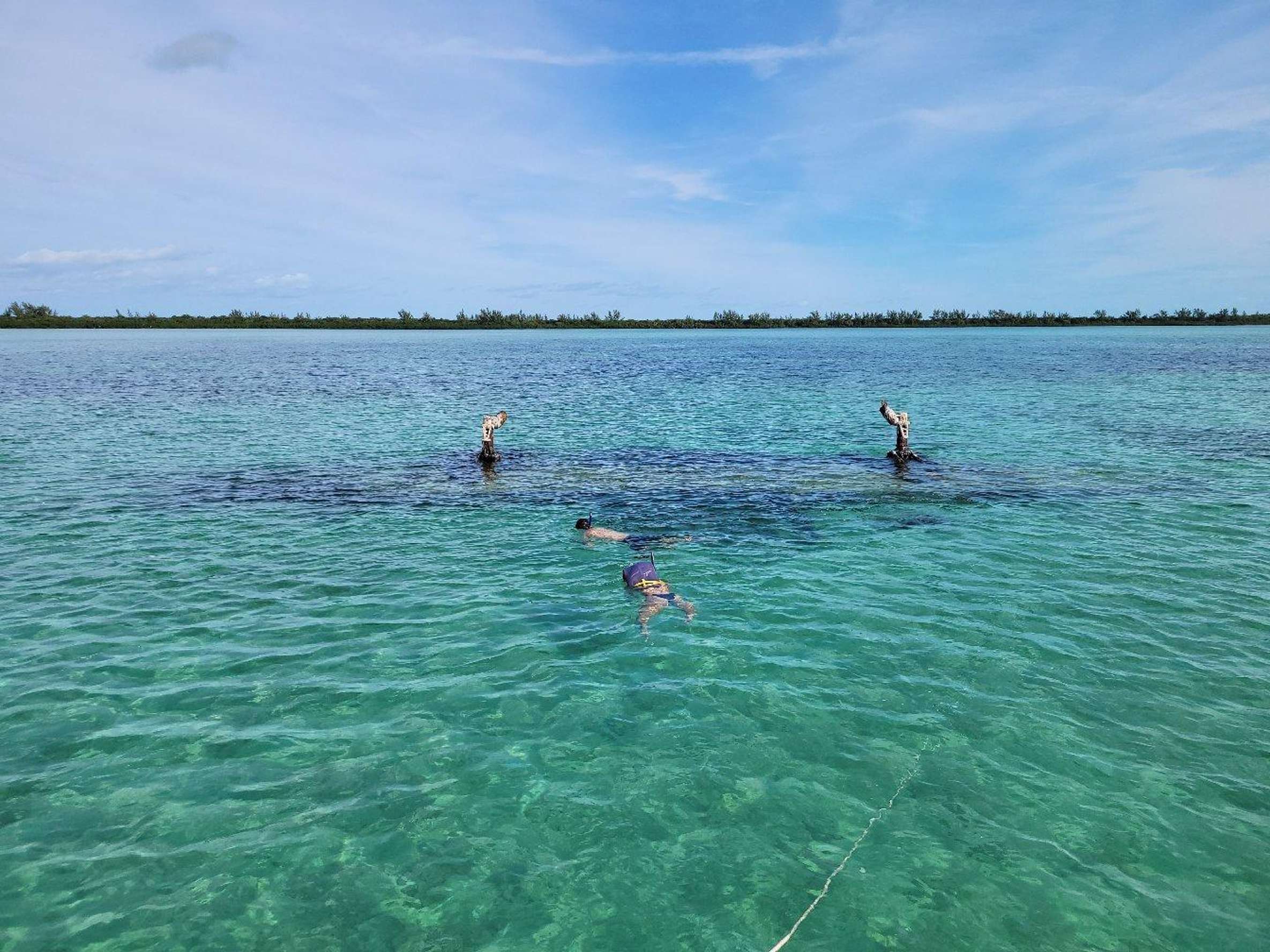
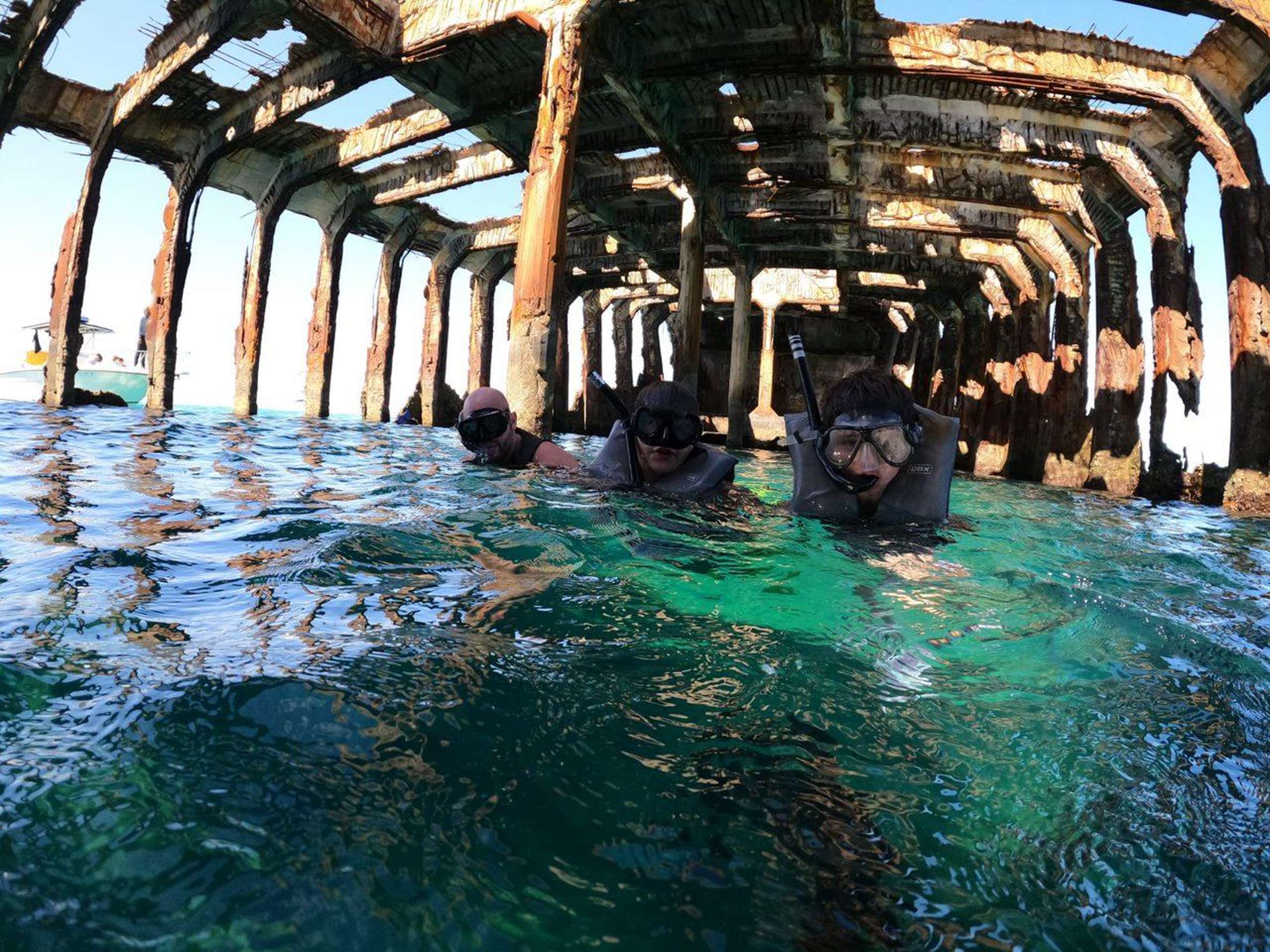
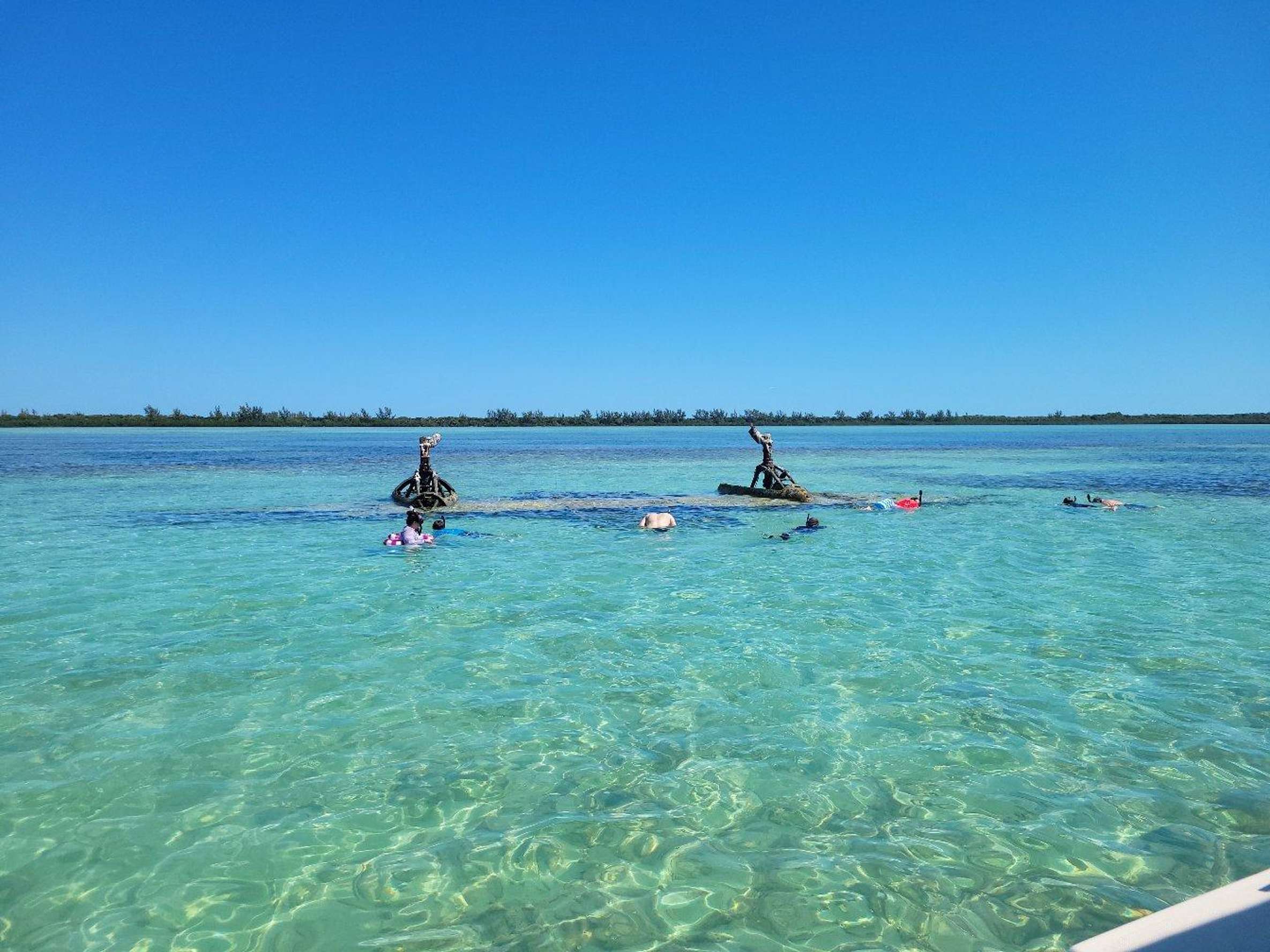
The boat leaves the North Bimini marinas and runs about 20 minutes across shallow water to the SS Sapona, a concrete ship built over a century ago when steel ran short in World War I. It later served as a Prohibition-era liquor warehouse, then a 1926 hurricane drove it aground.
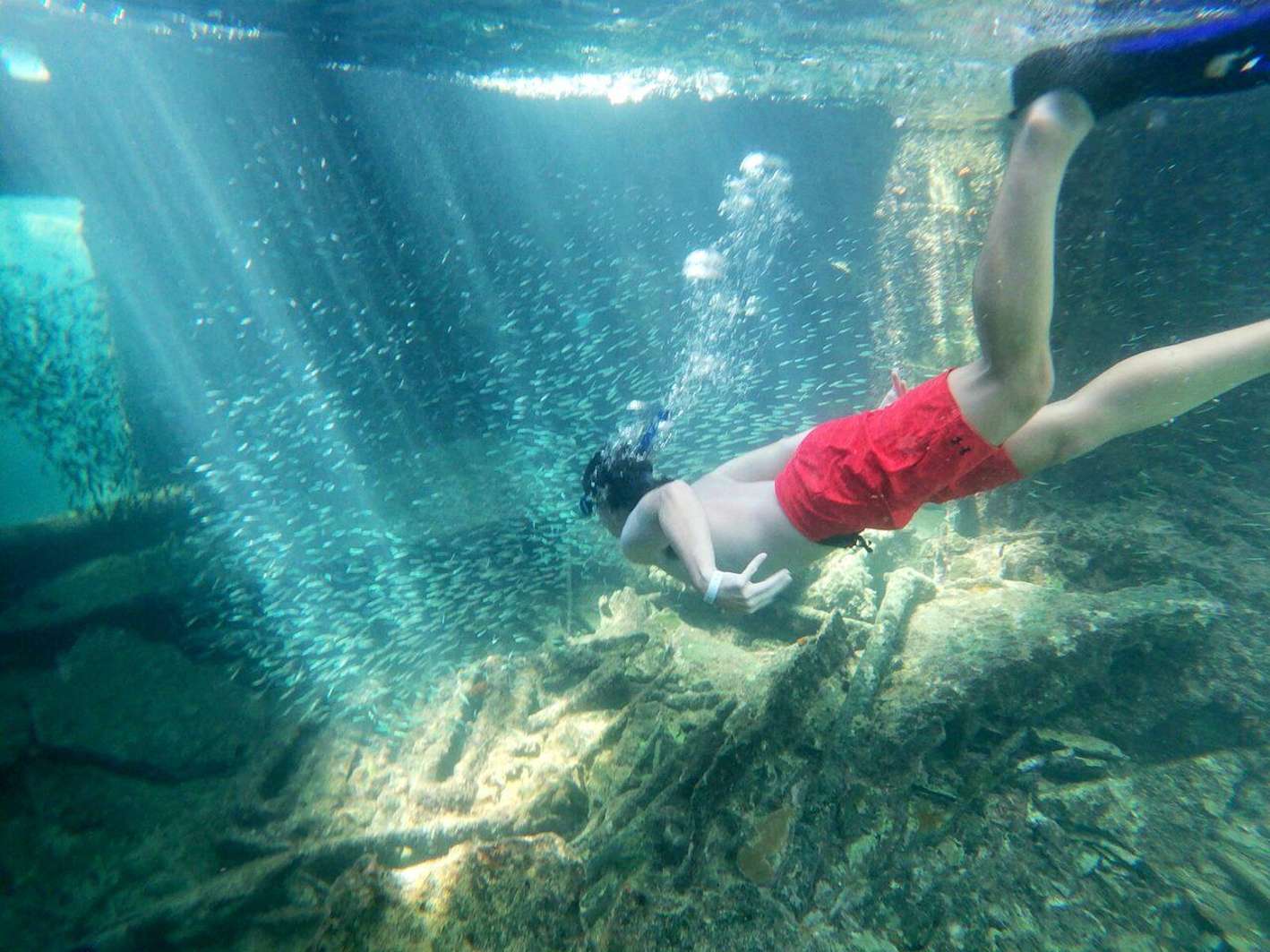
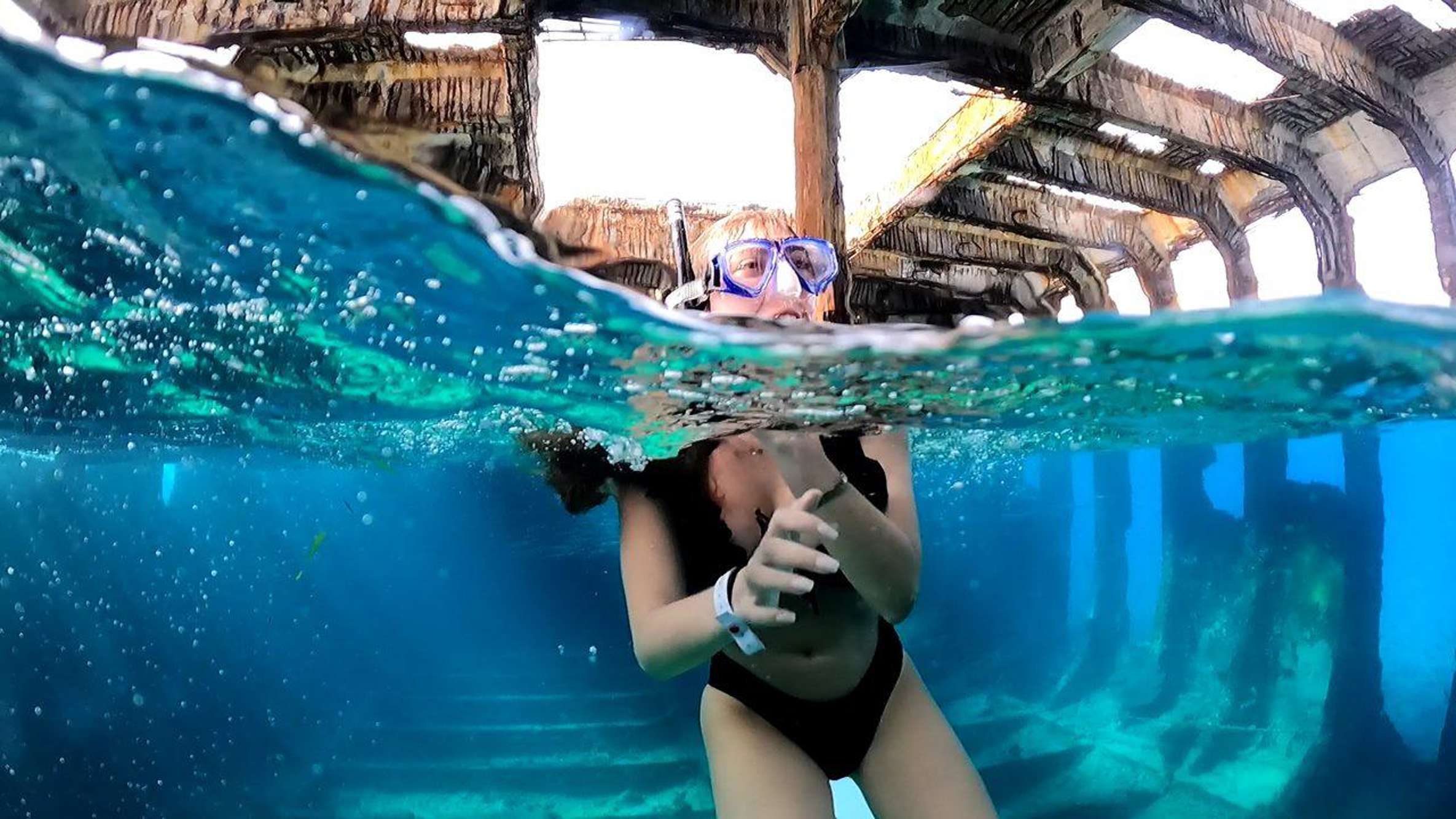
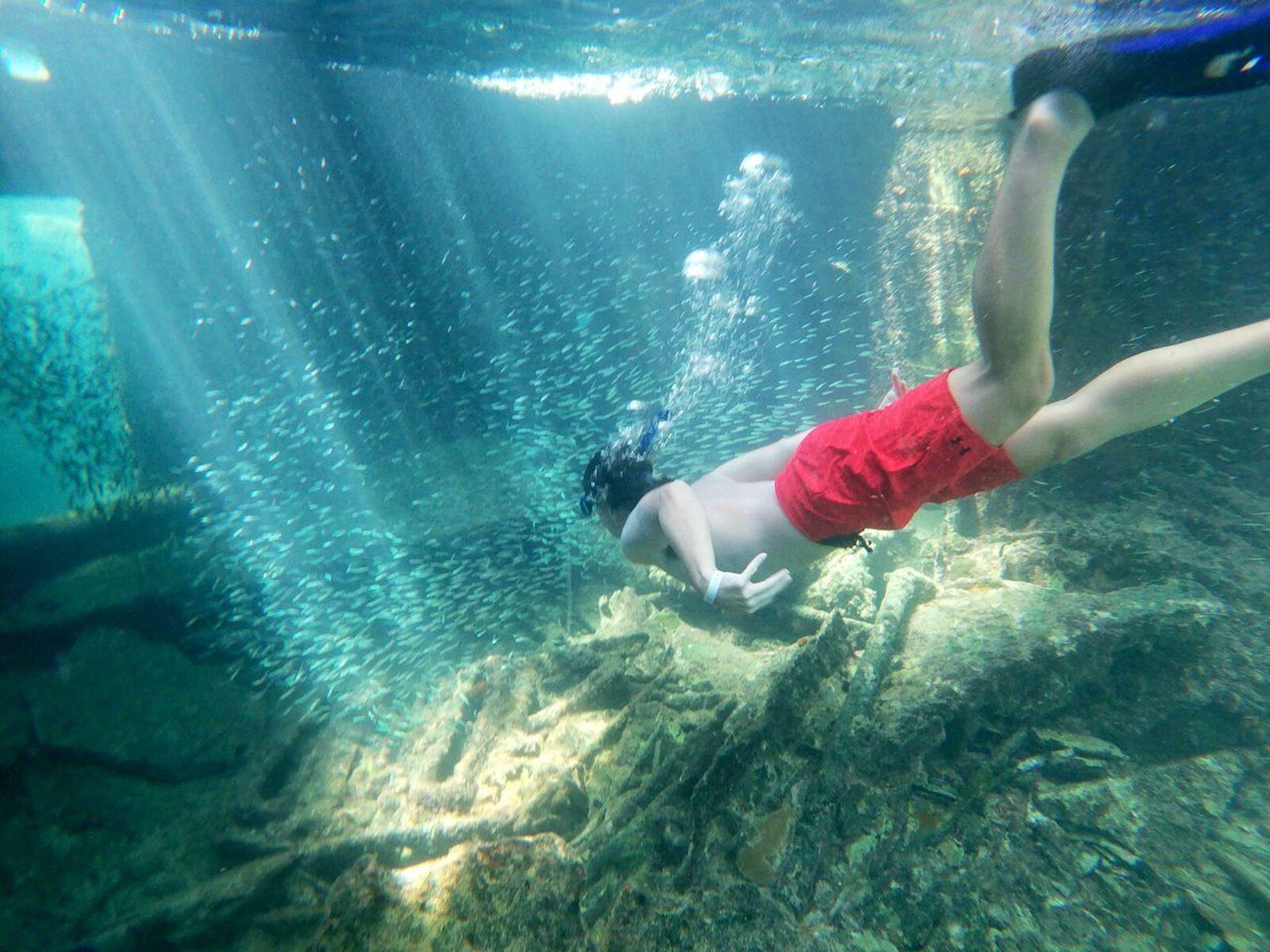
Today it sits in about 15 feet of water, its concrete ribs rising close enough to the surface to swim along. Nurse sharks and the occasional barracuda cruise the wreckage.
A dedicated wreck excursion lasts 2 to 2.5 hours, with roughly an hour anchored at the hull. On a multi-stop trip the time divides across the sites instead. Fair warning from people who have done it: the inside of the hull is more history than reef. The coral and fish concentrate outside, along the structure.
From the wreck, most boats push on to Triangle Rocks, where triangular formations rising from the sand hold a resident population of reef sharks all year.
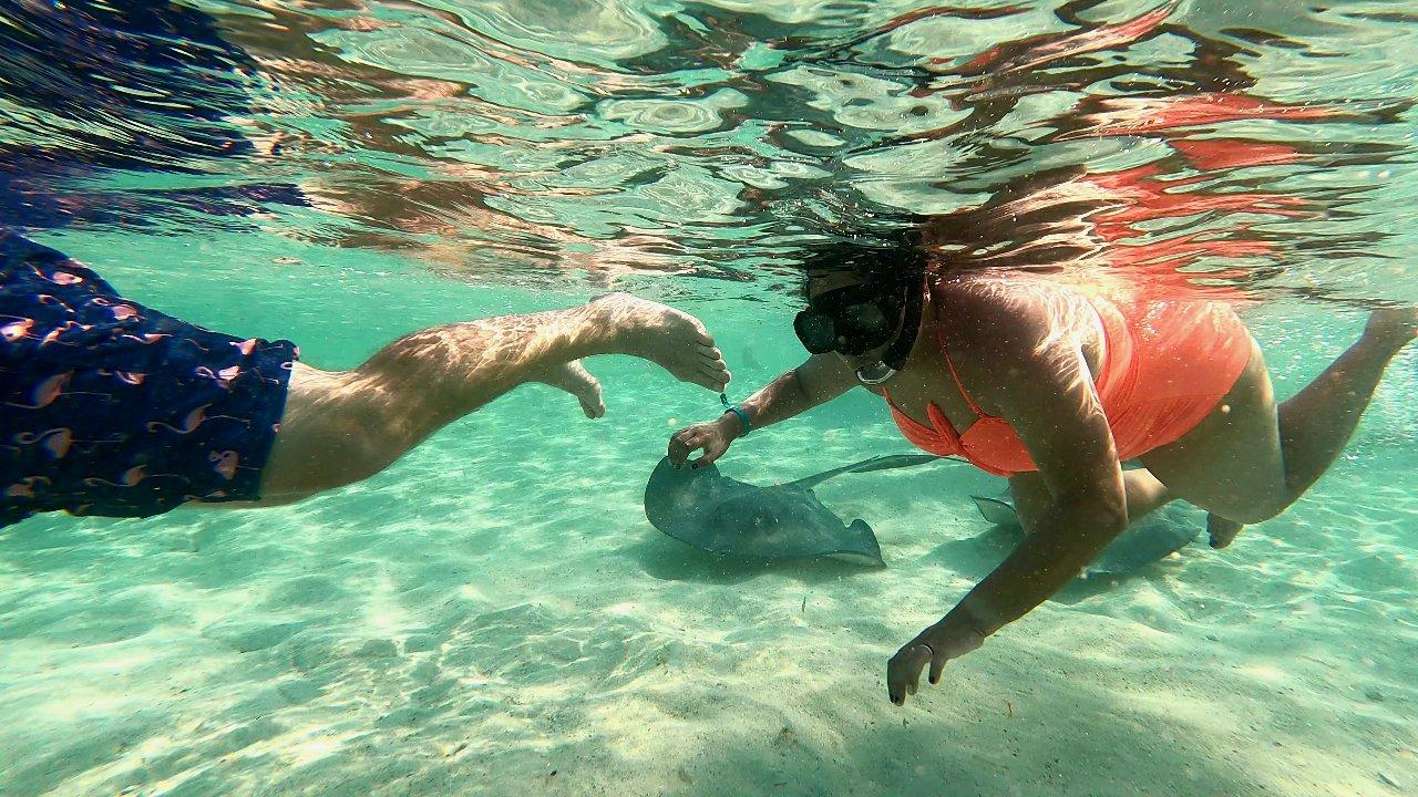
Then comes Honeymoon Harbour at Gun Cay, where stingrays have gathered for more than twenty years because fishermen once cleaned their catch there. Rays now connect arriving boats with food and appear within minutes of the anchor dropping.
Offshore distances and boat run times
3 milesoffshore distance to shipwreck
15-20 minboat run to the wreck
None of these sites are reachable from shore. The outer reefs sit a mile or two out along the drop-off, so a guided boat is the only way to reach them. Bimini Road, the limestone formation that resembles a paved road and draws Atlantis hunters, rounds out the list of spots the boats cover.
Tour for this
Bimini: Island Tour with Lunch1.0★ (1) · 2.5 hours · Free cancellation
Bahamas snorkeling tours - group trip or private charter
Two formats cover the water, and the choice shapes your whole morning. The shared option is the Bimini: 4-Stop Snorkeling Adventure, a 3-hour guided run that packs four different sites into one outing, from the plane wreck to Shark Arena.
Snorkel gear and bottled water come included, pickup and drop-off are covered, and the pace is fast by design.
The private route trades the fixed itinerary for control. A charter means your own captain, a photographer along for the swim, fishing supplies if you want them, and light refreshments on board, with lunch and drinks available as add-ons. You pick the departure time and how long each stop runs.
4-stop group adventure
Private boat charter
Stops
Four fixed sites, one route
Customized itinerary you set
Duration
3 hours
3 hours
Gear
Snorkel gear and bottled water
Snorkel gear, fishing supplies, refreshments
Who else
Shared with other guests
Your group only
Extras
Guide included
Photographer included, lunch as add-on
4-stop group adventure
Stops
Four fixed sites, one route
Duration
3 hours
Gear
Snorkel gear and bottled water
Who else
Shared with other guests
Extras
Guide included
Private boat charter
Stops
Customized itinerary you set
Duration
3 hours
Gear
Snorkel gear, fishing supplies, refreshments
Who else
Your group only
Extras
Photographer included, lunch as add-on
One rule decides for some readers: the 4-stop adventure is not suitable for non-swimmers, or for people with back problems, mobility impairments or heart conditions. Beginners comfortable in open water do join. Age limits vary by operator, so if you travel with infants or older relatives, confirm before you book.
Picture the group: a strong swimmer, a nervous one, a couple of small kids and one person with a camera wishlist. A fixed four-stop itinerary stretches to fit all of that, and sometimes it snaps. This is where the private charter earns its price.
Bimini: Private Boat Adventure with Photographer gives your group the boat to itself for 3 hours, sets its own departure time, and shapes each stop around who is aboard.
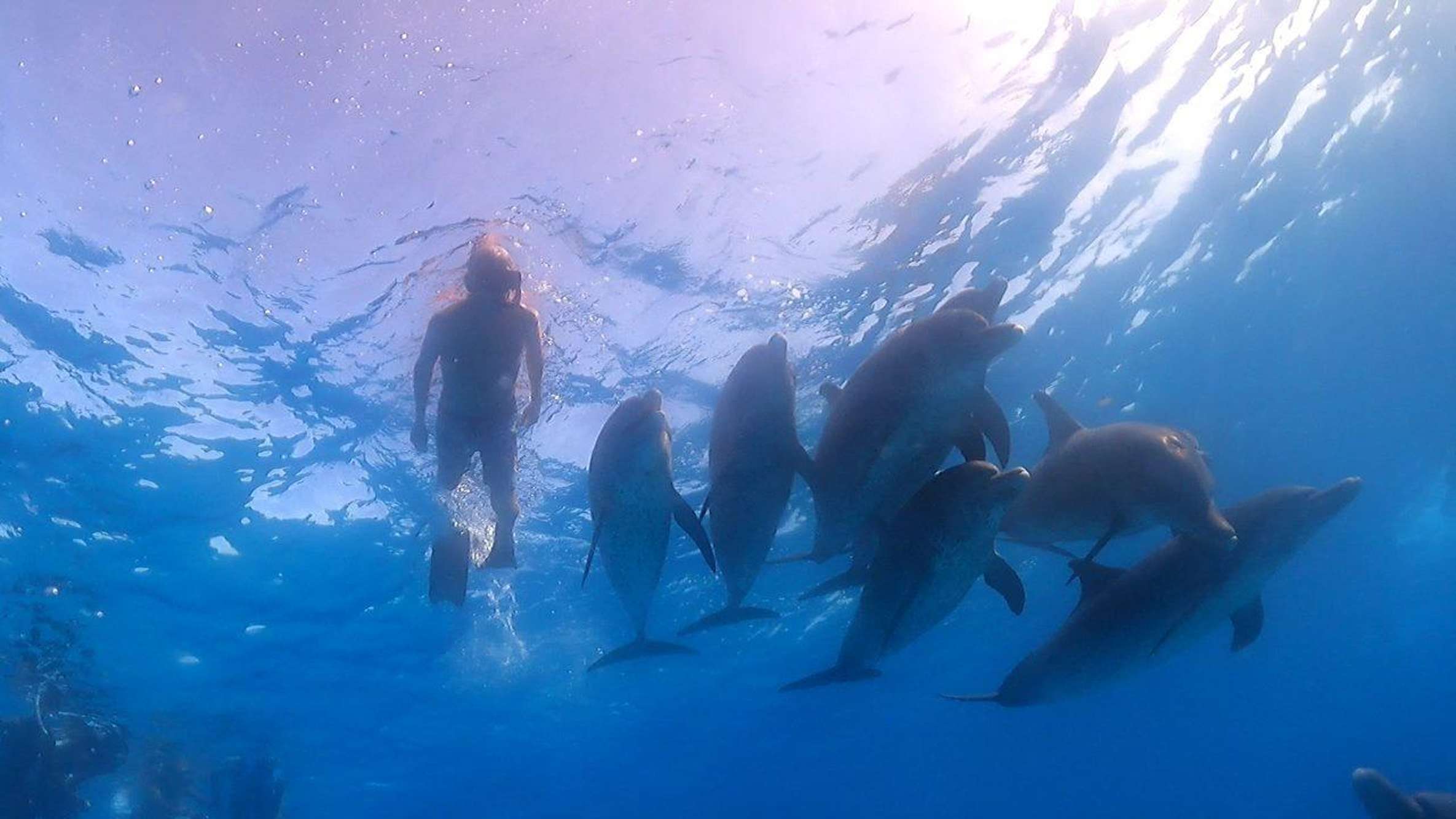
Swim with stingrays and dolphins, fish the shallows, snorkel a wreck, or eat lunch on a secluded beach. The photographer comes standard, which settles the who-holds-the-camera question.
Provisions lean generous too. Light refreshments are included, and lunch and alcoholic beverages can be added. On shared half-day charters, guests often get a cup of rum punch on the ride back, but food is your own affair. The charter changes that.
You pay for having the boat to yourselves. Most charter boats take ages 99 and under but exclude babies under 1 year and guests over 95. If your crew fits those limits and you want a morning shaped entirely around your own people, the private boat is the call.
Tour for this
Bimini: Private Boat Adventure with Photographer3 hours · Free cancellation
Best months and hours for clear, calm Bahamas snorkeling
The sea sets the quality of a Bimini snorkeling trip more than any gear does. Aim for late spring through summer. May stands out: calm water on 98% of days, gentle peak waves, and warm, mostly dry beach weather.
June through August bring the flattest seas of all, on 97% to 100% of days, though they also bring heat and frequent showers. Winter runs choppy, with cold fronts that stir the shallows.
Visibility follows the same calendar. In summer calm the water over the shallow Sapona wreck clears to 60 to 100 feet, which means seeing the whole structure from the surface.
During and just after a winter front it can drop to 6 to 20 feet, murky enough to blur the wreck, before settling clear again between fronts.
Bimini Snorkeling and Sea Conditions by Month
August is the peak month for tour crowds, delivering the warmest 30°C water and flat calm seas alongside afternoon tropical showers.
HighestJul to Sep
In betweenFeb to Jun, Oct to Nov
LowestDec to Jan
Darker: a higher how busy it gets score, out of 5
Tap a month to read it.
June: 5 out of 5 for water temperature. 29°C (85°F)
HighestMay to Oct
In betweenApr, Nov
LowestDec to Mar
Darker: a higher water temperature score, out of 5
Tap a month to read it.
June brings quiet crowds, flat calm seas, and warm 29°C water, though brief summer rain showers become frequent.
HighestApr to Sep94 to 100% of days
In betweenFeb to Mar, Oct89 to 90% of days
LowestNov to Jan81 to 86% of days
Darker months: higher, from 81 to 100% of days
Tap a month to read it.
December is a quiet month on the tours, with cooler 26°C water, crisp breezes, and slightly rougher seas.
HighestOct to Mar0.9 to 1.1 m
In betweenApr, Sep0.7 to 0.8 m
LowestMay to Aug0.4 to 0.6 m
Darker months: higher, from 0.4 to 1.1 m
Tap a month to read it.
March brings moderate crowds, dry sunny weather, and warming 25°C water alongside occasional windy spells.
HighestOct to Mar3.6 to 5.4 days
In betweenApr3 days
LowestMay to Sep0 to 1.6 days
Darker months: higher, from 0 to 5.4 days
Tap a month to read it.
Within any day, the morning wins. Departures between 8 am and 10 am get the calmest seas and the best light inside the wreck, before afternoon wind chops the surface and dulls the visibility. This matches what locals repeat: morning boats beat the afternoon chop.
One more scheduling fact: the fast ferry runs mainly Wednesdays, Fridays and Sundays, so your snorkeling day hangs on the sailing days. For summer weekends, holidays and spring break, book ferry seats 4 to 6 weeks ahead.
Sharks and stingrays up close - safety and sea rules
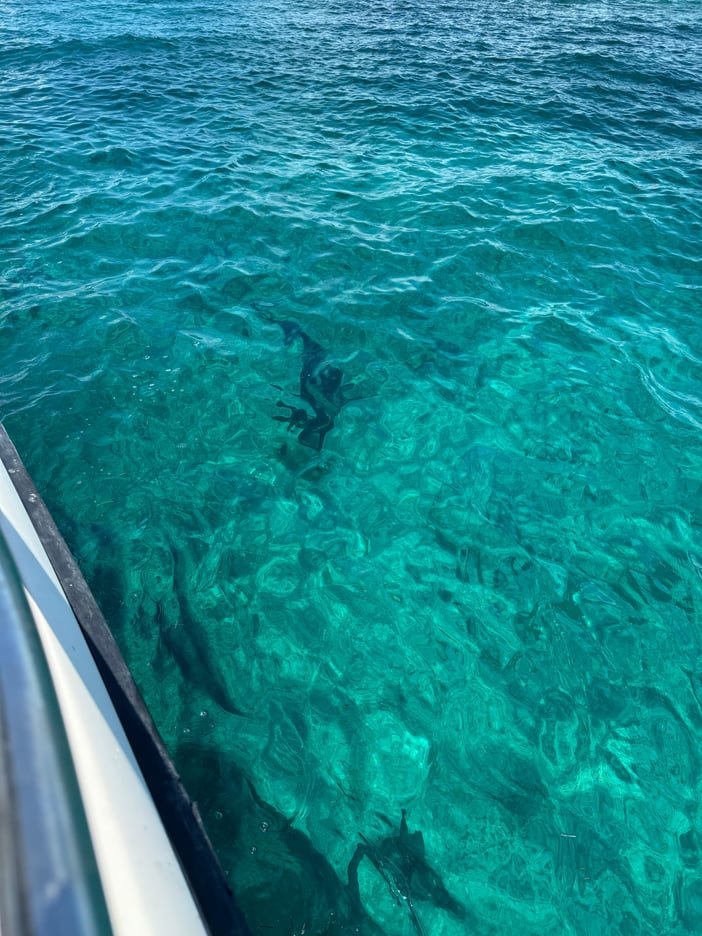
At Triangle Rocks, wild Caribbean reef sharks of 3 to 8 feet will circle close, closer than most first-timers expect.
Here is what steadies the nerves: these sharks are used to tour boats, they fixate on food containers, and they leave calm surface snorkelers alone. Panic and weak swimming cause more trouble in open water than the sharks ever do.
The crew sets the rules, and they matter. No touching, chasing or cornering, a practice backed by Bahamian law in a national shark sanctuary.
Keep facing an approaching shark, keep your arms close, and skip the wild splashing. A safety line trails from the boat for you to hold, and anyone uneasy can watch the whole encounter from the deck instead.
What nobody tells you
Hold the safety line
It keeps you anchored during the shark stop without fighting the current
Wear dark swimwear
Sharks read contrast well, and shiny jewelry mimics fish scales
Skip flash photography
It startles the sharks at Triangle Rocks
Shuffle at Honeymoon Harbour
Rays bury in the sand and most accidents come from stepping on them
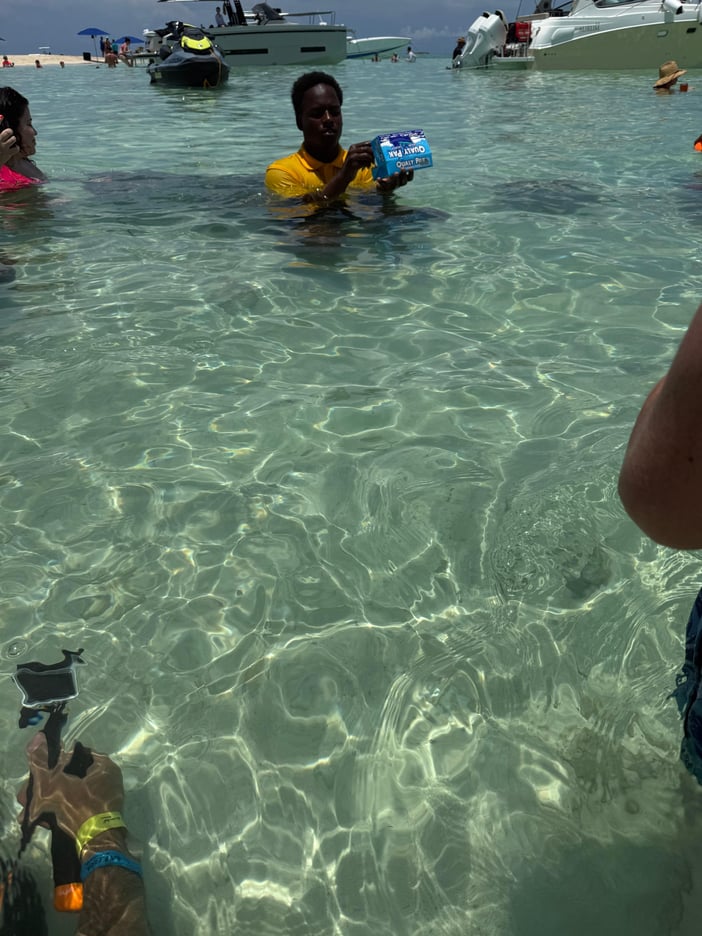
The stingrays bring their own etiquette. Kneel in the shallows with squid and a ray may glide over your hand; their mouths sit underneath, so this is harmless. Never grab one or step on one. Rays cannot lunge or throw their barbs, so calm feet solve the problem. Leave rings and watches on the boat.
Ferry to Bimini for Bahamas snorkeling - the crossing
Miami has no passenger ferry; every one of them leaves from Terminal 21 at Port Everglades in Fort Lauderdale. Travelers starting in Miami drive roughly 26 miles, about 45 minutes, north to the port; Miami hotel-transfer packages make the same drive.
Bimini itself sits about 50 miles across the Gulf Stream. Work the morning backwards. Check-in at the terminal opens three hours before departure because port security and passport checks take time, and doors close firmly one hour out.
Check-in and boarding run 1.5 to 2 hours, the crossing takes about 2 hours, and vessel clearance plus immigration at the Bimini dock typically takes about an hour more. Call the whole outbound journey 4 to 5 hours one way.
That arithmetic tells you what remains. Ferry day-trippers get roughly 4 to 6 hours on the island, so a morning snorkeling boat is the only realistic slot. The return ferry departs Bimini at 7 pm in summer, 6 pm from mid-September.
A seaplane exists as the fast lane: about 25 minutes each way, a VIP lounge with snacks, expedited customs, and around 8 hours on the island. It costs substantially more. The ferry remains the standard route for a snorkeling day.
Bimini snorkeling excursions - meeting points and transfers
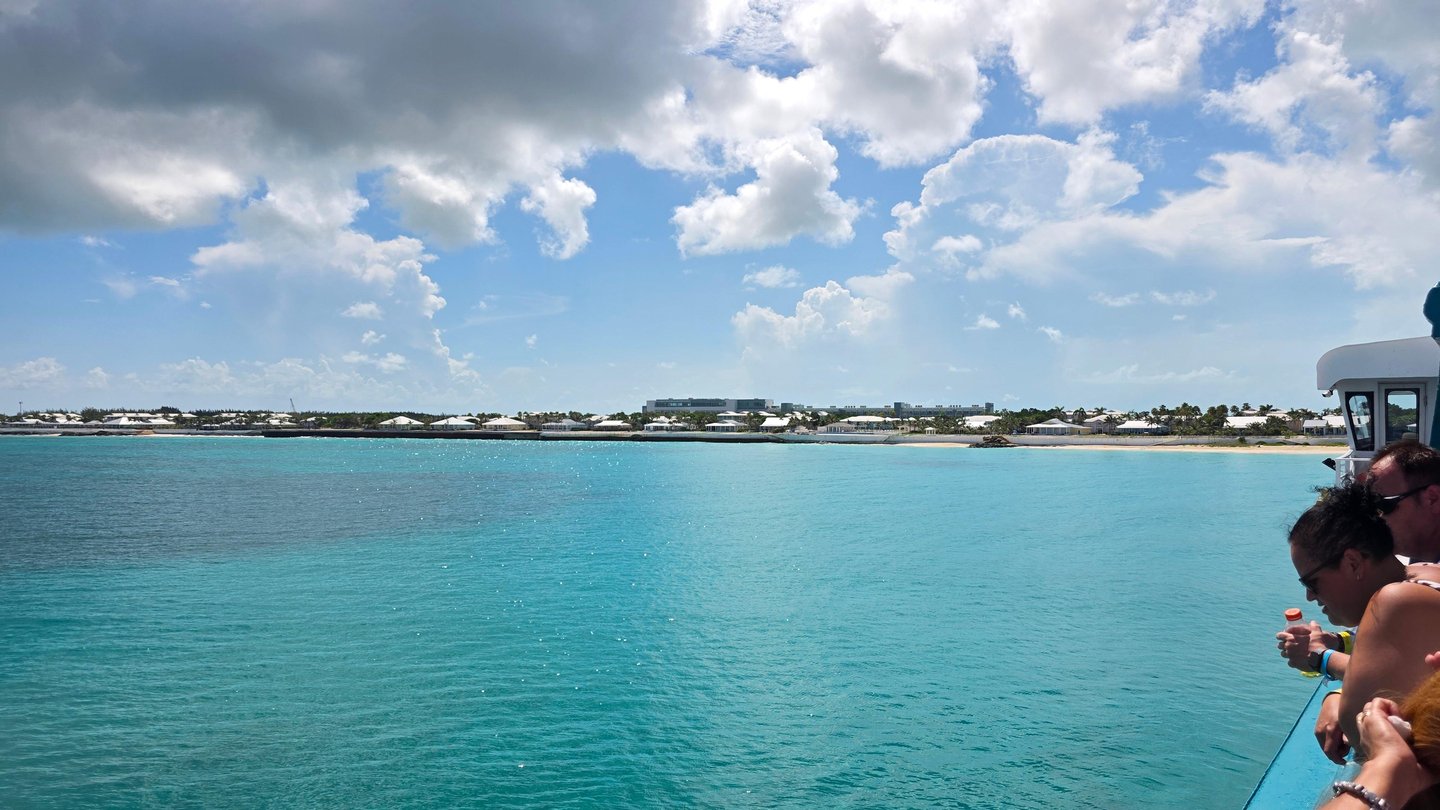
The ferry docks at Fisherman's Village on North Bimini, beside the Resorts World complex, and most snorkeling boats leave from marinas close by. The 4-stop adventure meets at the Resorts World hotel's Piano lounge, in the seating area behind the check-in desk.
Independent operators often meet at Kayak Beach at the end of the cruise pier or depart from marinas in Alice Town, about two miles south.
Moving between them is simple. Free open-air trams loop from the cruise dock to Fisherman's Village, the casino and the beach club, but they never run south into Alice Town.
For that leg, shared taxis wait at the end of the pier and charge a small per-person fare each way into town, or you rent a golf cart. Walking the two miles down King's Highway takes 40 to 45 minutes on narrow roads with no pavements, and heavy humidity makes it worse than it sounds.
Resorts World Bimini Ferry Terminal to Bimini Big Game Club Resort & Marina
Resorts World Bimini Ferry TerminalBailey Town
3 km
Bimini Big Game Club Resort & MarinaAlice Town
TaxiEasiest
Readily available at pier and tram stopsDirections →
Golf carts need a driver's license, run on the left under Bahamian law, and sell out fast when a cruise ship calls, so reserve ahead on peak days.
Carry US cash for the cart rental and the taxis; card acceptance is patchy at small vendors. Most boat tours to the Sapona depart from North Bimini, so budget the transfer into your morning.
Packing for Bahamas snorkeling trips in Bimini
Gear comes with the boat. Masks, snorkels, fins and flotation vests are standard on guided excursions, so you do not need to pack bulky equipment.
Quality varies between operators, though, and the anti-fog coating on rental masks is usually worn thin. Serious snorkelers bring their own mask and fins, and a small bottle of anti-fog solution costs little and saves a blurry morning.
Sunscreen is a legal matter in the Bahamas. Products with oxybenzone, octinoxate or octocrylene cannot be imported, sold or distributed there, so pack a reef-safe mineral formula. Nervous swimmers can ask the crew for an inflatable snorkel vest; it lets you float on the surface without expending energy through both open-water stops.
The seasickness pill is the item people regret skipping. Take it 30 to 60 minutes before boarding, not after nausea starts, and repeat the routine before the small-boat run across the banks, which turns choppy even in fine weather. On the ferry, sit low and mid-ship and keep your eyes on the horizon.
Tipping follows the dive-world custom here: 15% to 20% of the trip cost for the captain and deckhands, in cash, US dollars accepted everywhere. A rash guard, swimwear, a towel, water shoes and a waterproof phone pouch round out the bag.
In winter, add a 3 mm to 5 mm wetsuit, since the boats supply no thermal protection and the water sits in the mid-70s.
Weather, cancellations and the missed return ferry
Captains make their own calls offshore. There is no published wind or wave cutoff for the Sapona; boats cancel or reroute for heavy chop, swells, squalls and storm threats, while light rain does not stop a departure.
When conditions turn rough, the standard move is a reroute to sheltered reef areas, so you usually still swim, just at a different site.
Ferry cancellations stay occasional rather than routine. Winter cold fronts sweep through several times a month from December through April, and when small-craft advisories land, the crossing is scrubbed.
On a weather cancellation, operators typically offer a full refund or free rebooking on another sailing. Book your tours with dates that carry the same flexibility: many excursions allow cancellation up to 24 hours ahead for a full refund.
If this happens
What happens then
Weather cancels the ferry
Full refund or rebooking on another sailing
Tour operator cancels for weather
An alternative date or a full refund
You cancel 24 hours ahead
Full refund on the excursion
You miss the return ferry
No date change, no refund
The one deadline with no safety net is the return ferry. Terminal embarkation closes one hour before departure, late check-in is refused, and passengers who miss the boat through their own timing get neither refund nor date change.
Build your afternoon around it: leave the beach with margin, and remember the ride back into town takes time.
After Bahamas snorkeling - island hours left to fill
A morning boat returns you around 1 pm with hours still to spend, and Bimini rewards a short list. Skip the overpacked itinerary; two or three stops fill the afternoon well.
Lunch first. Stuart's Conch Stand in Bailey Town serves fresh conch salad and lobster, and Ebbie & Patt's nearby does fried lobster with its conch salad. Both sit a short taxi or golf cart ride from the dock, quick enough for a tight schedule. Cash works best at stands like these.
Beaches need no fee. Every sandy beach in Bimini is legally public, and Radio Beach pairs calm swimming with casual bars and conch shacks. A public beach also sits right at the ferry dock if the clock has run short.
If you prefer a resort pool, day passes to the Resorts World facilities can be bought on the ferry or at the lobby, though access can close when cruise ships dock.
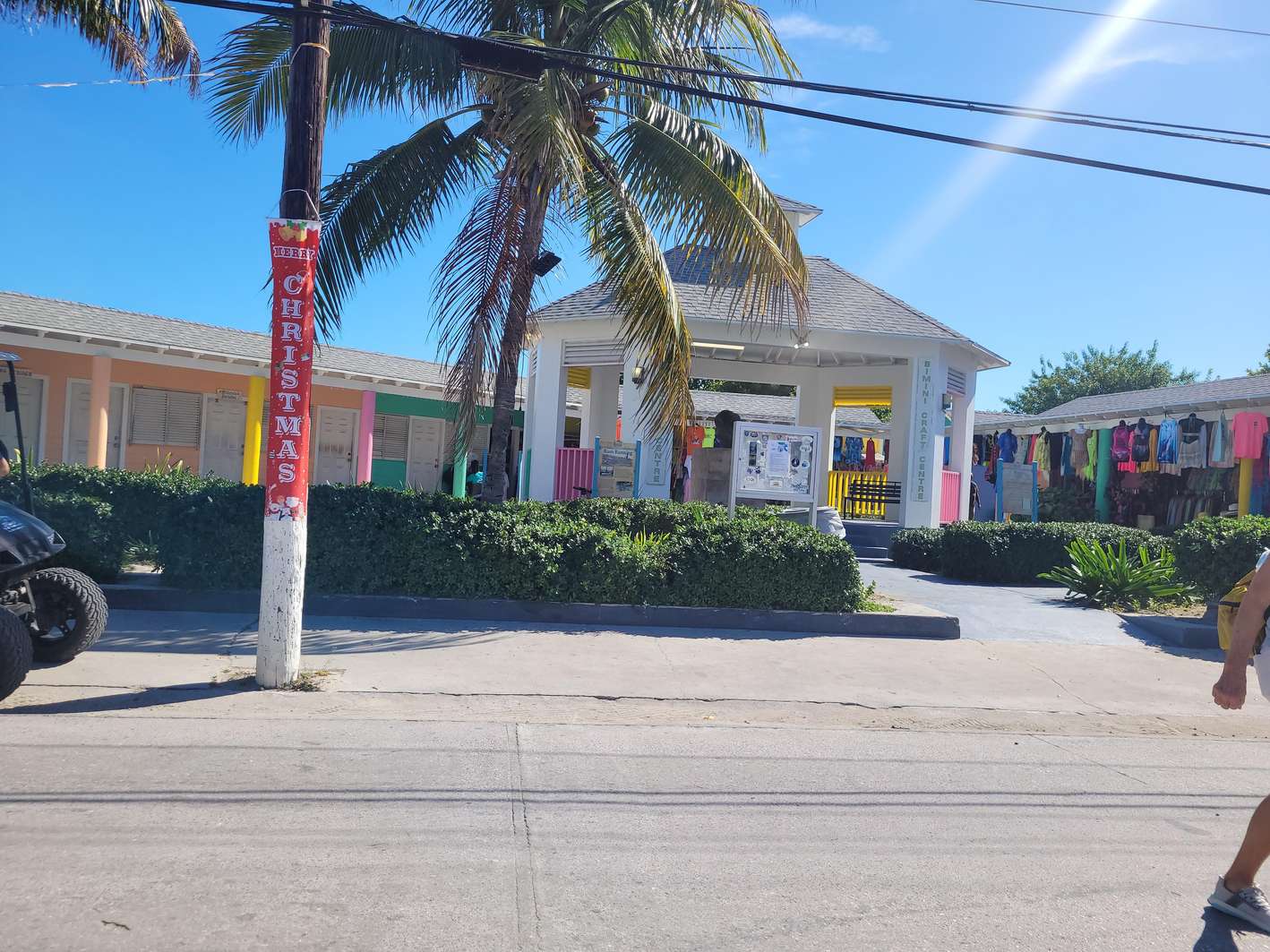
For more water, the Dolphin House and the Hemingway park area make an easy walk, the Straw Market covers souvenirs, and the rocky shoreline south of Radio Beach holds fish in its crevices for shore snorkeling with a rented golf cart.
Keep the day simple, watch the return-ferry hour, and the island hours stretch further than they look on paper.
More to book nearby
Live dates and prices
Worth the long day, with a morning boat
For a traveler with one open day, a Bimini snorkeling trip works when the boat runs in the morning and the return ferry hour is respected.
The shared 4-stop adventure covers wreck, sharks and rays in 3 hours; the private charter buys a custom itinerary and a photographer. Book the ferry weeks ahead in season, pack reef-safe sunscreen and seasickness pills, and the day delivers.
Choose an overnight instead if you want multiple excursions at a slow pace, or if your Florida trip is only a few days long.
Go ifYou have an open day in Florida and an early start does not bother youYou want the wreck, reef sharks and stingrays in a single morningYour group prefers a custom itinerary and a photographer on board
Skip ifYour Florida stay is three or four days and already fullYou are a non-swimmer or have back, mobility or heart concerns on the shared tourYou want a slow pace with several excursions across the island
Snorkeled the Sapona this morning, sharks by ten, conch salad by noon. Book the early boat and be at the dock an hour before your ferry.
Can I fit a snorkeling tour into a ferry day trip from Florida?
Yes, with planning. Embarkation at the Bimini terminal closes one hour before the return ferry, which typically leaves around 6 pm. A three-hour morning tour leaves plenty of buffer before you need to be back at the dock.
How far offshore are the best snorkeling sites?
The SS Sapona sits about 3 miles south of the islands in open water, and the outer reefs lie 1 to 2 miles out along the drop-off. None of it is reachable from shore. A boat run takes 15 to 20 minutes from local marinas.
Do I need to bring my own snorkel gear?
Guided boat tours include masks, snorkels, and fins, so personal gear is not required. If you snorkel often, bring your own mask for a better fit, plus a little anti-fog solution since the coating on rental gear is usually worn out.
Is it safe to snorkel with the sharks?
The Caribbean reef sharks around Bimini know the tour boats and stay focused on their food containers while calm snorkelers float at the surface. Follow the crew's guidance, skip the splashing, and keep your arms close. Anyone nervous can watch from the deck instead.
What rules apply when swimming near the sharks and stingrays?
Never touch, chase, or corner a wild shark, and face it directly rather than turning your back. The Bahamas protects its sharks as a national sanctuary. At Honeymoon Harbour, shuffle your feet in the sand so you never step on a buried stingray.
What is the difference between the shared 4-stop tour and a private boat?
The 4-stop snorkeling adventure runs 3 hours on a set route covering the Sapona, a sunken plane wreck, Stingray Island, and Shark Arena, with gear and bottled water included. A private boat gives you a custom itinerary, a photographer, fishing supplies, and the whole boat to your group.
Can non-swimmers join a snorkeling boat tour?
The 4-stop snorkeling adventure is not suitable for non-swimmers, nor for people with back problems, mobility impairments, or heart problems. Open-water swimming is the core of the trip, so honest confidence in the water matters.
How do I get from the ferry pier to the boat departure point?
The 4-stop adventure meets at the Resorts World hotel Piano lounge, right by the ferry dock. For boats leaving from Alice Town marinas, a taxi van or golf cart covers the two miles in 10 to 15 minutes. The resort tram does not go that far.
Will I get seasick on the boat?
The run across the shallow banks out to the Sapona can turn choppy and rocky. If you are prone to nausea, take medication 30 to 60 minutes before boarding, since it works far better before symptoms start. Seas are calmest from May through September.
What documents do I need to join a snorkeling day trip?
A valid passport or passport card, plus authorization to re-enter the United States such as an ESTA. Birth certificates and photo IDs are not accepted for these international crossings. Citizens of some countries also need a Bahamian visa.
Which tour should I pick if I have already snorkeled the wreck?
If the Sapona is done, the island tour with lunch is the nearest alternative on the site. It runs 2.5 hours through Alice Town, stops at a traditional conch stand, and includes lunch, so it trades the water time for history and food.
Should I tip the boat crew?
It is customary to tip dive guides and boat crew 15 to 20 percent of the trip cost. Gratuity is not included in the tour price, and US cash is accepted everywhere on the island.
Snorkeling in Bimini Bahamas - wrecks, sharks and rays in one boat trip
The 4-stop adventure takes you to the Sapona wreck, a sunken plane, Stingray Island and Shark Arena, with gear and bottled water included. Cancel up to 24 hours ahead for a full refund.