Snorkeling with Sharks in Bimini Bahamas Guided Wild Reef Encounters
Book a cage-free shark swim off Bimini today. Join snorkelers who came for the Caribbean reef sharks and stayed for the crystal-clear water, and hold onto the safety line while 3 to 8 foot reef sharks circle close in the Bahamas' clearest open water.
3.3★average rating59traveler reviews100%free cancellation11countries travelers came from
Shark snorkeling in the Bahamas - start here
A Bimini shark snorkeling day splits into a few kinds of trip: a guided boat outing that covers four offshore stops in three hours, a private charter you pace yourself, a ferry ticket from Florida with the island left open, and a short land-and-lunch tour. The one difference that decides it is simple: are you in the water with the sharks, or buying the crossing and arranging the swim once you land.
DocumentsA valid passport or passport card clears US re-entry and Bahamian immigration; birth certificates and state IDs are not accepted on the ferry, and all visitors pass through port immigration on arrival.
Swimming abilityThe 4-stop snorkeling adventure suits confident swimmers only; non-swimmers and people with back, heart, or mobility problems should pick a different boat or stay on deck.
In the waterHold the safety line, keep fins on, hands close to your chest, and never reach for a shark; the Bahamas protects sharks as a national sanctuary, so touching and chasing are off limits.
Booking aheadFerry seats for peak summer weekends, US holidays, and spring break sell out, so book four to six weeks out for those dates.
TimingThe offshore window before about 11 am gives the calmest seas and the clearest water, and snorkel stops at the shark sites often run only about five minutes.
SeasonReef sharks show up year-round, while May through August brings calm seas on nearly every day; winter cold fronts can cancel or rough up crossings.
CashCarry US dollars, since golf cart rentals and many beach bars run on cash; tipping boat crew runs 15 to 20 percent.
GearBoats supply masks, snorkels, fins, and flotation vests, but bring your own towel, swimwear, and reef-safe sunscreen, which is what Bahamian law requires.
Meeting pointsBoat tours commonly meet at Fisherman's Village or Kayak Beach by the cruise pier; one snorkeling tour meets behind the check-in desk at the Resorts World piano lounge.
Motion sicknessTake tablets 30 to 60 minutes before boarding if you are prone, and pick a low, mid-ship seat for the two-hour Gulf Stream crossing.
documentBirth certificates, photo IDs and naturalization papers are not accepted for the Bimini ferry day trip: every passenger, including children and infants, needs a valid passport book or passport card.
Check that each person in your group holds a passport valid for at least six months beyond the travel date, and bring your US re-entry authorization such as an ESTA if you are not a US citizen. Confirm any visa question for your nationality before booking.
Shark snorkeling tours in the Bahamas - pick your boat
Most popular
3 hours·English
4.5(22)
Bimini: 4-Stop Snorkeling Adventure
The 4-stop adventure is the shared trip most travelers pick: three hours, four stops and a 4.5 rating from past snorkelers.
What a snorkeling with sharks day in Bimini Bahamas looks like
about 3.5 h
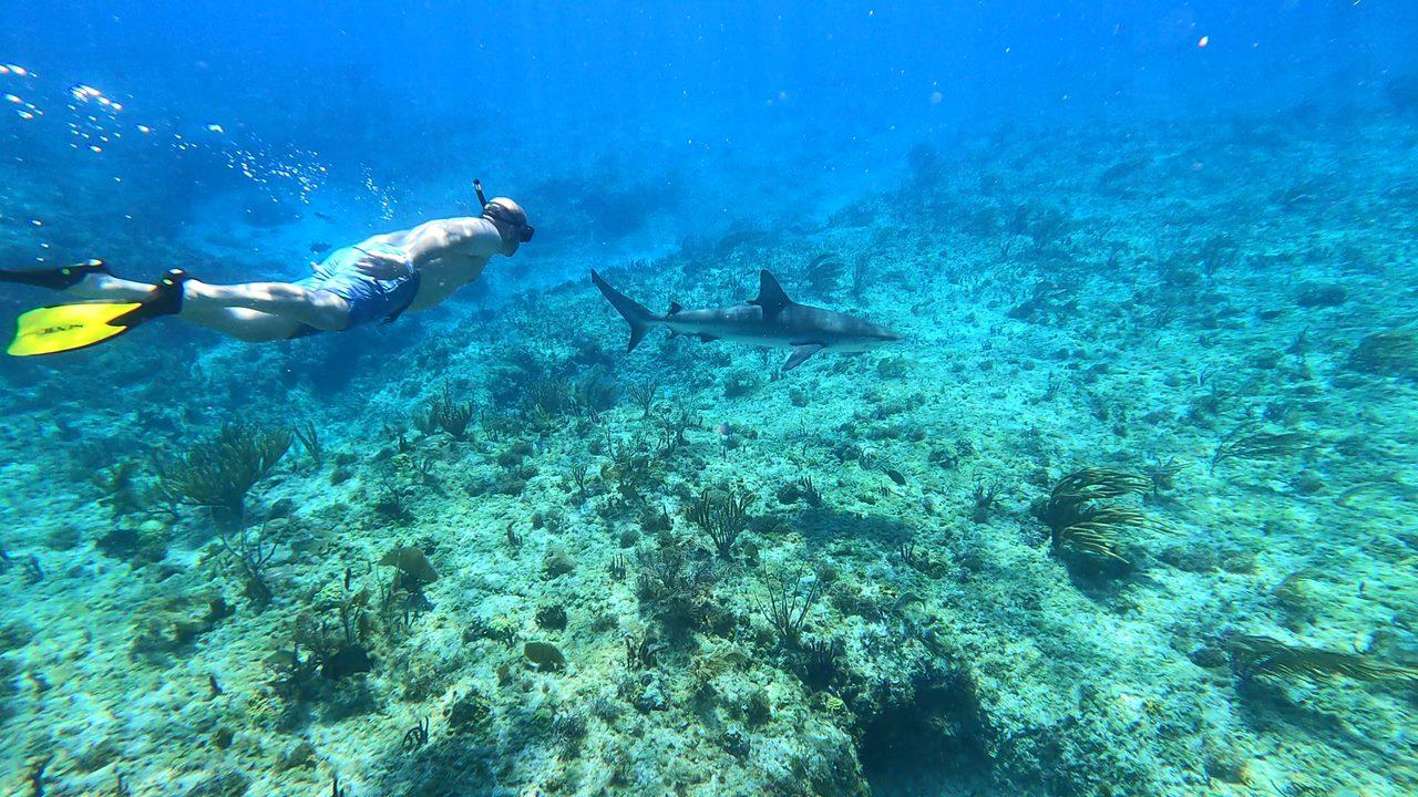
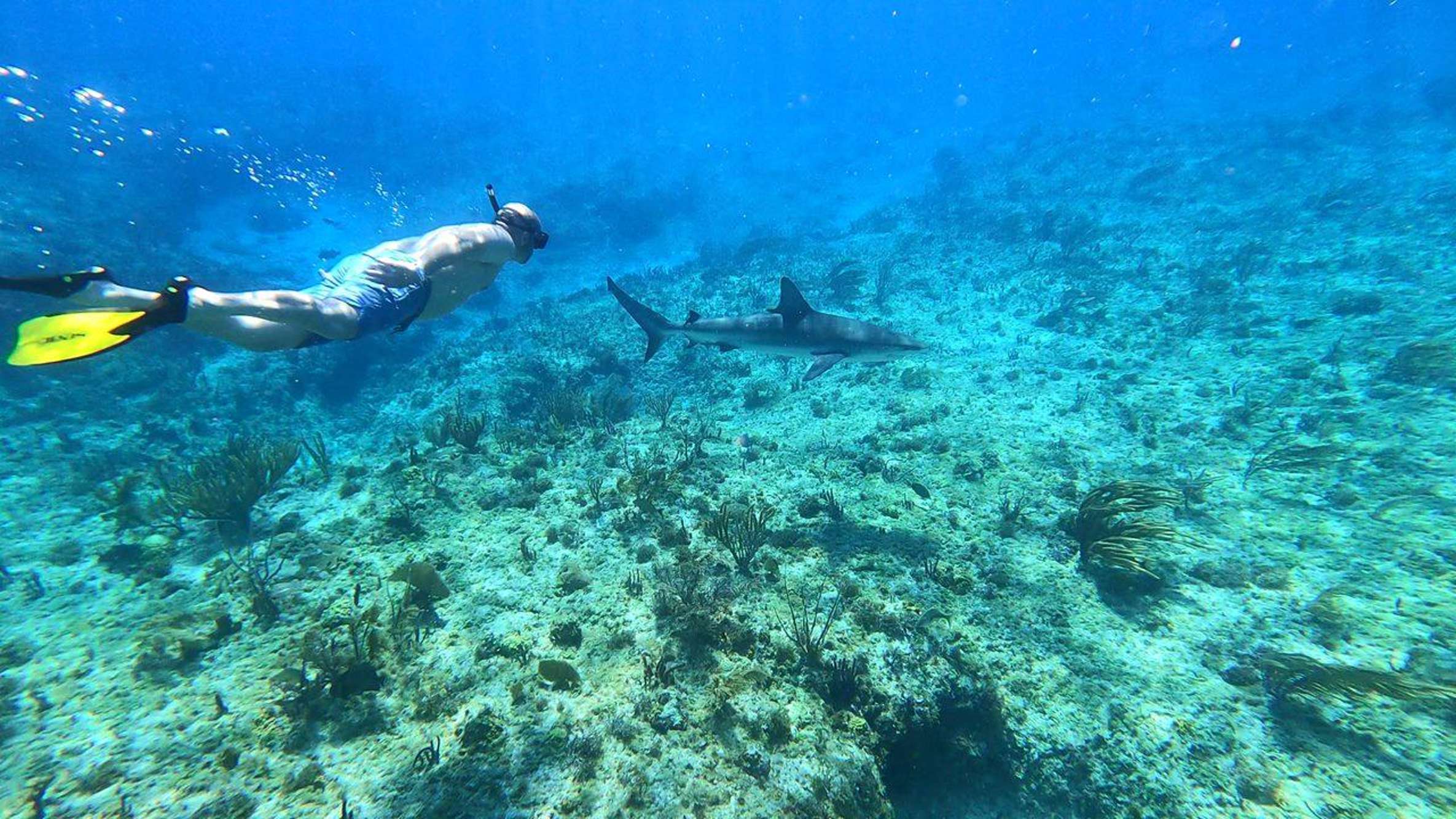
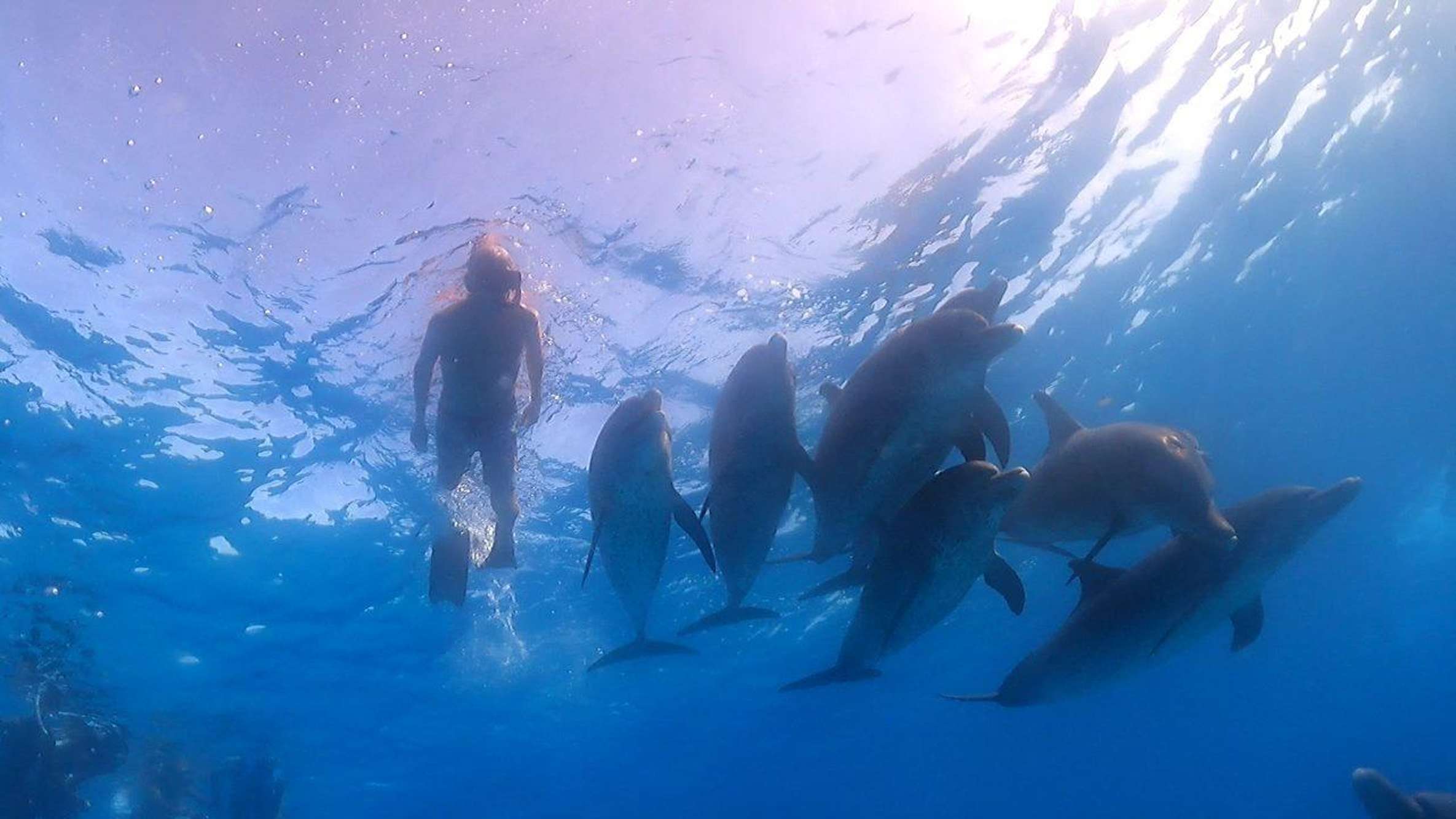
The stop people remember is Shark Arena, off the south of the island. Caribbean reef sharks gather there in numbers, and on a good day the water stays clear for more than 60 feet, so you watch them patrol from the surface or drop down a short free dive for a closer look.
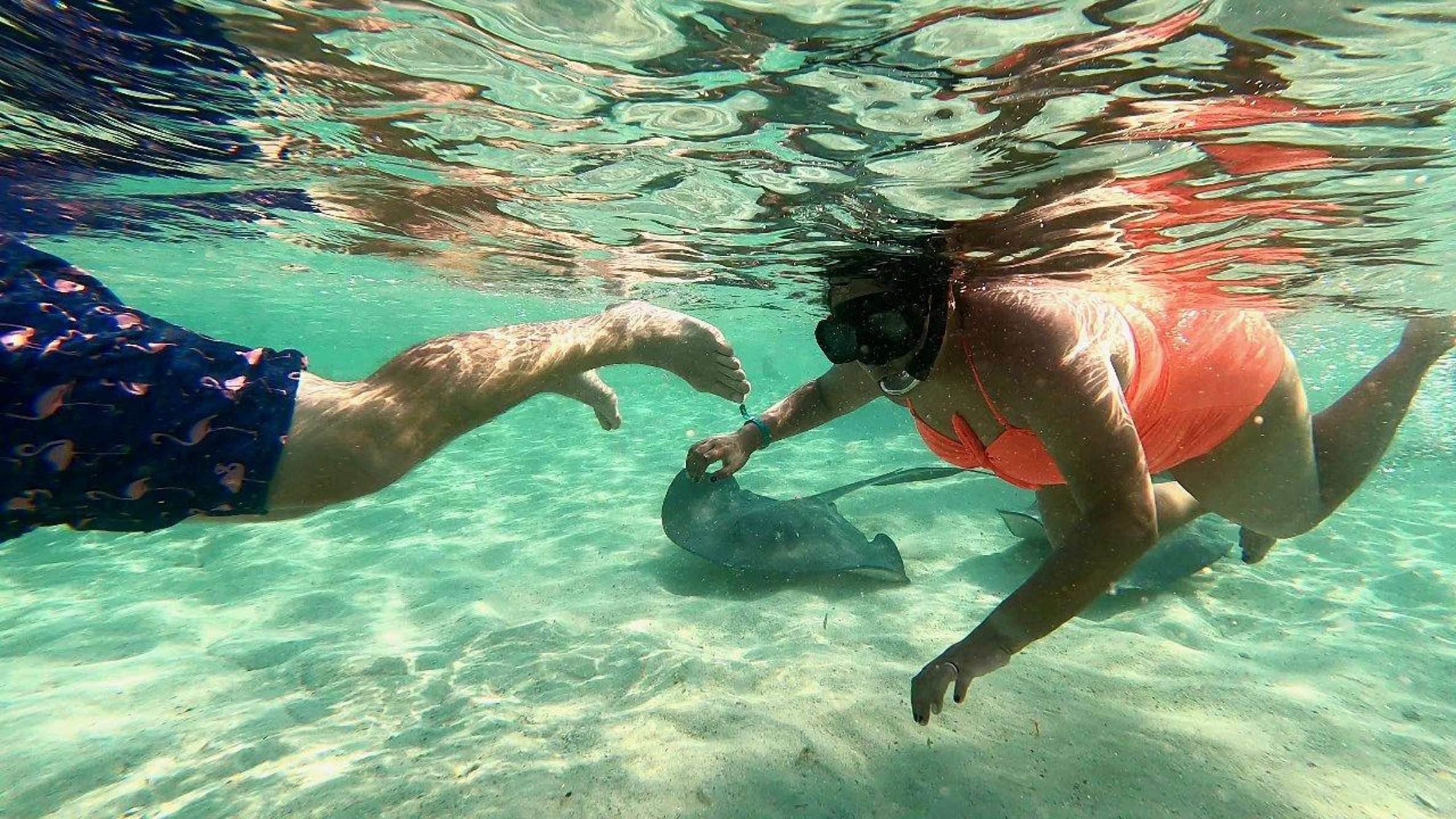
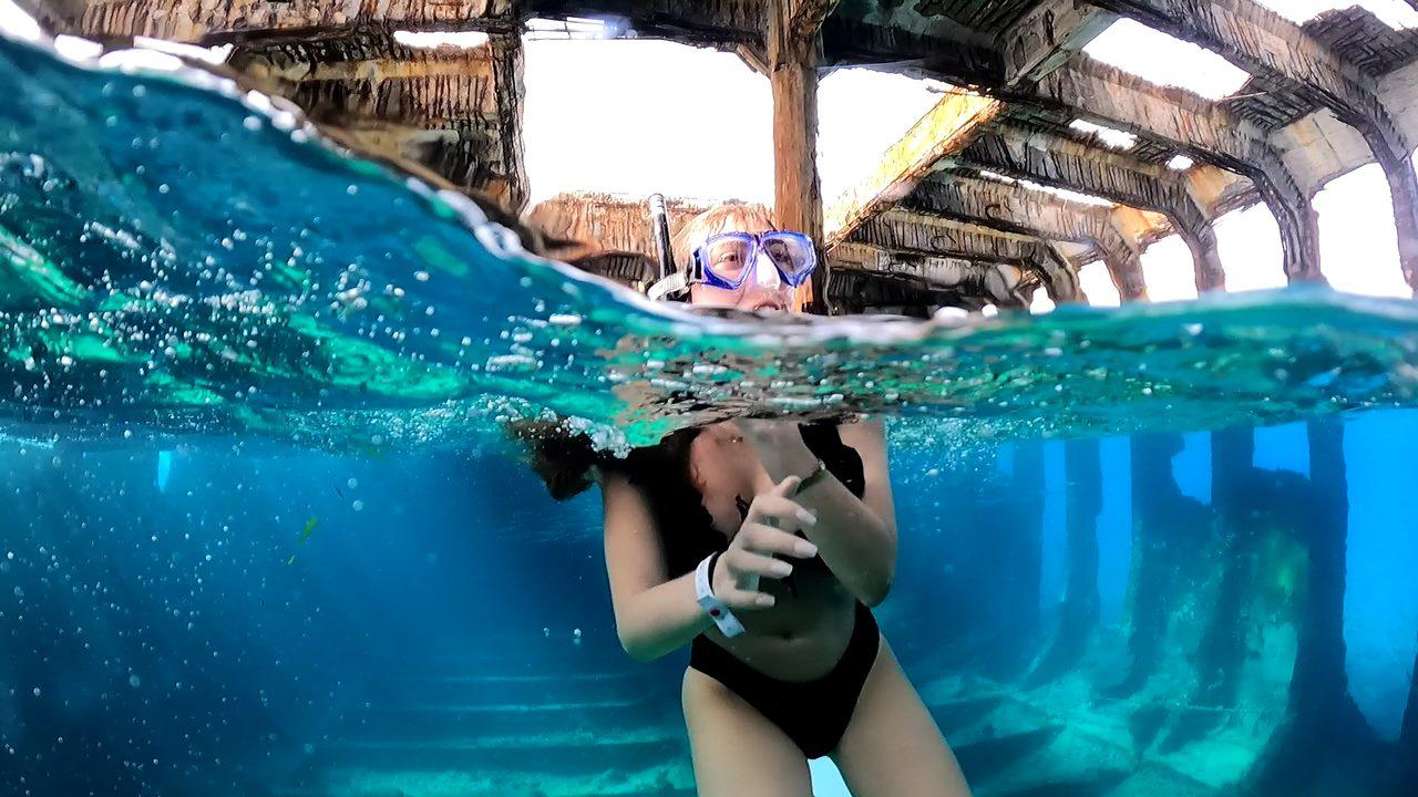
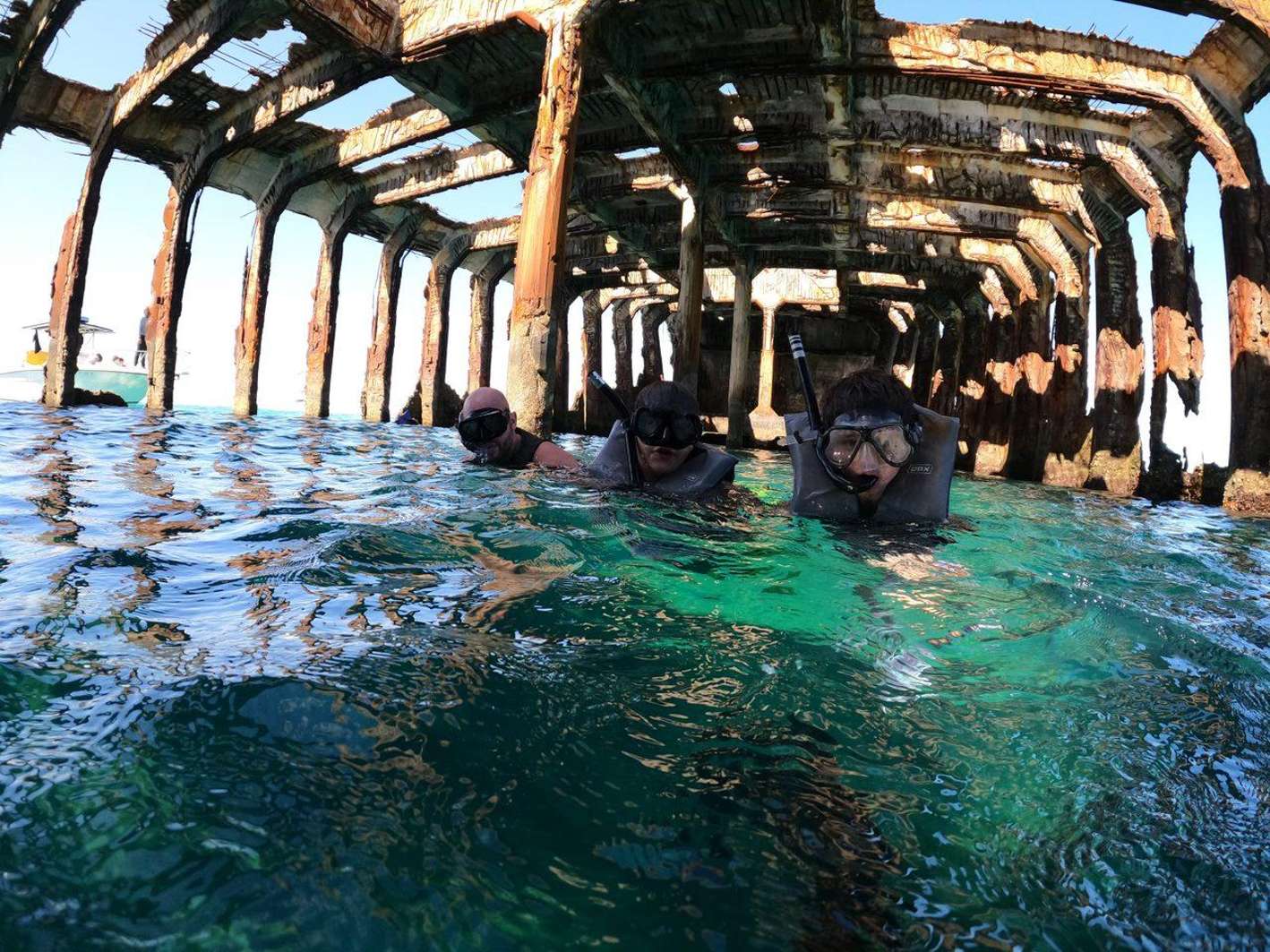
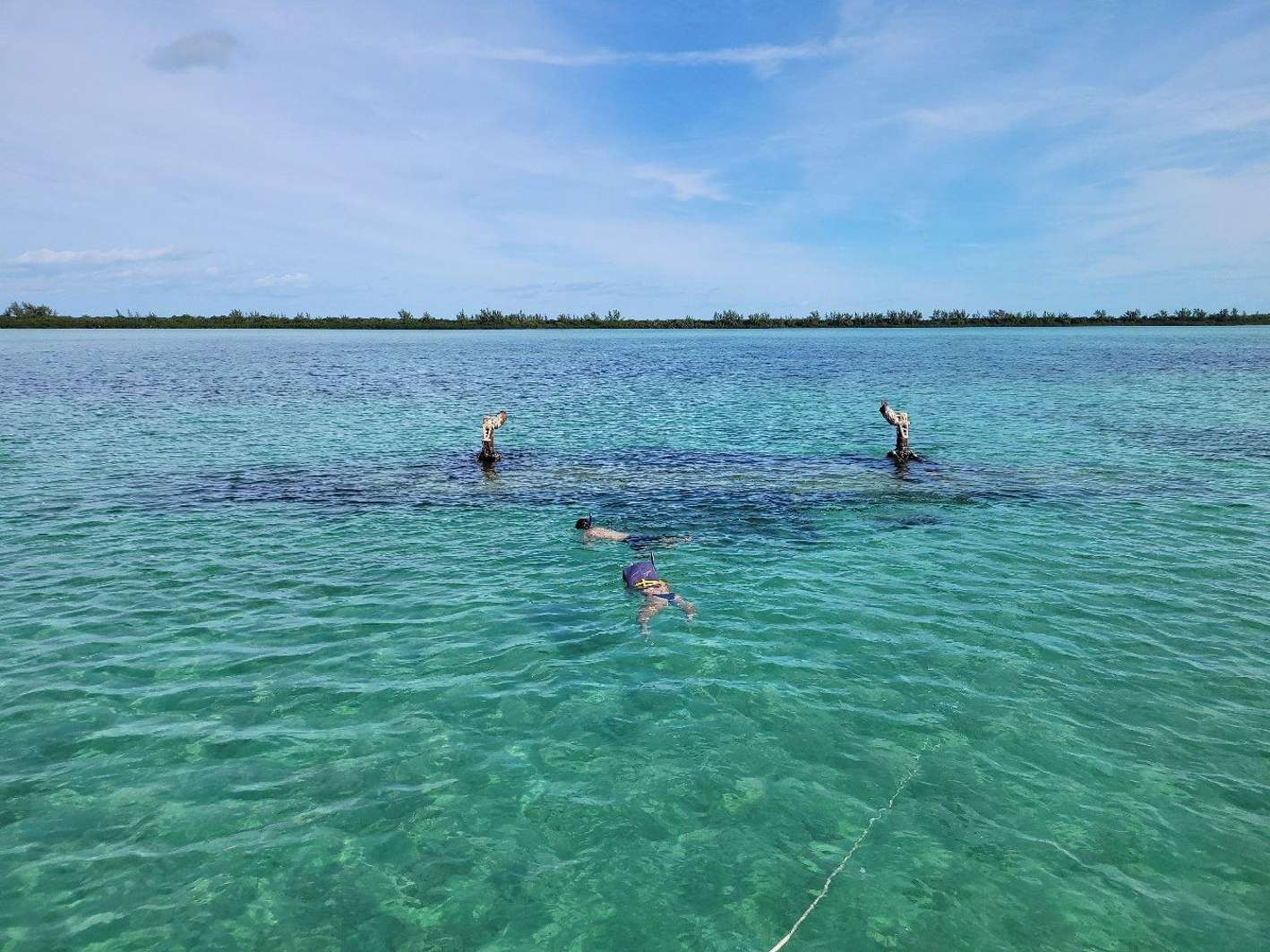
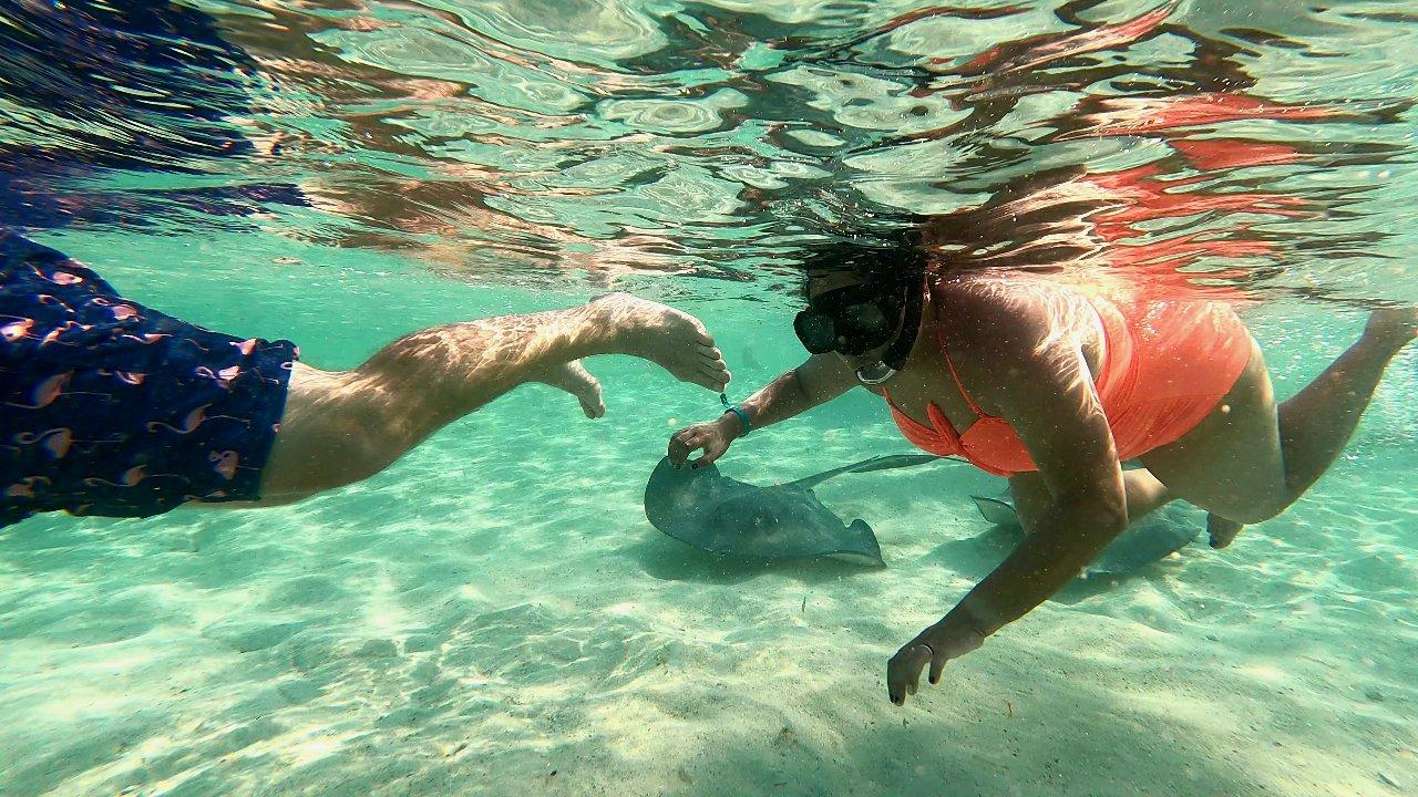
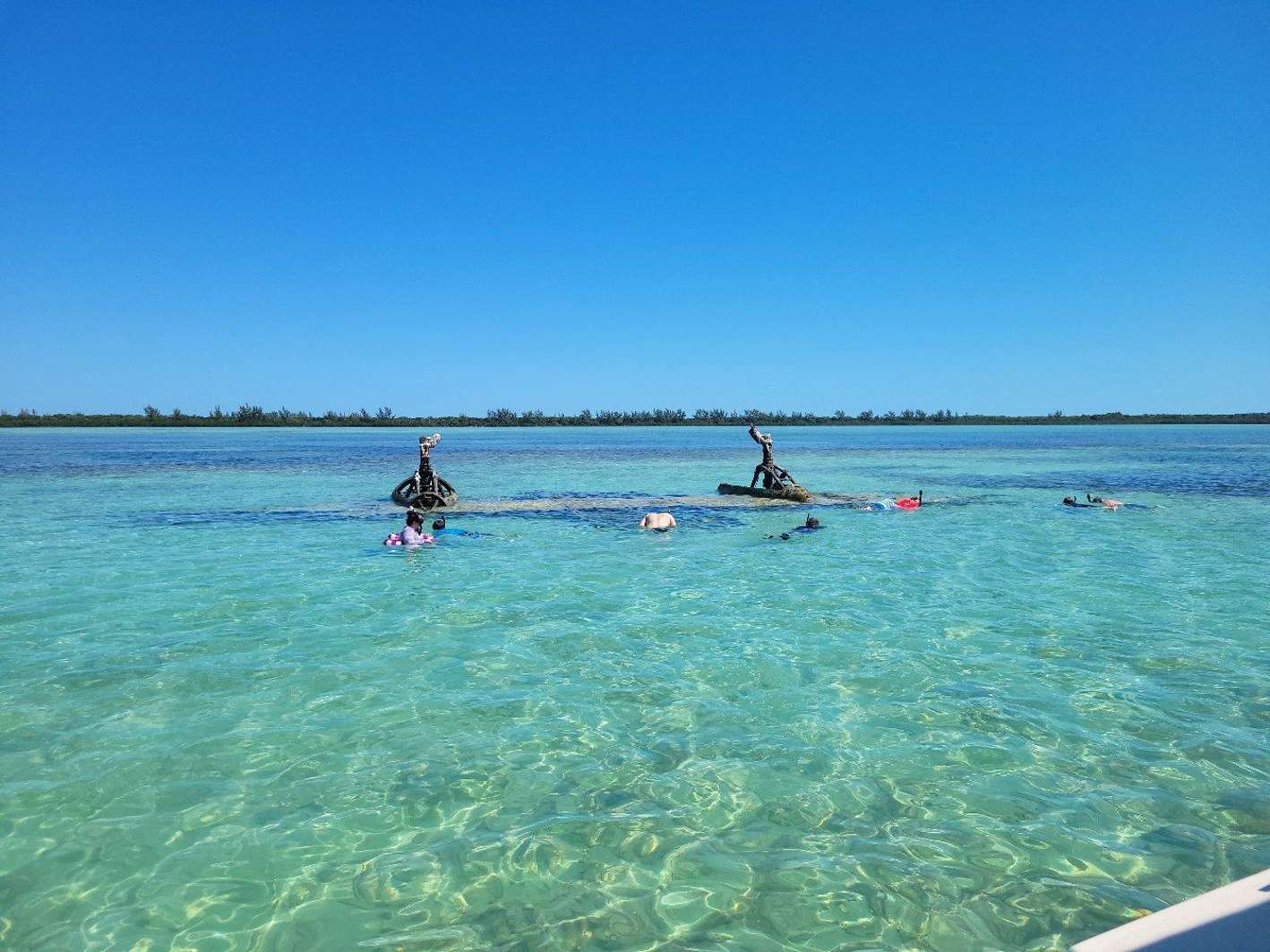
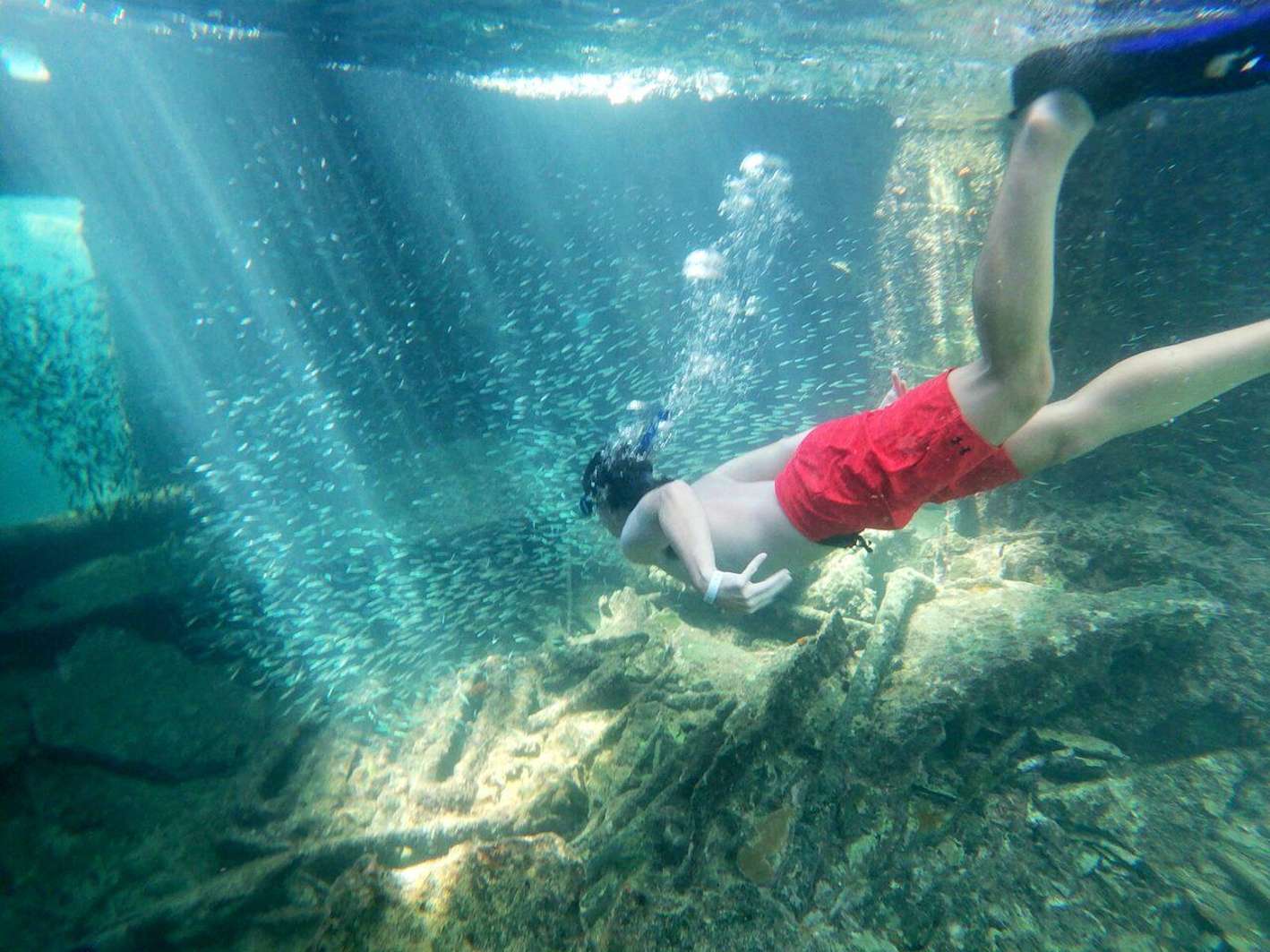
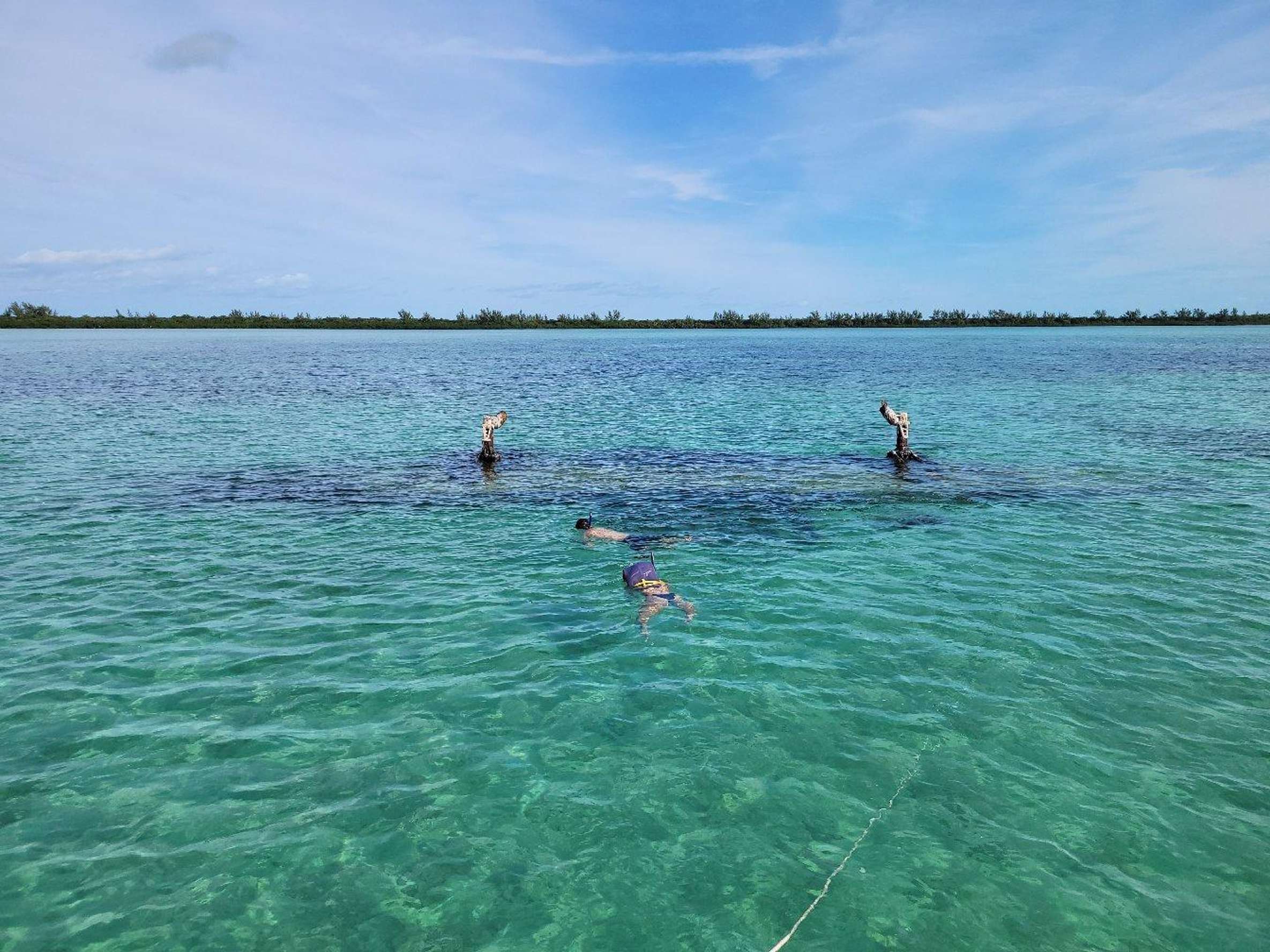
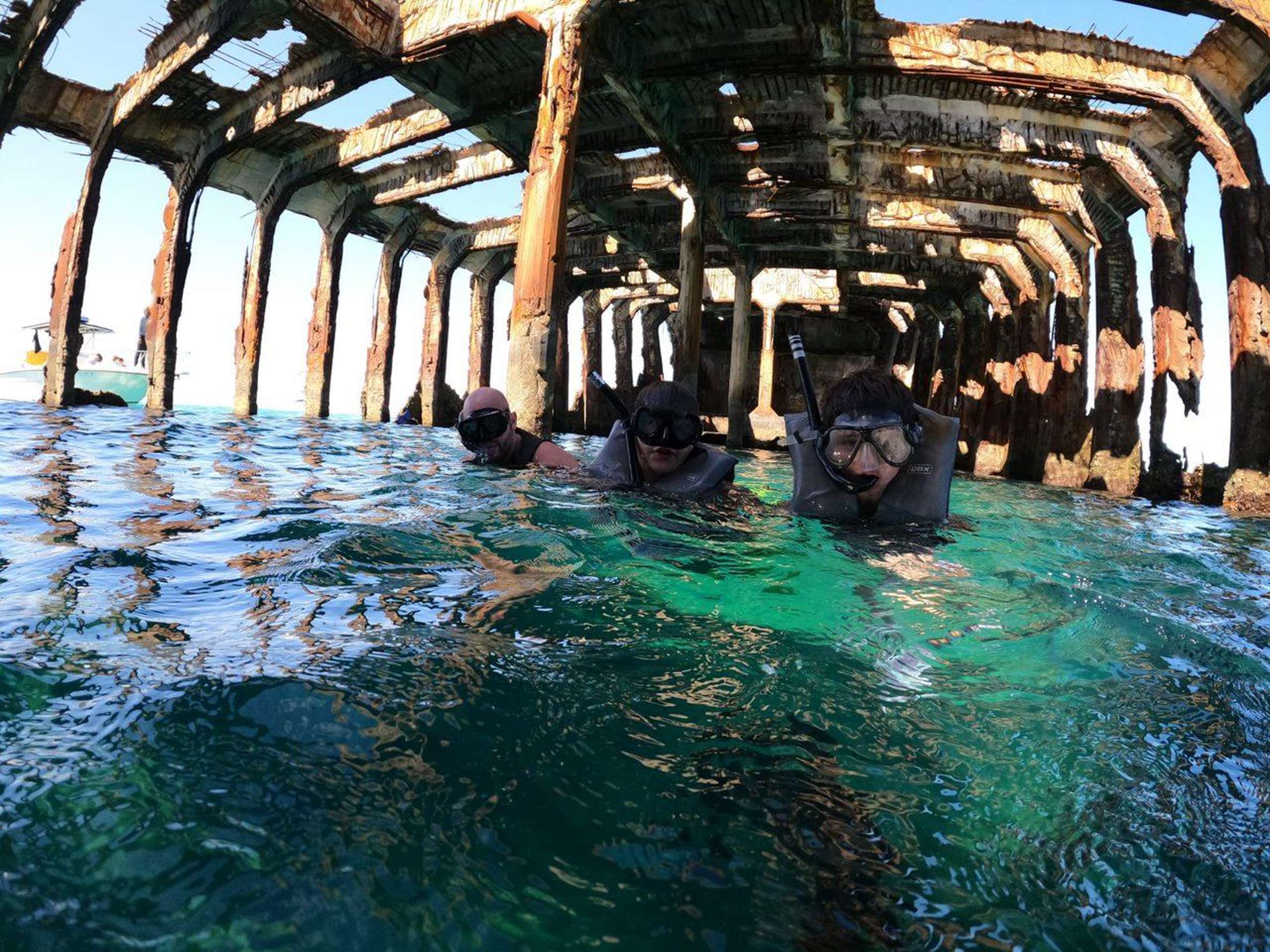
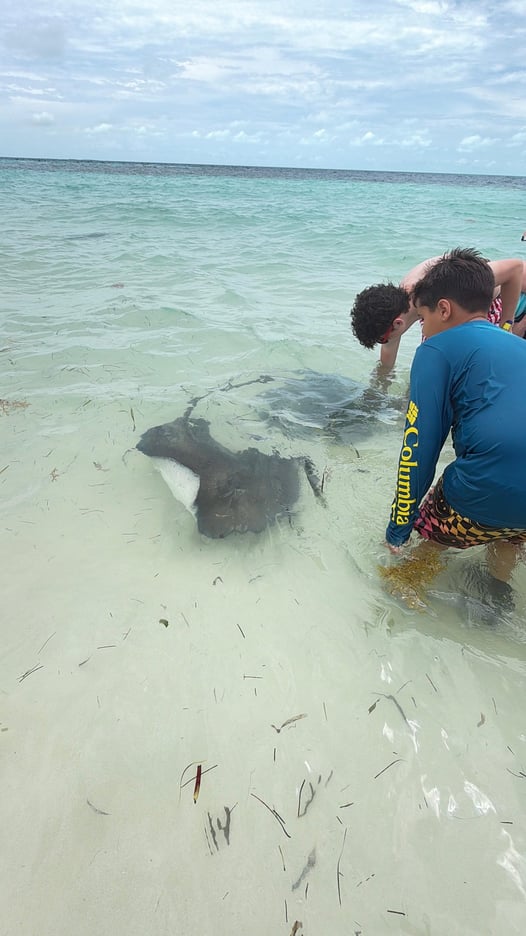
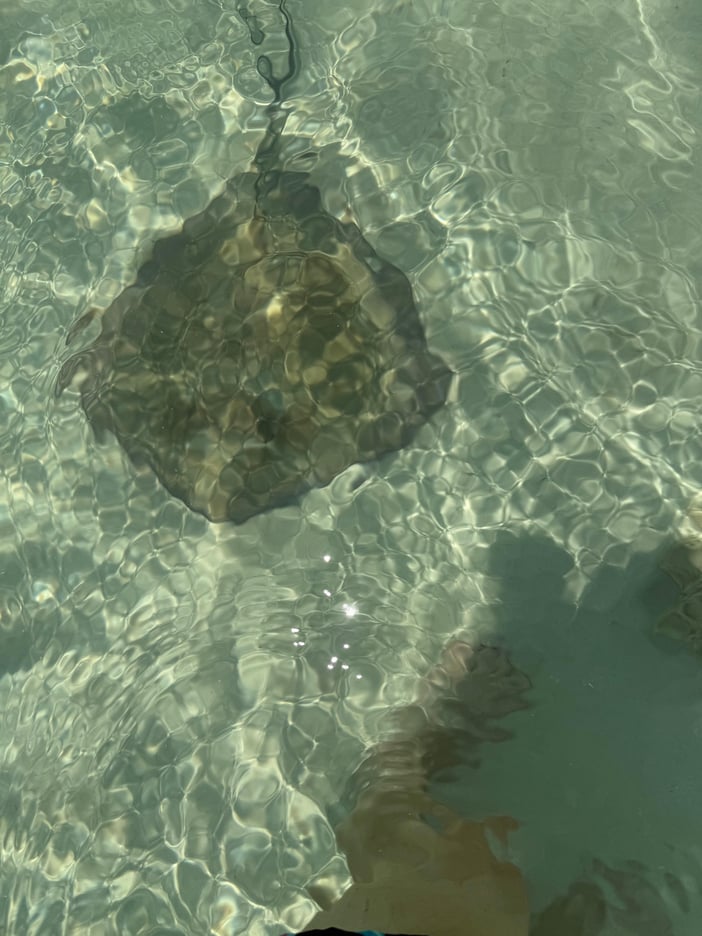
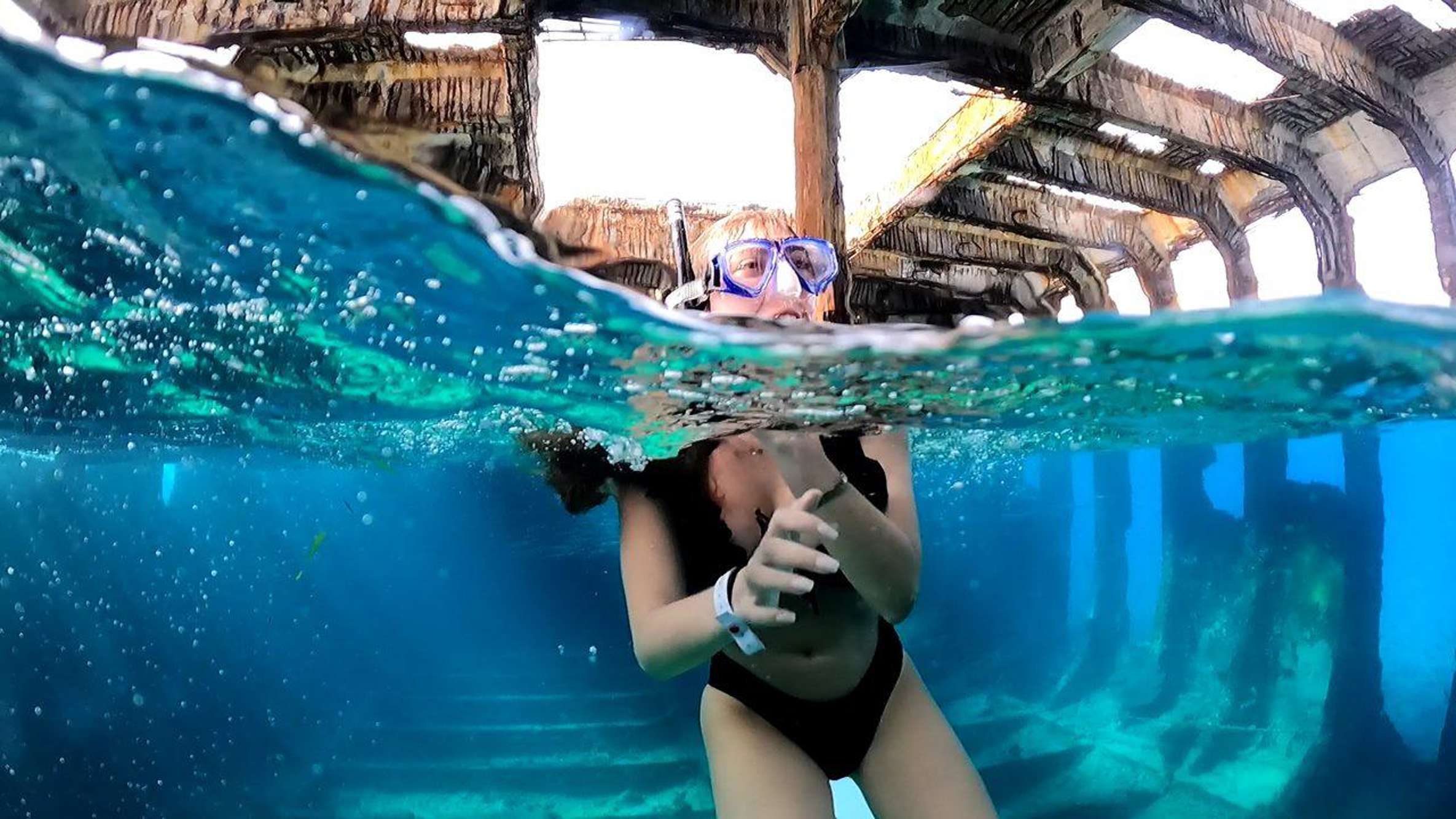
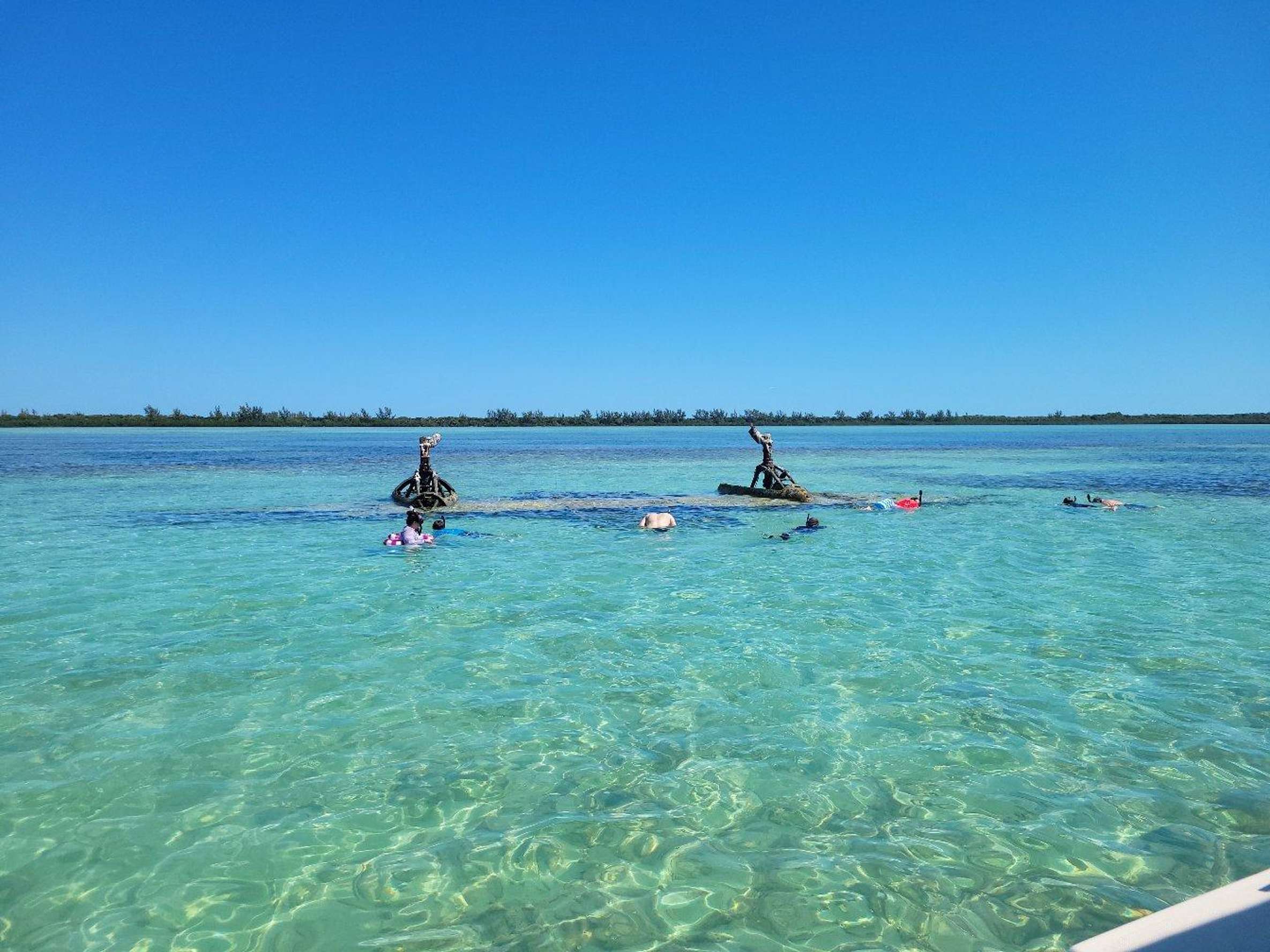
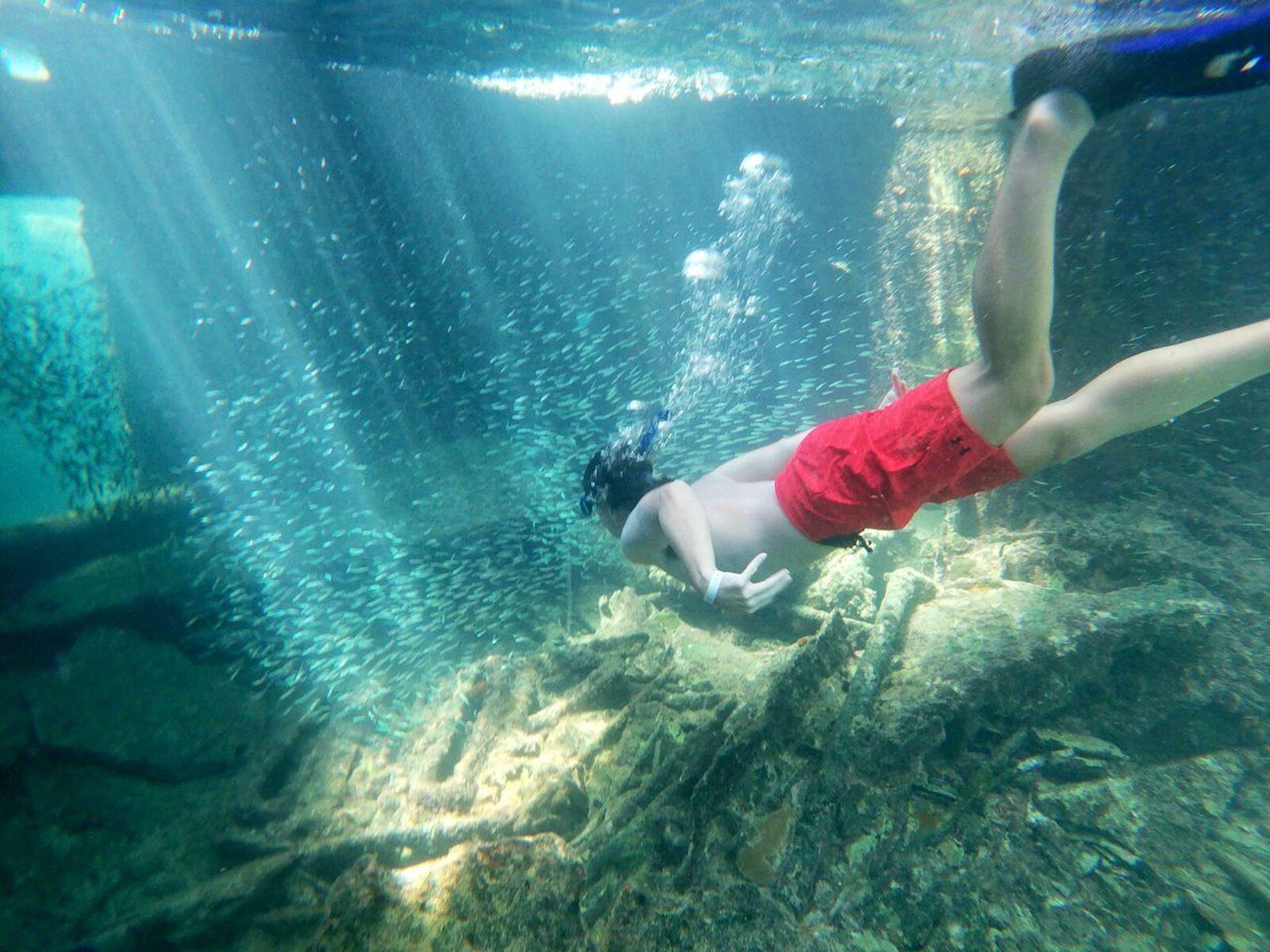
The 4-stop snorkeling adventure covers that plus three more stops in three hours: a sunken plane wreck, the concrete SS Sapona, and Stingray Island, where rays glide through water shallow enough to wade in.
You get pickup and drop-off, a guide, snorkel gear, and bottled water; bring your own towel, swimwear, and sunscreen. A safety briefing comes before the sharks, and if you would rather stay dry, you can watch the whole encounter from the deck.
1The sunken plane wreck· about 35 minYour first swim takes you around the remains of a sunken plane, with clear water and plenty of marine life moving through the wreckage.2Snorkeling the SS Sapona· about 45 minThe boat anchors at the SS Sapona, a concrete shipwreck standing in 15 to 20 feet of water. Swim inside the open hull sections and around the outside of the wreck.3Stingray Island· about 40 minAt Stingray Island you wade into the shallows where southern stingrays glide around your feet. Shuffle your feet as you walk so you never step on one buried in the sand.4Shark Arena at Triangle Rocks· about 40 minThe finale brings you face to face with wild Caribbean reef sharks. Hold the safety line near the boat, keep your hands in close, and let the sharks circle past you.5Back aboard· about 20 minOnce snorkelers are out of the water, the crew feeds the sharks at the surface, so you get one last close view from the deck before the ride home.6The ride home· about 30 minA half-hour run back to the dock, often with dolphins or turtles spotted along the way, and hours of your island day still ahead.
Included
Pick-up and drop-offGuideSnorkel gearBottled water
Not included
TowelsGratuity
Bimini Bahamas shark snorkeling trips side by side
Green marks the lowest price. Each price says whether it is per person or per group.
Tour
Price
Duration
Languages
Best for
Our pick
Bimini: 4-Stop Snorkeling Adventure
4.5★ (22)
from $175lowest price
3 hours
English
snorkelers who want sharks, a shipwreck and stingrays in one boat day
The guides gave them plenty of time at each stop and kept the whole day fun and safe.
Best surprise
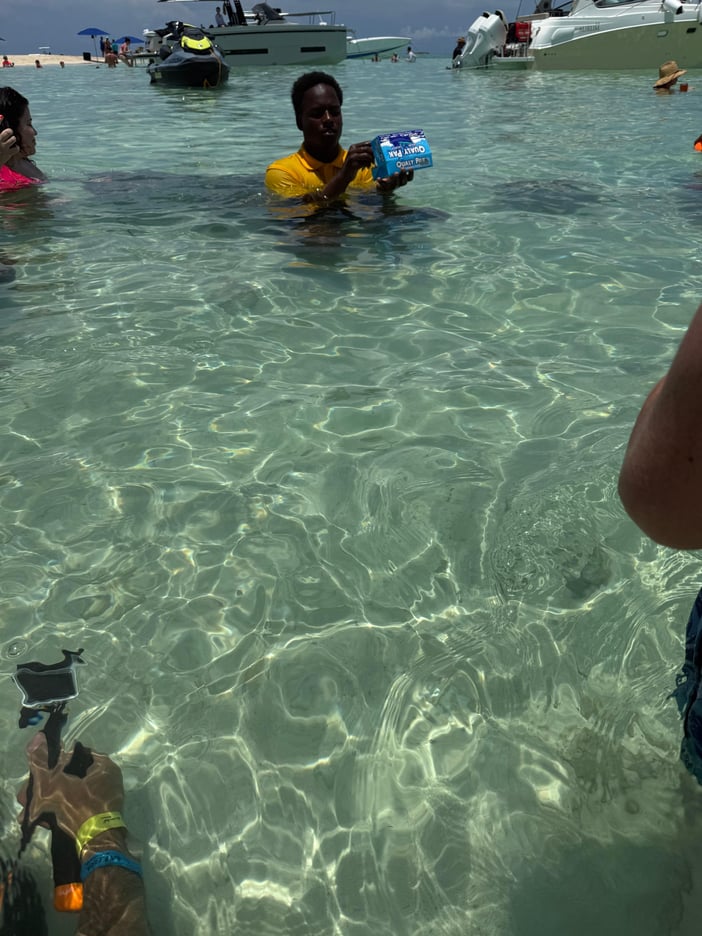
Many families found feeding the stingrays just as exciting as swimming with the reef sharks.
Most common wish
A few reviewers wished someone had told them their meeting point sooner, so they could relax before the boat.
How to book a shark snorkeling trip in Bimini Bahamas
01
Pick your date and morning slot
Choose a day on the ferry calendar first, then book the 4-stop snorkeling adventure for a departure between 8 am and 10 am, when seas stay calm and underwater visibility is at its best.
RecommendedThe offshore window runs from first light until about 11 am, before afternoon winds stir up surface chop
Common mistakeFirst-timers book an afternoon slot and spend the swim fighting chop instead of watching sharks
02
Choose your boat: shared or private
The shared 4-stop adventure runs 3 hours and stops at the plane wreck, the SS Sapona, Stingray Island and Shark Arena. The private boat adventure also runs 3 hours, sets its own itinerary and brings a photographer.
ImportantThe shared trip is not for non-swimmers or anyone with back, heart or mobility problems
Pro tipIf someone in your group prefers to stay dry, boats let guests watch the sharks from the deck
03
Check the meeting point on the voucher
Your voucher and the operator's messages arrive by email after booking. The 4-stop adventure meets inside the Resorts World hotel at the Piano lounge, in the seating area behind the check-in desk.
Pro tipThe boat ride out to Shark Arena and Triangle Rocks takes about 30 minutes each way, so the morning math works even on a ferry day trip
04
Keep the 24-hour cancellation in your pocket
Both snorkeling tours let you cancel up to 24 hours before departure for a full refund. If the weather turns or your ferry plans shift, cancel in time and book another morning.
RecommendedIf winter winds cancel your trip, rebook for the next settled day between fronts, when the water clears again
05
Travel light and arrive ready
Snorkel gear and bottled water come with the tour, so pack swimwear, a towel and sunscreen. Wear your suit under your clothes and skip the metallic jewelry and neon swimwear, since dark colors draw less attention from sharks.
Common mistakeLeaving the towel at the hotel, since neither tour includes one
What to know before you book shark snorkeling in Bimini Bahamas
Can stop the dayGood to knowGood news
01
ChoosingWhat it is, who it suits, when to go
6
How it runs
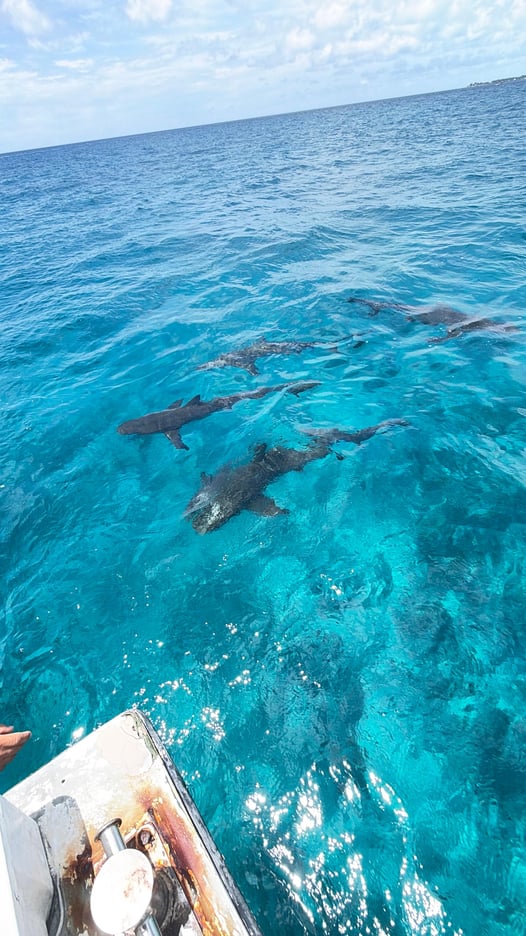
A crew safety demonstration comes first, before the boat reaches the shark area. In the water you hold a safety line trailing from the boat, and in-water time at the feeding spot often lasts around five minutes. After everyone climbs back aboard, the crew surfaces and feeds the sharks near the hull.
In the water
Wild Caribbean reef sharks of 3 to 8 feet circle close to swimmers, and at Triangle Rocks the water usually stays clear past 60 feet in calm conditions. You can watch from the surface or free dive 15 to 30 feet for a closer look. Nurse sharks, lemon sharks and the occasional sea turtle share the reef.
Swimwear
Sharks read contrast well, so neon, yellow or alternating light-and-dark suits draw more attention than plain dark colors like black or dark blue. Leave shiny jewelry, metallic fabric and exposed watches on the boat, since a glint of light mimics fish scales.
Timing
Boats leaving between 8 am and 10 am get the calmest seas and the clearest water, and the offshore window closes around 11 am when afternoon winds stir surface chop. A morning shark run also returns you by midday with hours left for the beach before the evening ferry.
Nervous swimmers
Wild reef sharks here are used to tour boats and stay focused on the bait, leaving calm snorkelers alone. Anyone who would rather not get in can watch clearly from the deck, and crews can run a rope in the water for hesitant swimmers to hold.
Tipping
Gratuity is not included on either boat tour, and tipping the captain and deck crew 15 to 20 percent is customary in Bimini. Carry cash for it, since card acceptance on the island is patchy.
02
BookingHow far ahead, and what happens if plans change
1
Cancellation
Both featured boat tours let you cancel up to 24 hours ahead for a full refund. Book the shared trip at least a few days out in peak season, since seats are limited and ferry day-trippers fill the morning departures.
03
Before you goPapers, health, what to bring
3
DocumentsCan stop the day
The crossing to Bimini is international travel, so every passenger, including infants, needs a valid passport or passport card. US re-entry authorization such as an ESTA must be in place before you sail. Birth certificates and photo IDs are not accepted, and travelers from countries outside the USA, EU, UK and Switzerland may need a Bahamian visa.
Health and age
The 4-stop snorkeling adventure excludes non-swimmers and people with back, heart or mobility problems, so a shark stop is out of reach if you cannot swim in open water. On the private boat, babies under 1 and guests over 95 cannot come aboard. Ferry tours are unsuitable for pregnant travelers and infants under 6 months.
What is included
Both boat tours supply snorkel gear, and the shared tour adds a guide and bottled water, so pack the rest yourself:
Swimwear and a towel (towels are not provided on either boat)
Reef-safe sunscreen, which the Bahamas requires by law
A rash guard or wetsuit vest from December to April, when water sits at 24 to 25°C
Motion sickness tablets if open water bothers you, taken 30 to 60 minutes before boarding
04
During the tourWhat is expected of you
1
Shark rulesCan stop the day
The Bahamas is a protected national shark sanctuary, so shark populations here are safeguarded by law. Reaching out to touch a shark is forbidden on these trips, and guides ask you to keep hands close to your chest, fins on, and splashing to a minimum. Cornering or chasing wildlife in open water is against the spirit of the rules.
The day, the boat and the sharks - snorkeling in Bimini, Bahamas
Swimming with wild reef sharks off Bimini, Bahamas is a real, bookable day from South Florida, and the day runs tight: a long crossing, strict documents and the ferry clock decide everything. Every choice below settles one of those.
If you only remember three things
1
A ferry day trip runs 15 to 17 hours door to door for 4 to 6 hours on the island; take the earliest sailing you can.
2
A valid passport book or passport card is mandatory for every passenger, children included; birth certificates are turned away.
3
Book the shark snorkeling stop in the morning, when seas are calmest and the water is clearest before 11 am.
Is a one-day Bahamas run for shark snorkeling worth it
Four to six hours on the island. That is what a ferry day trip from South Florida buys you, against 15 to 17 hours door to door once check-in, both crossings and customs are counted.
The math looks grim on paper, and it is honest math. Bimini is also barely 50 miles offshore, the nearest piece of the Bahamas, so no other island hands you more time in the water for the same travel day.
The honest line on who this suits: travelers with one genuinely open day who want a quick international hit and do not mind a pre-dawn alarm. If your Florida vacation is only three or four days long, the advice is blunt, leave it out.
If you want a slow pace and several excursions, take an overnight instead. For everyone else, one well-planned day carries a shark trip, a beach afternoon and the ferry home.
It helps to see the alternatives side by side. A seaplane buys about 8 hours on the island with a 25-minute flight each way, at a far higher price. Freeport gives a bigger island and more shopping, but its longer crossing eats the gain.
Getting to the Bahamas in one day: three ways
Bimini by fast ferry
Bimini by seaplane
Freeport by ferry
Water crossing
About 2 hours each way from Fort Lauderdale
25 to 30 minutes each way
A longer open-water run than Bimini
Island time
Around 4 to 6 hours
About 8 hours
Less than Bimini, transit takes more of the day
Cost
The affordable option
Substantially pricier
Similar, with fewer offshore thrills
Suits
First-time Bahamas visitors and a quick beach-and-sharks day
Travelers who want maximum island time
Shoppers and longer, varied itineraries
Bimini by fast ferry
Water crossing
About 2 hours each way from Fort Lauderdale
Island time
Around 4 to 6 hours
Cost
The affordable option
Suits
First-time Bahamas visitors and a quick beach-and-sharks day
Bimini by seaplane
Water crossing
25 to 30 minutes each way
Island time
About 8 hours
Cost
Substantially pricier
Suits
Travelers who want maximum island time
Freeport by ferry
Water crossing
A longer open-water run than Bimini
Island time
Less than Bimini, transit takes more of the day
Cost
Similar, with fewer offshore thrills
Suits
Shoppers and longer, varied itineraries
The ferry column is where most shark snorkelers land, because the morning boat and the beach afternoon both fit inside its 4 to 6 hours. Pick the seaplane only when extra island time outweighs the fare, and Freeport only when shopping beats the sharks.
Tour for this
Fort Lauderdale: Bimini Island Day Trip by Ferry4.3★ (36) · 16 hours · Free cancellation
How you reach your snorkeling boat from south Florida
There is no ferry from Miami. Every Bimini passenger boat leaves from Terminal 21 at Port Everglades in Fort Lauderdale, roughly a 45-minute drive north from Miami, after the old Miami service was discontinued. Plan that drive into the morning.
Check-in opens three hours before departure for practical reasons: security checkpoints at the port entrance back up traffic, passport and immigration checks take time, and the terminal doors close one hour before sailing. Miss the cutoff and boarding is not guaranteed.
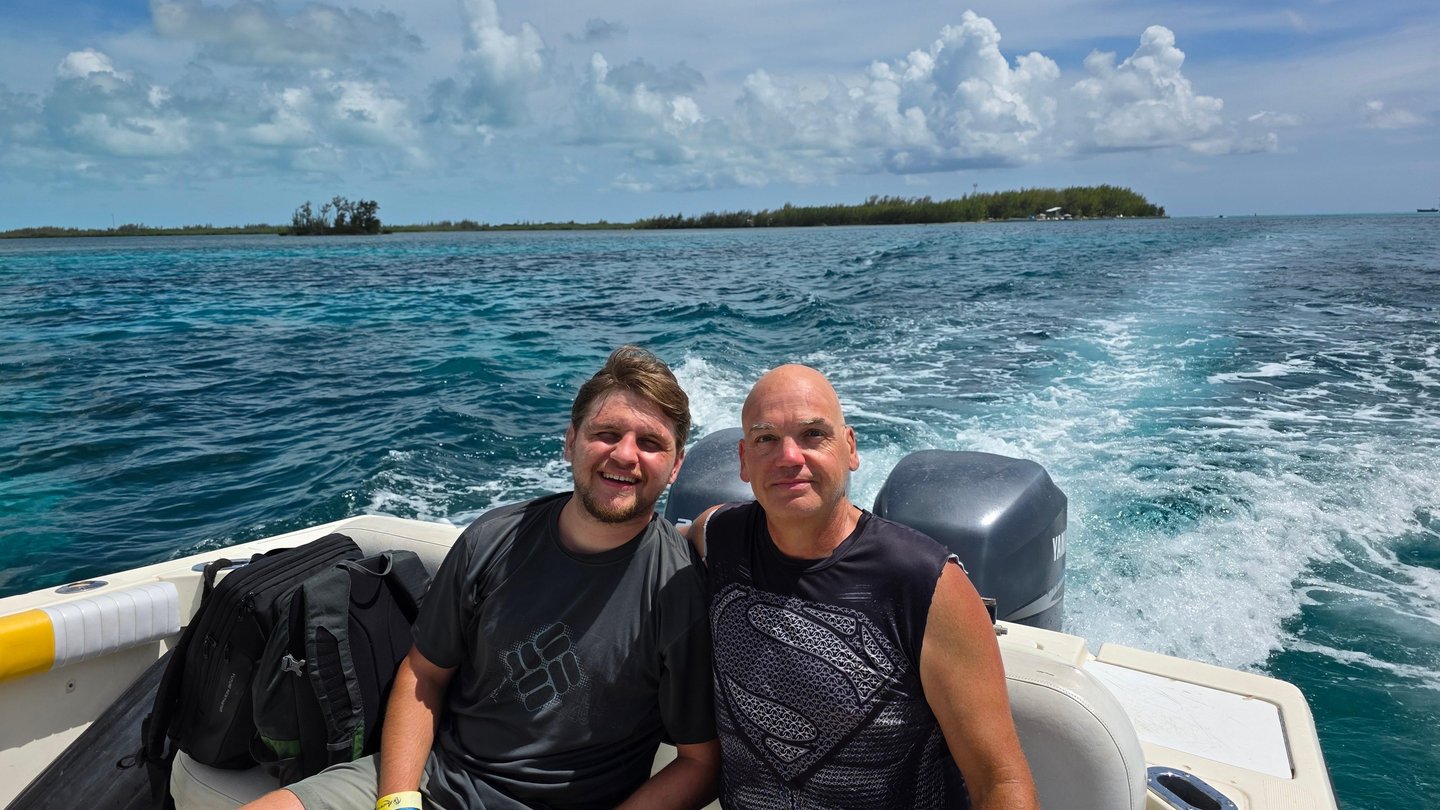
The crossing itself takes about two hours over the Gulf Stream aboard a high-speed catamaran. It is a passenger-only service, so no cars go aboard.
The ferry runs Wednesdays, Fridays and Sundays year-round, with extra sailings on some Mondays and holidays. For summer weekends, spring break and US holidays, seats sell out early enough that booking 4 to 6 weeks ahead is the safe move.
The Fort Lauderdale: Bimini Island Day Trip by Ferry bundles the roundtrip crossing with about six hours of free time on the island, and excursions like shark snorkeling are booked separately once you land.
The document mistake that ends a Bahamas trip at the dock
Birth certificates and photo IDs will not get you on this boat. US citizens need a valid passport book or passport card, and children count too. Arrive with a state ID and you risk being denied boarding outright.
Alongside the passport, every traveler needs US re-entry authorization, an ESTA for Visa Waiver nationals, and anyone in the US on a visa should hold the valid US visa that gets them back in.
Citizens of the USA, EU, UK and Switzerland need no Bahamian visa; other nationalities may, and the Bahamas High Commission needs 7 to 10 business days to issue one. Green card holders carry both the passport of their country of birth and their alien resident card.
Customs is where careless packing bites. No food or drink of any kind goes aboard, and firearms, fireworks and marijuana, even medical marijuana with a prescription, are illegal in the Bahamas. Keep the carry-on within the 22 by 18 by 10 inch, 26.5-pound allowance and leave the medicine cabinet at home.
Rules that can stop the trip
Birth certificates, photo IDs and naturalization documents are not accepted on the ferry Carry a valid passport book or passport card for every passenger, children included
One line in your own booking terms matters here too: there is no refund when passport details given at booking turn out to be missing or false, so type the numbers carefully.
Tour for this
Bimini: Island Tour with Lunch1.0★ (1) · 2.5 hours · Free cancellation
Your first hour on Bimini before shark snorkeling starts
The ferry docks at Fisherman's Village on North Bimini, beside the Resorts World complex, and then the clock tests you.
Maritime authorities clear the vessel first, a wait of at least an hour before anyone steps off, and immigration plus customs usually adds a little more when your paperwork is ready. Keep the stamped stub the officer hands you; you surrender it when you leave.
From the pier, complimentary open-air trams loop between the dock, Fisherman's Village Marina, the casino and the beach club. Taxis wait at the end of the pier and charge a small flat fare per person into town.
Walking to the far resorts is a bad idea, more than two miles on an exposed road in heavy humidity.
The shared 4-stop snorkeling adventure meets at the Resorts World hotel Piano lounge, in the seating behind the check-in desk, minutes from the dock by tram. Private captains gather at Fisherman's Village Marina. Mind the return: terminal doors close an hour before the ferry sails, 7 pm in summer and 6 pm from mid-September.
How a shark snorkeling day unfolds
1
Mid-morning
Ferry docks at Fisherman's Village, North Bimini
Vessel clearance takes about an hour before disembarking
2
An hour later
Immigration and customs inside the terminal
Usually under an hour with paperwork ready
3
Late morning
Tram or taxi to your meeting point
The 4-stop trip meets at the Resorts World Piano lounge
4
Midday
Morning boat excursion runs offshore
Back by early afternoon with beach hours to spare
5
Early evening
Return ferry departs
Be at the terminal a full hour before, doors then close
Run the numbers and the shape of the day appears: clear the dock by late morning, take the midday boat, and you still hold hours of beach before the early-evening cutoff.
When to go snorkeling in Bimini for calm, clear water
May and April are the months to chase. May brings calm seas on about 98 days in 100, gentle peak waves and air around 27°C on mostly dry days; April runs a close second.
June through August have the flattest water of the year, the trade being heat, humidity and rain on a third of days.
Winter is the opposite problem, dry but choppy, when cold fronts several times a month push stiff northerlies against the Gulf Stream and build steep seas. Outright ferry cancellations stay occasional, but crossings turn rough.
Within any good day, the morning wins. Departures between 8:00 and 10 am get the calmest seas and peak visibility, and the offshore window closes around 11 am once afternoon wind stirs surface chop. Book the earliest shark trip you can.
Water in winter sits around 24 to 25°C, or 75 to 77°F, by monthly sea records.
Charter operators quote the low-to-mid 70s°F for the same December-to-April stretch, a slightly colder reading that counts the cooler shoulder weeks in April as well. Either way, a wetsuit earns its space. Summer warms to 29 to 30°C, bath water.
Bimini Snorkeling and Sea Conditions by Month
August is the peak month for tour crowds, delivering the warmest 30°C water and flat calm seas alongside afternoon tropical showers.
HighestJul to Sep
In betweenFeb to Jun, Oct to Nov
LowestDec to Jan
Darker: a higher how busy it gets score, out of 5
Tap a month to read it.
June: 5 out of 5 for water temperature. 29°C (85°F)
HighestMay to Oct
In betweenApr, Nov
LowestDec to Mar
Darker: a higher water temperature score, out of 5
Tap a month to read it.
June brings quiet crowds, flat calm seas, and warm 29°C water, though brief summer rain showers become frequent.
HighestApr to Sep94 to 100% of days
In betweenFeb to Mar, Oct89 to 90% of days
LowestNov to Jan81 to 86% of days
Darker months: higher, from 81 to 100% of days
Tap a month to read it.
December is a quiet month on the tours, with cooler 26°C water, crisp breezes, and slightly rougher seas.
HighestOct to Mar0.9 to 1.1 m
In betweenApr, Sep0.7 to 0.8 m
LowestMay to Aug0.4 to 0.6 m
Darker months: higher, from 0.4 to 1.1 m
Tap a month to read it.
March brings moderate crowds, dry sunny weather, and warming 25°C water alongside occasional windy spells.
HighestOct to Mar3.6 to 5.4 days
In betweenApr3 days
LowestMay to Sep0 to 1.6 days
Darker months: higher, from 0 to 5.4 days
Tap a month to read it.
Match your dates to the calm-sea line and the decision makes itself. A windy winter week can churn the shallows for a day or two after a front, and the fix is simply going offshore, where the water clears fastest.
Thirty minutes south of the docks, the boat slows over Triangle Rocks, and the sharks arrive before you do. Caribbean reef sharks there are so conditioned to feeding that the sound of the engine alone draws them in, a habit researchers began building in 1990.
Nurse sharks and lemon sharks gather alongside them, with blacknose sharks, grouper, moray eels, lobster and the occasional sea turtle around the rocky outcrops.
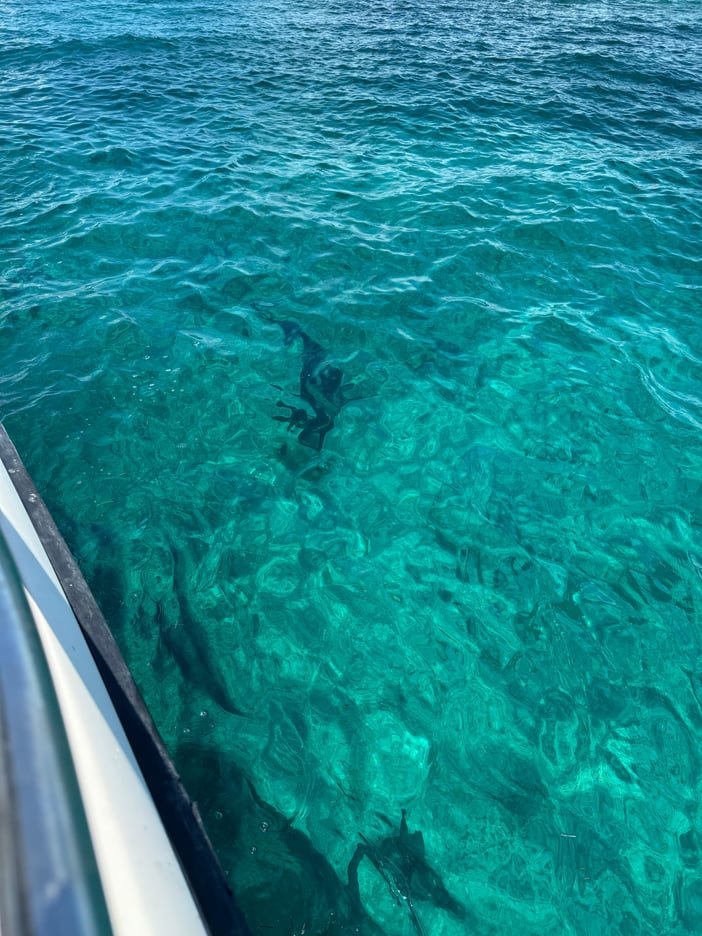
What a stop looks like: sharks three to eight feet long, several of them, circling close to swimmers in water that clears past 60 feet on calm days. Watch from the surface or free dive 15 to 30 feet for a closer look.
In-water time at the feeding spot often runs about five minutes, shorter than a regular reef stop, and the sharks stay deep around the submerged bait box. Once snorkelers climb out, the crew feeds them near the boat.
A full shark excursion runs two to three and a half hours, most tours three, with about 30 minutes of transit each way.
The shared trip that does all this is the Bimini: 4-Stop Snorkeling Adventure, which adds a sunken plane wreck, the SS Sapona and Stingray Island around the shark stop, with guide and snorkel gear included.
Is swimming with wild sharks in the Bahamas actually safe
The sharks are used to boats. Wild Caribbean reef sharks around Bimini do not treat swimmers as prey; they stay locked on the food containers and ignore calm people floating at the surface. The Bahamas is a protected national shark sanctuary, which is why the animals are here in numbers at all.
Crews keep it that way with structure. Before the stop, everyone gets a safety demonstration: minimal splashing, fins on, hands and fingers held close to the chest, and no touching the sharks, ever.
A safety line trails from the boat for anyone who wants an anchor in open water, and nervous swimmers can stay on deck and watch the whole encounter from above, a choice the boats welcome.
Panic in open water causes more trouble than the sharks ever do. Erratic splashing is what draws curiosity; smooth movement and facing a shark that approaches keep the water calm.
One honest limit: the 4-stop trip is not for non-swimmers or people with back, heart or mobility problems, since this is open water, deeper and more exposed than a shoreline reef.
What people wrongly assume
MythChumming turns the water into a feeding frenzy
Reality
Sharks stay deep around the bait box, and the crew feeds them only after snorkelers have climbed out
MythA shark sighting means danger
Reality
Reef sharks routinely cruise shallow coastal waters and reefs without bothering anyone
MythYou are forced into the water with sharks
Reality
Anyone can watch the entire encounter from the boat deck, clearly and safely
Knowing all three, the water looks different. The encounter is choreographed from the moment the anchor drops, and the deck seat is a full-price option rather than a failure.
Shared boat or private charter for shark snorkeling
The choice comes down to structure versus freedom. The Bimini: 4-Stop Snorkeling Adventure is a three-hour guided trip with a fixed route, gear and bottled water included, at a fraction of a charter's cost.
You share the boat, the pacing is set, and the four stops give beginners time to ease in at calmer reefs before the shark arena.
The Bimini: Private Boat Adventure with Photographer is the other road: your own boat, a customized itinerary, a dedicated photographer, fishing supplies and the option of a beach lunch, all in three hours.
You choose the departure time and how long each stop lasts. It suits small groups who want the sharks at their own rhythm and the photos to prove it. Two hard limits apply, no babies under one and nobody over 95.
Ferry rules matter here too: the fast ferry is not advised for pregnant travelers, and infants under six months are not permitted.
How to choose a shark snorkeling trip in Bimini
Check
Why it matters
Our pick
Swimming requirement
Open water needs genuine confidence; weak swimmers struggle most
Confident swimmers only; non-swimmers not taken
Who it excludes
Health and age limits decide the boat for some families
Not for back, heart or mobility problems
Deck access for non-swimmers
The nervous or tired can watch from above
Crews welcome deck watchers with a clear view
Photography
Someone has to hold the camera
The private charter brings a dedicated photographer
Pacing
Fixed route versus your own timing
The private charter sets its own departure and stop times
Tour for this
Bimini: Private Boat Adventure with Photographer3 hours · Free cancellation
What to wear and bring snorkeling with sharks in Bimini
Plain dark swimwear is the pick. Sharks read contrast well, so bright yellow, neon and alternating light-and-dark stripes make you visible underwater, and shiny jewelry or an exposed watch flashes like fish scales. Black or dark blue keeps the encounter calm. Take rings off before the water; glints attract barracudas too.
Charters supply masks, snorkels, fins and flotation vests but no thermal protection, so winter snorkelers from December through April bring their own wetsuit or neoprene vest, when water sits in the mid-70s Fahrenheit.
Swimwear, towel and sunscreen travel with you. The sunscreen matters legally: the Bahamas bans sunscreens with oxybenzone, octinoxate and octocrylene, so a reef-safe mineral formula is the one that clears customs. A prescription mask comes from home as well.
Crews work for tips, and it is customary to tip guides and deckhands 15 to 20 percent of the trip, in US or Bahamian dollars, both accepted everywhere on the island.
What to wear, bring, and avoid for shark snorkeling
Dark blue or black swimwearPlain dark colors blend naturally into ocean waters rather than creating stark contrast.
Long-sleeved rash guardShields against strong tropical sun and jellyfish stings while evening out skin tone.
No shiny jewelry or watchesMetallic reflections and glints resemble the shimmering scales of prey fish.
Avoid bright yellow and neon gearHigh-contrast colors are especially visible underwater, where sharks distinguish contrast well.
Skip high-contrast striped patternsAlternating light and dark bands create sharp silhouettes that catch underwater attention.
Reef-safe sunscreenProtects your skin without chemicals like oxybenzone that damage coral and marine life.
Keeping your stomach steady snorkeling the Bahamas' open water
The two-hour Gulf Stream crossing is where most stomachs are tested. North wind pushing against the northward current builds steep, jarring waves, worst from October through February, and travelers report plenty of green faces on choppy winter days.
The steadiest seat is mid-ship on a lower deck, and the worst place is anywhere near a screen, so put the phone away.
Timing decides more than seating. Take dimenhydrinate or meclizine 30 to 60 minutes before boarding, because once nausea starts the pills work poorly. Eat something bland like toast, skip alcohol and fried food, and keep your eyes on the horizon.
The anchorage at the shark site rocks in open swell even on sunny days. When it builds, move toward the rear deck, get fresh air, and know that slipping into the water often settles the stomach, since submersion stops the conflicting signals.
From May through September nearly every day runs calm and the whole problem fades.
When a Bahamas shark snorkeling day goes sideways
No published wind or wave number decides a cancellation; captains judge it themselves. Rough seas, heavy chop, big swells, thunderstorms or storm threats stop the boats, and light rain does nothing to them.
When the Sapona anchorage is too rough, snorkel charters reroute to sheltered reefs, so a wavy day usually means a changed plan rather than none.
The ferry answers weather the same way. Crossings stop when small-craft advisories or tropical storm warnings are issued, most often in hurricane season and winter cold fronts. When that happens, operators generally offer a full refund or rebooking on another sailing, though nobody pays for a lost day or a hotel night.
Missing the return boat is the one rule with no mercy. Passengers who miss their departure through their own fault get no date change and no refund. If a storm strands you instead, the ferry operator refunds the ticket and nothing beyond it.
When the day changes
If this happens
What happens then
Rough weather cancels the ferry crossing
A full refund or rebooking on another sailing, your choice
The snorkel boat cannot anchor offshore
The crew reroutes to sheltered reef stops for the day
You miss the evening ferry yourself
No date change and no refund under the operator's terms
The operator cancels the package crossing
Reschedule without penalty to a date within a year of booking
What else to do around your shark snorkeling trip
A morning shark trip leaves the afternoon free, and Bimini spends it well. The 4-stop route already covers the SS Sapona, the concrete shipwreck three miles south with nurse sharks in its wreckage, plus Stingray Island.
On your own, Honeymoon Harbour puts you in shallow, calm water with stingrays that take squid from a kneeling hand; shuffle your feet and never step on one, since that is how barbs hurt people.
Back on land, Radio Beach serves conch salad and casual beach bars with no resort fees, every beach on the island being legally public.
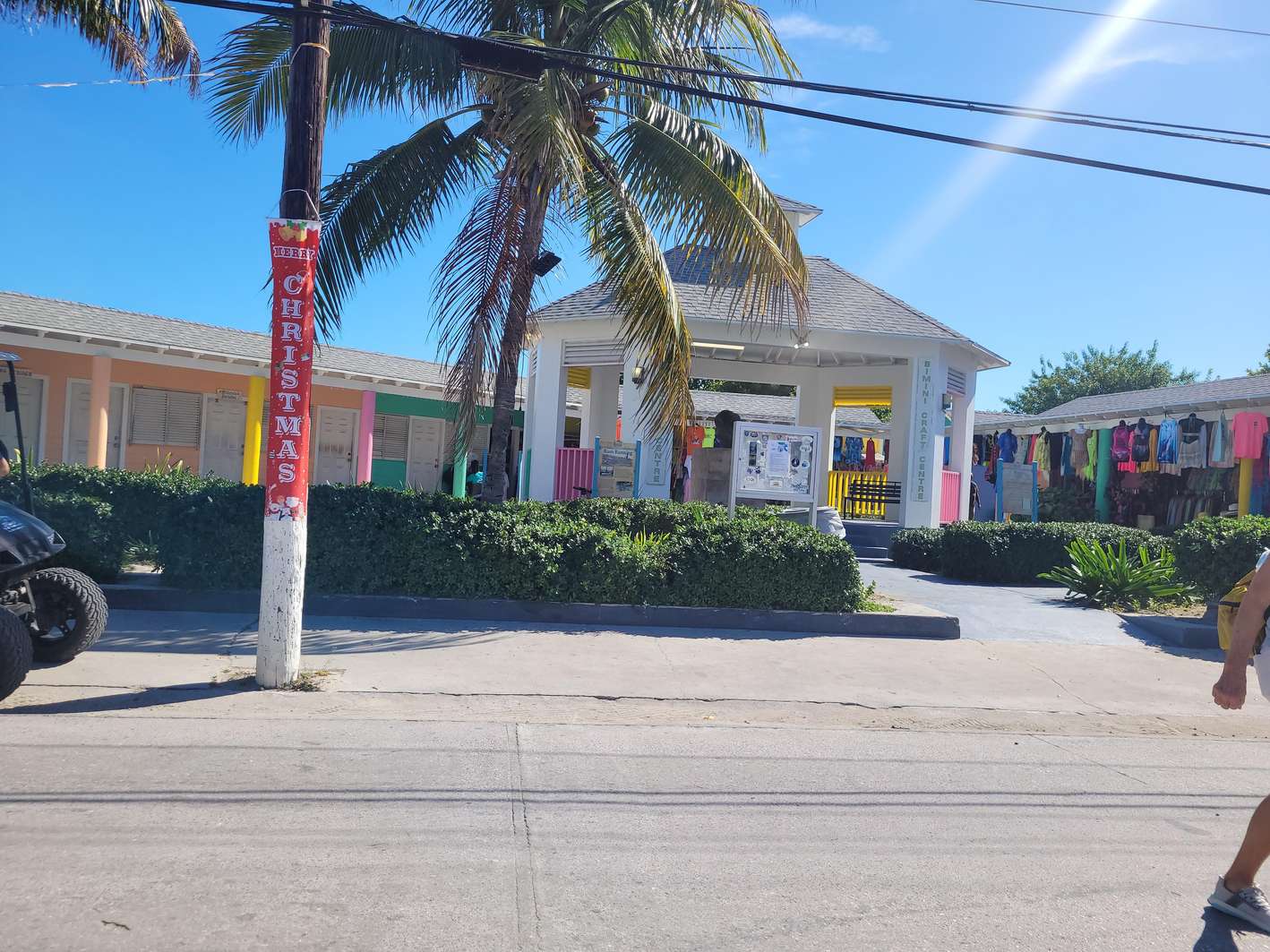
The Dolphin House and the Straw Market fill an hour, and golf carts, the best way to cover the island in a short day, rent from stands along the pier road. Book the cart ahead when a cruise ship is in port; fleets are small and sell out fast.
Then there is the Shark Lab. The Bimini Biological Field Station has studied these waters for decades, cataloguing more than 60 individual great hammerheads, which pass through from December to April while the reef sharks stay year-round. In winter, the hammerheads are the reason divers come.
More to book nearby
Live dates and prices
A traveler's note
If you do only one thing in Bimini, make it this. Our favorite summer adventure. Swimming with the sharks was my favorite spot, and feeding the stingrays was amazing ⭐️⭐️⭐️⭐️⭐️
A Bimini shark snorkeling day rewards the well-planned and punishes the loose. Book the early ferry, the morning boat and the cart, carry the right passport, and you are back in Fort Lauderdale by night with the best few minutes of open water in the Bahamas behind you.
Go ifYou have one genuinely open day and a taste for open waterYou are a confident swimmer who wants a wild, cage-free encounterYou can take the earliest sailing and the 8 to 10 am boat window
Skip ifYour Florida trip is only three or four days longYou are a non-swimmer, pregnant, or traveling with an infant under six monthsYou cannot face a 15- to 17-hour travel day
Straight answers on safety, water clarity, and how a shark stop fits into your day on the island.
2026
Three reef sharks circled below me at Triangle Rocks, the water clear 60 feet down. Book a morning slot; the sea stays calmest before 11.
Is it safe to swim with wild sharks in Bimini?
Wild Caribbean reef sharks around Bimini are used to tour boats and stay focused on the bait, leaving calm surface snorkelers alone. The main risk in open water is panic or weak swimming, so crews run a safety demonstration before you get in and often trail a rope for hesitant swimmers to hold.
How close will the reef sharks get to me?
Very close. Several wild reef sharks, 3 to 8 feet long, circle near swimmers at the feeding sites. When the sea is calm, visibility at Triangle Rocks runs past 60 feet, so you can watch them patrol from the surface or free dive down 15 to 30 feet for a tighter view.
What actually happens in the water during a shark stop?
You keep your fins on, tuck your hands close to your chest, and keep splashing to a minimum. Touching the sharks is forbidden. Time in the water at a feeding spot is often brief, about five minutes, and after snorkelers climb back aboard the crew surfaces the sharks and feeds them near the boat.
Can I stay on the boat and still see the sharks?
Yes. Guests who prefer to skip the swim stay on deck and watch the sharks clearly from above. The crew can also rig a rope in the water so you can hold on and observe without swimming freely.
What should I wear in the water around sharks?
Plain dark swimwear works best, black or dark blue. Bright and high-contrast colors, especially yellow or neon, catch a shark's eye, and shiny jewelry or an exposed watch reflects light like fish scales. Cover or leave the metal at the hotel.
Do I need to be a strong swimmer for a shark snorkeling trip?
For the shared 4-stop snorkeling adventure, yes: the tour is not suitable for non-swimmers, and it rules out people with back problems, mobility impairments, or heart conditions too. Nervous but able swimmers can ask the crew for an inflatable snorkel vest or life jacket and float without working hard.
How long does a Bimini shark snorkeling excursion take?
Most standard tours run about 3 hours, with the boat ride to offshore spots like Triangle Rocks or Shark Arena taking roughly 30 minutes each way. That leaves around half an hour with the sharks plus the other stops on a multi-site trip.
When is the best time of year for snorkeling with sharks in Bimini?
Caribbean reef sharks show up all year, and spring and summer bring calm seas and the best visibility. Great hammerheads are a winter story: they migrate through from December to April, peaking between January and March, and they suit certified divers on scuba.
Are there sharks near the public beaches in Bimini?
Wild sharks cruise the shallow coastal water and reefs routinely and bother nobody there. The close encounters happen on boat tours that run to the offshore feeding spots south of the island, where sharks have gathered around bait since researchers began feeding them in 1990.
What else lives at the shark sites besides reef sharks?
Nurse sharks and lemon sharks gather at Triangle Rocks alongside the reef sharks, with blacknose sharks and the occasional great hammerhead passing through. The rocky outcrops hold lobster, moray eels, and grouper, and sea turtles visit from time to time.
What other stops come with a shark snorkeling trip?
The shared 4-stop tour pairs Shark Arena with the SS Sapona shipwreck, a sunken plane wreck, and the stingray shallows. A private boat adventure lets you set your own stops, with a photographer along to document the swim.
Will I have time for a shark trip on a ferry day visit?
A 3-hour excursion fits a ferry day if you book a morning departure, when the seas are calmest before the afternoon chop. Note that non-swimmers and people with back, heart, or mobility issues are not suited to the shared snorkeling tour.
Shark snorkeling in the Bahamas and day trips to plan next
Swim with wild sharks on a Bahamas reef snorkeling trip in Bimini
Snorkel with Caribbean reef sharks at Shark Arena, plus a shipwreck, a plane wreck and stingrays, on a three-hour tour you can cancel free up to 24 hours ahead.